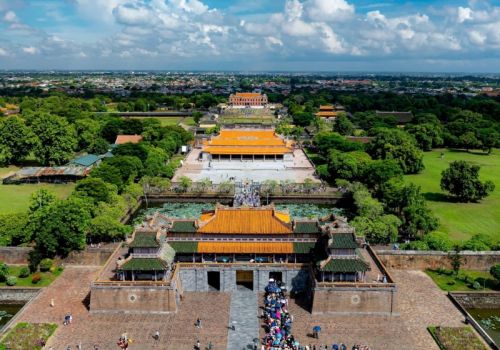




Discover tomb Tu Duc in Hue - A masterpiece of Nguyen dynasty architecture
As one of Hue’s must-visit historical sites, tomb Tu Duc impresses with its exquisite architecture, peaceful surroundings, and centuries-old structures that carry the essence of the Nguyen Dynasty. If you love exploring culture and history while immersing yourself in the poetic scenery of the ancient capital, this royal tomb should be on your travel list!
About Tomb Tu Duc
Tomb Tu Duc, also known as Khiem Tomb, is one of the most magnificent and well-preserved royal mausoleums of the Nguyen Dynasty. Located in a peaceful area of Hue, this grand structure was built as the final resting place of Emperor Tu Duc, the longest-reigning monarch of the dynasty. More than just a tomb, it reflects the emperor’s artistic taste, philosophical depth, and deep connection with nature.
_2.jpg?1743760901813)
Panoramic view of Tu Duc Tomb, a historic royal resting place in Hue (source: Lao Dong news)
The construction of Tu Duc Tomb began in 1864 and was completed in 1867. Unlike other Nguyen emperors, Tu Duc planned and built his own tomb while he was still alive, using it as a retreat for relaxation and poetry writing. The project was highly ambitious, involving thousands of workers, but it also led to political unrest. The infamous "Chay Voi" (Elephant Revolt) occurred as a result of heavy taxation and labor exploitation, revealing tensions within the kingdom.
Despite these struggles, Tu Duc’s vision for the tomb resulted in an exquisite masterpiece that perfectly integrates architecture, nature, and Feng Shui principles. Today, Tu Duc Tomb stands as a historical and cultural treasure, attracting visitors from all over the world who seek to experience the grandeur and tranquility of this imperial resting place.
Unique architecture of Tomb Tu Duc
Unlike the imposing grandeur of other imperial tombs, Tu Duc Tomb exudes elegance and serenity, with its delicate structures, poetic landscapes, and carefully arranged elements based on feng shui principles. Every detail, from the placement of lakes and gardens to the intricate carvings on wooden pillars, reflects the emperor’s desire for a peaceful resting place. Let’s explore the architectural wonders that make this tomb one of Hue’s most exquisite heritage sites.
The poetic beauty of Tomb Tu Duc
Tu Duc Tomb exudes a poetic beauty, seamlessly blending royal architecture with serene nature. Unlike other grandiose imperial mausoleums, this structure radiates elegance with its gracefully curved roofs, tranquil lakes, and lush gardens shaded by ancient trees.
_2.jpg?1743760848643)
The vast Luu Khiem lake creates a harmonious feng shui balance (source: Du lich con voi)
Notably, the vast Luu Khiem lake not only enhances the tomb’s picturesque charm but also creates a harmonious feng shui balance. The structures within the complex, from Khiem Cung Gate and Hoa Khiem Palace to the Minh Khiem Theater, are intricately carved, reflecting the refined artistry and romantic soul of the poetry-loving emperor.
Amidst this peaceful setting, Tu Duc Tomb is not just a resting place but a living watercolor painting, perfectly capturing the harmony between nature and the architectural essence of the Nguyen Dynasty.
Architectural highlights of Tu Duc tomb
The Tomb of Tu Duc is divided into two main sections: the temple area (worship and living quarters) and the tomb area (the emperor’s final resting place). This layout reflects both the daily life and the afterlife of Emperor Tu Duc, making it one of the most unique architectural complexes among the Nguyen Dynasty’s royal tombs. The entire Tu Duc Tomb is set amidst a peaceful natural landscape, featuring lakes, gardens, and pavilions that enhance its poetic charm.

Khiem Cung gate (source: Vinpearl)
In the temple area, the most significant structures include Khiem Cung Gate, the grand entrance leading to the inner complex, and Hoa Khiem Palace, which once served as the emperor’s retreat and later became an ancestral altar. Nearby, the Minh Khiem Theater, one of Vietnam’s oldest surviving theaters, showcases the emperor’s love for poetry and art. Another remarkable structure is Luong Khiem Temple, dedicated to Tu Duc’s mother, demonstrating his deep filial devotion.
Bi Dinh area (source: Vinpearl)
The tomb area, also known as the Royal Tomb of Emperor Tu Duc, is where the emperor was meant to be buried. However, his actual burial site remains a mystery, as his remains were secretly placed elsewhere to prevent looting. The most striking feature here is the Stele Pavilion, home to the largest stone stele in Vietnam, inscribed with the emperor’s own words detailing his reign, regrets, and reflections. This self-written epitaph makes the Tomb of Emperor Tu Duc one of the most historically significant sites in Hue.
Together, these structures make Tu Duc Tomb not only an architectural masterpiece but also a place filled with historical and cultural significance. Each detail within the tomb tells a story about the life, philosophy, and artistic vision of one of Vietnam’s most poetic emperors.
Visiting tips for Tu Duc tomb
Exploring the Tomb of Tu Duc is a journey into Vietnam’s imperial past, where history, culture, and nature blend seamlessly. To make the most of your visit, here are essential travel tips, including how to get there, entrance fees, opening hours, and important notes to ensure a smooth experience.
How to get to Tu Duc tomb

Tomb Tu Duc can be easily accessed by various means of transportation (source: Vinwonders)
The Tomb of Emperor Tu Duc is located about 6 km from Hue city center, making it easily accessible by various means of transportation. If you prefer flexibility and adventure, renting a motorbike or bicycle is a great option. The ride to the tomb takes you through scenic roads, offering a peaceful journey amidst Hue’s greenery. Alternatively, taxis and ride-hailing services like Grab provide a comfortable and quick way to reach the site in around 15 minutes. For those who enjoy guided experiences, many tour operators in Hue include Tu Duc Tomb in their itineraries, offering historical insights and hassle-free transportation.
Opening hours & ticket prices
The Royal Tomb of Emperor Tu Duc is open daily from 7:00 AM to 5:30 PM, allowing visitors ample time to explore its architectural beauty and serene surroundings. Entrance fees are approximately 150,000 VND per adult and 30,000 VND per child, with possible discounts available for students and group tours. As ticket prices may change over time, it is advisable to check in advance before visiting.
Important notes for visitors
To fully enjoy your visit to Tu Duc Tomb, there are a few key things to keep in mind.

A peaceful corner of Tu Duc Tomb (source: Mia)
- Dress modestly: As a historical and sacred site, visitors should wear respectful attire, covering shoulders and knees.
- Best time to visit: Early mornings or late afternoons offer cooler temperatures and fewer crowds, making for a more enjoyable visit.
- Bring essentials: Wear comfortable walking shoes, carry water, and bring sunscreen, especially during summer.
- Respect the site: Avoid loud noises, do not touch or climb on historical structures, and follow all guidelines provided by staff.
Explore more historic and cultural sites around Tomb Tu Duc
After visiting the royal tomb of emperor Tu Duc, take the opportunity to explore other fascinating historical and cultural sites nearby. These attractions offer deeper insights into the Nguyen Dynasty and the rich heritage of Hue.
Khai Dinh Tomb

Inside Khai Dinh tomb (source: Phong Nha locals)
Located just a short drive from Tu Duc Tomb, Khai Dinh Tomb stands out with its striking fusion of Eastern and Western architectural styles. The tomb is adorned with intricate mosaics, elaborate carvings, and a grand staircase guarded by stone dragons, making it one of the most unique imperial tombs in Hue.
Minh Mang Tomb

Minh Mang tomb (source: Vietnam evasion)
Known for its harmonious design, Minh Mang Tomb is a stunning blend of nature and architecture. Surrounded by lush gardens and serene lakes, this tomb reflects the emperor’s vision of a peaceful afterlife. Its symmetrical layout and picturesque setting make it a favorite among visitors seeking both history and tranquility.
Read more: Khai Dinh Tomb in Hue – A Masterpiece of Nguyen Dynasty Architecture
Thien Mu Pagoda

Thien Mu pagoda (source: Seatimes)
Perched on a hill overlooking the Perfume River, Thien Mu Pagoda is one of Hue’s most iconic landmarks. This ancient temple, with its seven-story Phuoc Duyen Tower, is not only a place of worship but also a symbol of the city’s spiritual heritage. Visitors can enjoy peaceful surroundings and panoramic river views.
Hue Imperial City
A UNESCO World Heritage Site, the Hue Imperial City was the political and cultural center of the Nguyen Dynasty. This vast complex features palaces, temples, and defensive walls that tell the story of Vietnam’s last feudal dynasty. Walking through its ancient gates offers a glimpse into the grandeur of royal life in the 19th century.
Read more: Discover the beauty of Hoa Lu Ancient Capital
Dong Ba Market
For a taste of local life, Dong Ba Market is the perfect stop. This bustling market is the oldest in Hue, offering everything from traditional Hue cuisine to handicrafts and souvenirs. Whether you're looking for a delicious bowl of bun bo Hue or unique local fabrics, Dong Ba Market provides an authentic cultural experience.
As one of the most exquisite royal tombs of the Nguyen Dynasty, with the serene atmosphere and ancient charm, Tomb Tu Duc is undoubtedly a must-visit when exploring Hue. If you appreciate history and seek tranquility within an imperial setting, make sure to add this site to your itinerary. For a complete and insightful journey to Tu Duc Tomb, let Asia Pacific Travel be your companion, providing you with an exceptional experience and in-depth knowledge of this magnificent royal monument. Contact us through hotline +84 904488850 to book your tour now!
Related Posts
.jpg)

.png)