




A complete guide to Hue Imperial City: The magical journey through Vietnam’s royal past
As a UNESCO-recognized heritage site, this grand complex boasts majestic palaces, intricate temples, and a fascinating history that captivates every visitor. Let’s uncover the secrets of this historic treasure and explore the best things to do inside its ancient walls.
Hue Imperial City - a historic legacy by the Perfume river
Located in the heart of Hue, Vietnam, on the northern bank of the Perfume River, Hue Imperial City is a remarkable historical and cultural landmark. As part of the Complex of Hue Monuments, it was recognized as a UNESCO World Heritage Site in 1993, preserving the legacy of Vietnam’s last imperial dynasty. Situated within Thua Thien-Hue Province, a region rich in cultural heritage, the citadel stands as a testament to the country’s royal past.
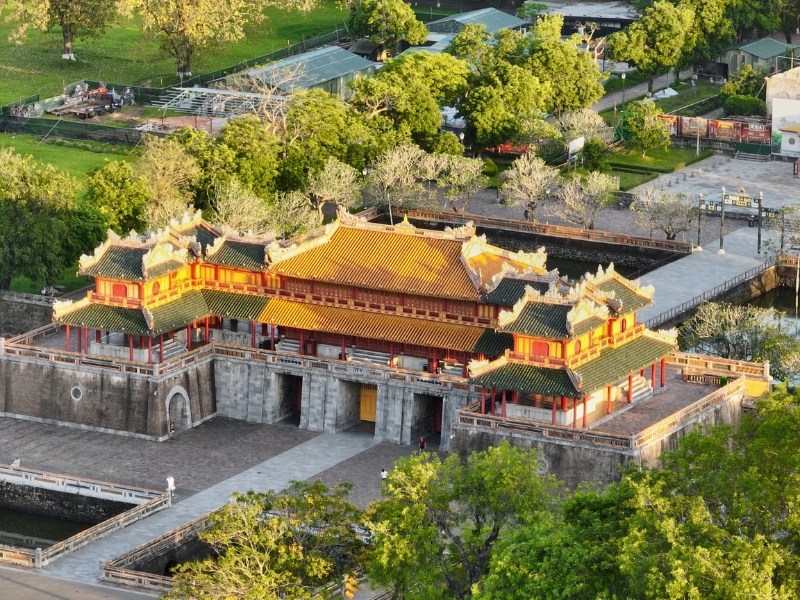
Hue Imperial City attracting visitors from around the world to explore its grand palaces, ancient temples, and rich cultural traditions each year (source: Dai Doan Ket news)
Construction of Hue Imperial City began in 1805 under Emperor Gia Long and was completed in 1832 under Emperor Minh Mang. Serving as the political, cultural, and religious center of the Nguyen Dynasty (1802–1945), it housed emperors, mandarins, and royal family members for over a century. The Hue citadel witnessed numerous historical events, including the rise and fall of Vietnam’s last monarchy, colonial conflicts, and wars that shaped the nation's history.
Today, Hue Imperial City remains one of the most significant historical sites in Vietnam, attracting visitors from around the world to explore its grand palaces, ancient temples, and rich cultural traditions.
Visitor’s guide to Hue Imperial City
Visiting Hue Imperial City is a journey into Vietnam’s royal past, where history, culture, and architecture blend harmoniously. To make the most of your experience, it’s important to plan your visit carefully, from choosing the best transportation to understanding the site’s regulations.
How to get to Hue Imperial Citadel
Hue Imperial City is conveniently located in the heart of Hue, making it easily accessible from various parts of Vietnam. Travelers from other cities can reach Hue by plane, train, or bus. Phu Bai International Airport, about 15 km from the city center, offers regular domestic flights from Hanoi, Ho Chi Minh City, and Da Nang. Alternatively, Hue Railway Station is just 2 km from the Imperial City, providing a scenic train journey from major destinations.
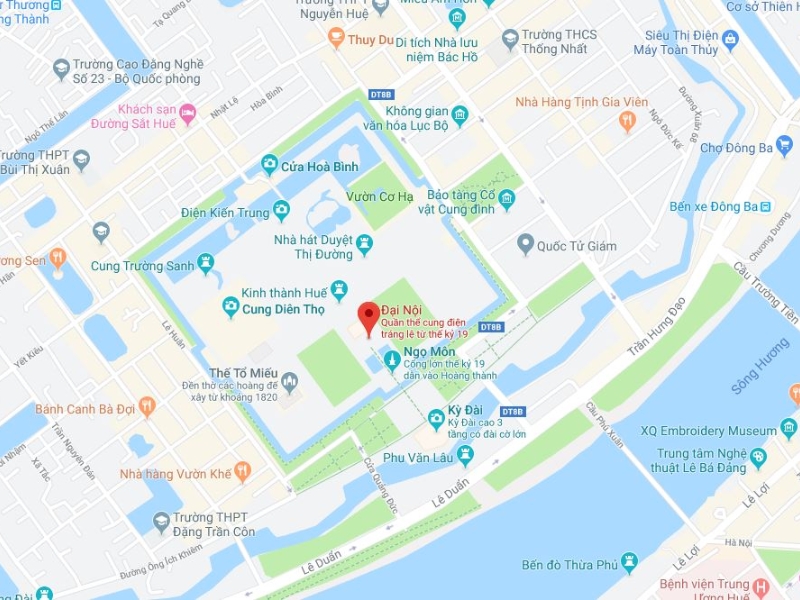
Hue Imperial Citadel - Dai Noi Hue (source: Silk Path)
For those already in Hue, getting to the Imperial City Hue is simple. Visitors can rent motorcycles or bicycles to explore at their own pace, take a cyclo for a leisurely ride through the historic streets, or use taxis for a quick and convenient trip. Group travelers may also consider booking a private car or tour service for a more comfortable experience.
Hue Imperial City opening hours and ticket prices
To ensure visitors have enough time to explore the grandeur of Hue Imperial City, the site operates with different schedules depending on the season:
- Hue Imperial City opening hours:
- March 16 – October 15: 6:30 AM – 6:00 PM
- October 16 – March 15: 7:00 AM – 5:30 PM
It is recommended to visit early in the morning or late in the afternoon to avoid the midday heat and large crowds, especially during peak tourist seasons.
- Ticket prices:
- Hue Imperial City entrance fee: 200,000 VND for adults, 40,000 VND for children (ages 7-12)
- Minh Mang, Tu Duc, and Khai Dinh Tombs: 150,000 VND for adults, 30,000 VND for children (ages 7-12)
- Combo ticket (Hue Imperial City + 3 royal tombs) : 530,000 VND for adults, 100,000 VND for children (ages 7-12)
For those planning to visit multiple sites within the Complex of Hue Monuments, purchasing a combo ticket is a cost-effective option, allowing access to several historical landmarks at a reduced price. Tickets can be bought directly at Hue Imperial City ticket office at the entrance or booked online through the Hue Monuments Conservation Center website. Booking in advance is recommended during peak seasons to avoid long queues.
Essential tips for visitors
To fully enjoy your visit while respecting the historical significance of the site, keep the following guidelines in mind:
- Dress respectfully: Ensure your attire is modest, covering shoulders and knees, especially when entering sacred or royal spaces.
- Maintain cleanliness and order: Dispose of waste properly, avoid making excessive noise, and help preserve the peaceful atmosphere of the Hue citadel.
- Protect the heritage: Refrain from touching, leaning on, or sitting on ancient structures. Avoid climbing restricted areas or stepping on historic foundations.
- Photography and filming: While taking photos is generally allowed, some interiors and artifacts may have restrictions. Always check for signs or ask staff before capturing images.
- Observe safety rules: Smoking is prohibited inside palace buildings and near wooded areas to prevent fire hazards. Additionally, refrain from bringing large bags or potentially hazardous items inside the complex.
- Follow security protocols: Visitors entering by vehicle must comply with security checks and park in designated areas. Security personnel may request identification for verification in certain zones.
Architectural structure and key landmarks in Hue Imperial City
Hue Imperial City is a masterpiece of Vietnamese feudal architecture, designed according to feng shui principles and heavily influenced by traditional Eastern designs.
Overall structure
The entire Hue citadel spans approximately 520 hectares, featuring a square layout with walls stretching over 10 km in total length. The walls, built from bricks and earth, are about 6.6 meters high and 21 meters thick, ensuring protection against invasions. A system of moats, filled with water from the Perfume River, surrounds the citadel, acting as an additional defensive measure.
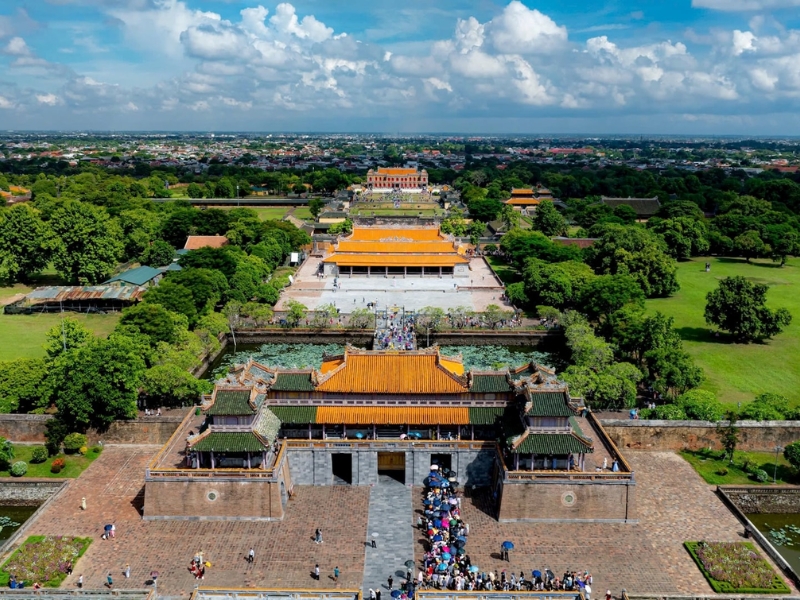
Well-preserved royal architecture in the heart of Hue (source: Kham pha Hue)
Access to the Imperial City Hue is granted through four main gates, with Ngo Mon Gate being the most magnificent and historically significant. The gate serves as the main entrance, reserved for the emperor and high-ranking officials during grand ceremonies. Other key gates include Hien Nhon Gate (East), Chuong Duc Gate (West), and Quang Duc Gate (North), each with its own symbolic meaning.
Read more: Discover the beauty of Hoa Lu Ancient Capital
Key landmarks inside the Imperial City Hue
Once inside, visitors can explore a series of impressive structures, each playing a vital role in the daily life and governance of the Nguyen emperors.
Ngo Mon gate - the majestic entrance of the Citadel
Ngo Mon Gate is the main southern entrance to the Imperial City and one of the most iconic structures in Hue. Built in 1833 under Emperor Minh Mang, this impressive two-story pavilion served as a ceremonial gateway exclusively for the emperor.
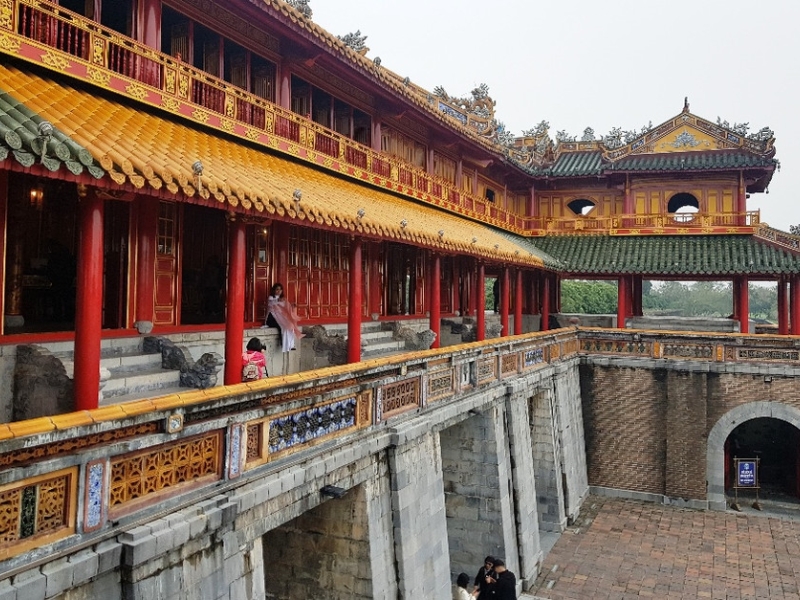
A closer look to Ngo Mon gate (source: Dai bieu nhan dan news)
The gate has five passageways: the central path was reserved for the emperor, the two flanking paths were for high-ranking officials, and the outermost paths were used by soldiers and servants. The upper pavilion, called Lau Ngu Phung (Pavilion of Five Phoenixes), was where the emperor appeared for royal proclamations and public addresses. Ngo Mon Gate is particularly stunning at sunset, with its golden roof and intricate woodwork creating a majestic silhouette.
Thai Hoa palace - the symbol of royal power
Thai Hoa Palace is the most important building within the Imperial City Hue, serving as the site for major royal ceremonies, state meetings, and receptions for foreign envoys. Built in 1805 during Emperor Gia Long’s reign and later renovated by Emperor Minh Mang, this palace showcases exquisite wooden architecture with massive lacquered columns carved with dragon motifs - symbols of imperial power.
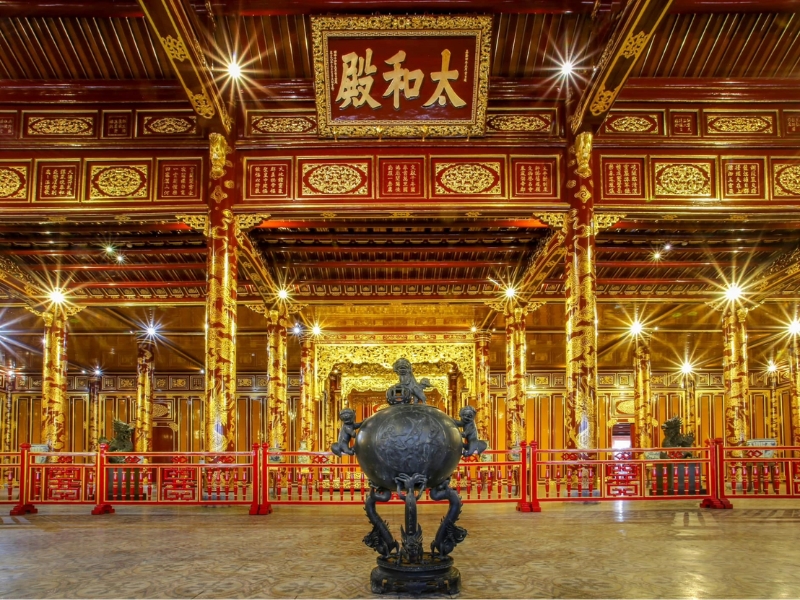
Inside Thai Hoa palace (source: Thanh nien news)
Inside, the grand throne of the Nguyen emperors remains preserved, surrounded by traditional decorations and banners bearing Confucian teachings. Visitors can admire the intricate detailing while imagining the grandeur of the imperial court that once gathered here.
The temple and Hung temple - the sacred temples of the Imperial family
The temple (The mieu) and Hung temple (Hung mieu) are ancestral temples dedicated to the Nguyen emperors and their predecessors, where annual rituals were performed to honor them.
The Mieu, built in 1821 by Emperor Minh Mang, houses the ancestral tablets of the Nguyen rulers, while Hung Mieu is dedicated to Emperor Gia Long’s parents - the founders of the dynasty. These temples showcase distinctive royal architecture, with incense-filled altars, ceremonial objects, and portraits of past emperors, reflecting Confucian values on filial piety and dynastic tradition.
Duyet Thi Duong – the royal theater
Duyet Thi Duong is the oldest surviving royal theater in Vietnam, built in 1826 under Emperor Minh Mang. This was where the emperors and the royal family enjoyed Nha Nhac (Vietnamese court music), which has been recognized as a UNESCO Intangible Cultural Heritage.
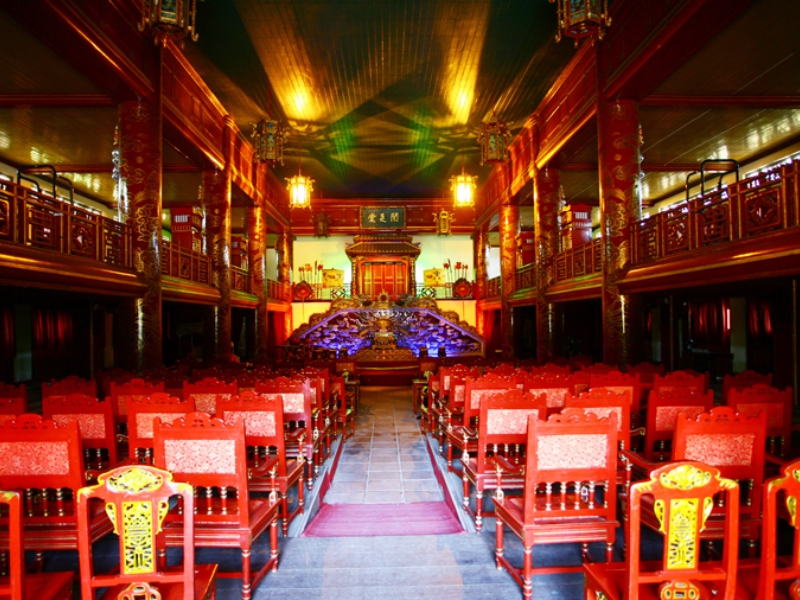
Duyet Thi Duong - the oldest surviving royal theater in Vietnam (source: Kham pha Hue)
The theater features a wooden stage, red lacquered pillars, and golden dragon motifs, embodying traditional Vietnamese aesthetics. Today, visitors can still enjoy live performances of royal dances, classical music, and theatrical plays, recreating the grandeur of imperial entertainment.
Each of these landmarks within Hue Imperial City holds immense historical and cultural significance, offering visitors a deeper understanding of the last feudal dynasty of Vietnam. From grand palaces and sacred temples to an exquisite royal theater, Hue Imperial City is not just a relic but a vivid representation of the nation’s past.
Exciting activities to experience at Hue Imperial City
Beyond its grand architecture and historical significance, Hue Imperial City offers a variety of immersive activities that help visitors experience the grandeur of Vietnam’s last royal dynasty in an unforgettable way.
Explore the Citadel by cyclo
The Imperial City of Hue is vast, with numerous important structures spread across its grounds. To explore every corner efficiently without exhausting yourself, a cyclo ride is an ideal choice. Seated in a traditional cyclo, visitors can relax and take in the ancient scenery while a local driver navigates through the majestic gates, palaces, pavilions, and tranquil lakes.
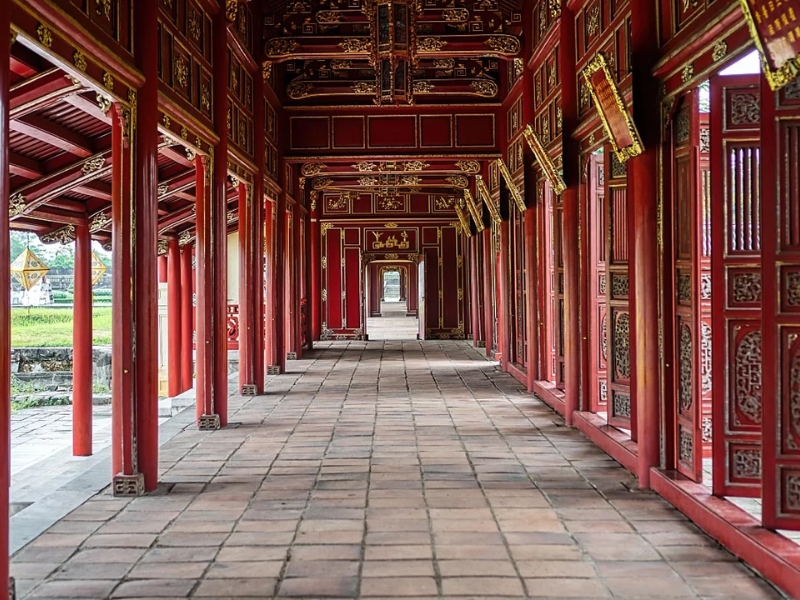
Cyclo is the perfect way to appreciate the Hue Imperial City’s beauty (source: Titan group)
A cyclo journey allows you to admire key landmarks such as Ky Dai (Flag Tower), Ngo Mon Gate, Thai Hoa Palace, The Mieu, and the Nine Dynastic Urns without the strain of walking long distances. Moreover, cyclo drivers - often well-versed in Hue’s history - can share fascinating stories about each site. Some tours even include visits to nearby attractions like Dong Ba Market or local street food experiences, offering a taste of Hue’s rich culinary heritage.
Choosing a cyclo ride not only provides a relaxing way to explore but also immerses you in Hue’s slow and contemplative rhythm. It’s the perfect way to appreciate the Imperial City’s beauty while ensuring no hidden corner goes unnoticed.
Watch traditional royal ceremonies
Several royal rituals are reenacted in the Hue Imperial City, allowing visitors to immerse themselves in the grandeur and solemnity of the Nguyen Dynasty’s court life. Some of the most notable events include:
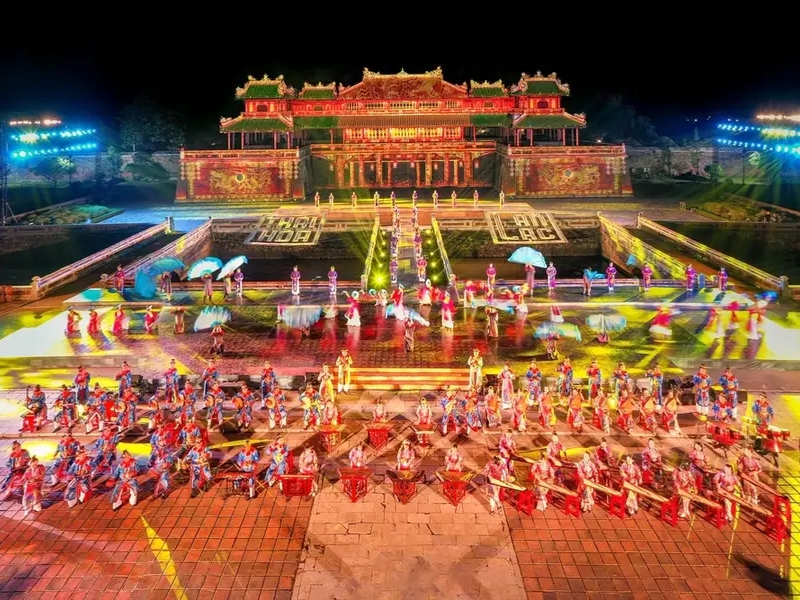
Vibrant ceremonies held at Hue Imperial City (source: Traveloka)
- Changing the guard at Ngo Mon gate: This ceremonial event replicates the ancient guard-changing ritual of the imperial army. Dressed in traditional military uniforms, the imperial guards perform a structured march and switch posts at designated times, offering visitors a glimpse into the disciplined life of palace soldiers.
- Royal music performances: Hue’s court music, recognized as an Intangible Cultural Heritage by UNESCO, was once performed during imperial festivities. Tieu Nhac (Small Music) was played at royal banquets and informal gatherings, while Dai Nhac (Grand Music) was reserved for important state ceremonies, reflecting the solemnity of the imperial court.
- Nam giao and Xa tac sacrificial rites: Though these ceremonies are not regularly held, they are occasionally reenacted to educate visitors about the Nguyen Dynasty’s rituals of offering prayers for national prosperity and agricultural abundance.
Enjoy royal tea at Dien Tho residence
Dien Tho Residence, once the living quarters of the Queen Mothers of the Nguyen Dynasty, now serves as an exquisite venue for enjoying royal tea. Nestled in a peaceful setting with lush gardens and tranquil ponds, this residence offers a serene retreat where visitors can savor traditional tea rituals.
Royal tea in Hue is more than just a beverage, it is an art form that embodies the refinement of the imperial court. Some of the most distinguished teas include:
- Lotus tea: Delicately infused with the natural fragrance of lotus flowers from Tinh Tam Lake, this tea exudes a gentle and refined flavor.
- Chrysanthemum tea: Known for its cooling properties, this tea is believed to have health benefits and is often enjoyed for relaxation.
- Five-flavored herbal tea: A blend of various medicinal herbs, this tea was favored by emperors for its restorative qualities.
Experience court music at Duyet Thi Duong royal theater
As Vietnam’s oldest surviving royal theater, Duyet Thi Duong was once an exclusive venue where emperors and the royal court enjoyed artistic performances. Today, this historic theater continues to showcase Nha Nhac – Vietnamese Court Music, a UNESCO-recognized Intangible Cultural Heritage.
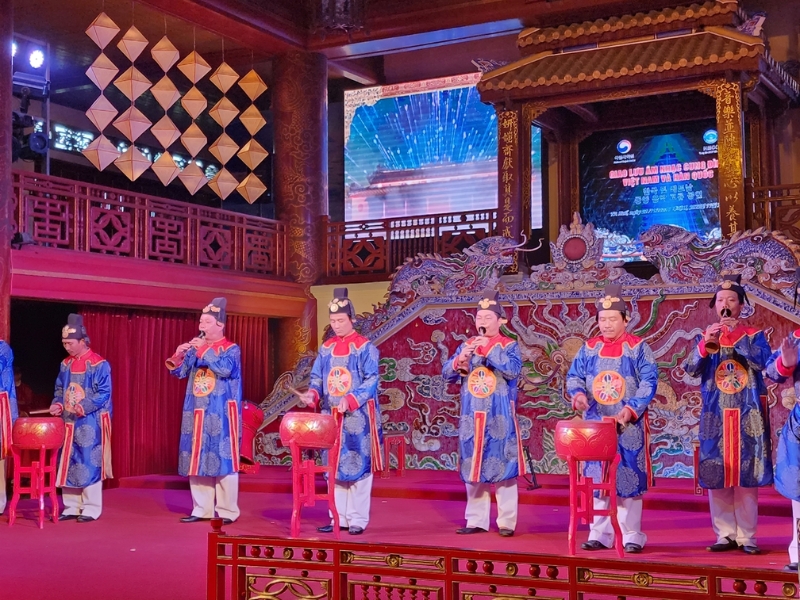
Live performances featuring traditional instruments is an integral part of imperial ceremonies (source: Thua Thien Hue news)
Visitors can witness live performances featuring traditional instruments, elaborate costumes, and graceful court dances. The refined melodies of Nha Nhac were carefully composed to convey reverence, solemnity, and grandeur, making them an integral part of imperial ceremonies. Attending a performance here provides a rare glimpse into Vietnam’s regal artistic traditions.
Discover deeper with virtual reality experience
To enhance visitors' understanding of the ancient capital, the Hue Imperial City now offers the "Finding the Lost Palace" virtual reality experience (from 35,000 VND to 300,000 VND depending on ticket type). This cutting-edge technology recreates the grandeur of the imperial palace as it stood in its heyday, allowing visitors to step back in time and witness its former splendor.
To enhance visitors' understanding of the ancient capital, the Hue Imperial City now offers the "Finding the Lost Palace" virtual reality experience (source: Tap chi Du Lich)
In addition to viewing detailed digital reconstructions, visitors can also participate in interactive activities, such as "Dau Ho", a traditional court game enjoyed by the Nguyen aristocracy (50,000 VND each person). This game, originating from China and introduced to Vietnam during the Nguyen Dynasty, involves throwing small sticks into a vase from a certain distance, requiring skill and precision.
This innovative fusion of history and technology provides a fresh and engaging way to explore Hue's imperial past.
Explore the Imperial City at night
By day, the Hue Imperial City exudes a majestic and solemn beauty, but at night, it transforms into an enchanting spectacle of illuminated palaces and shimmering walkways. The "Hue Imperial City by night" program offers visitors a completely different perspective on this historical site.
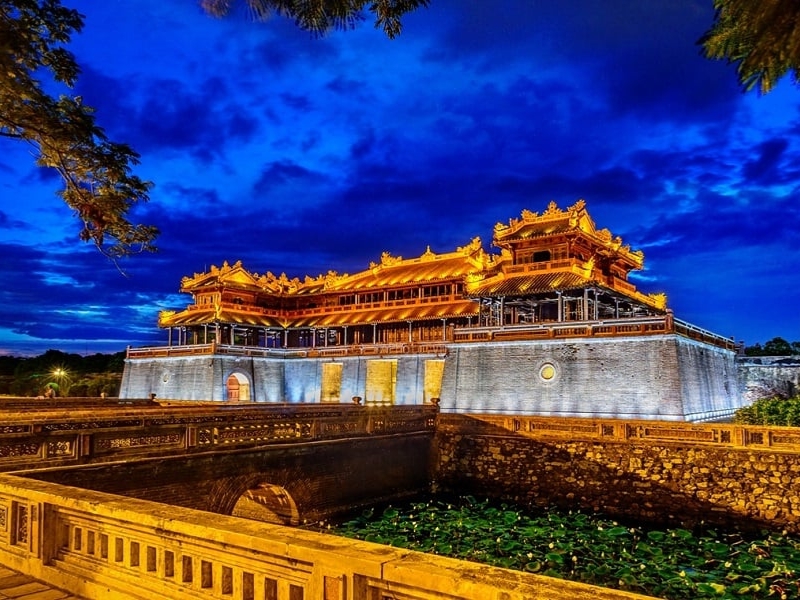
Enchanting Hue Imperial City at night (source: Vinwonders)
Evening tours feature unique activities such as:
- Martial arts demonstrations by Imperial guards: This performance showcases the training routines of the emperor’s elite guards, highlighting their discipline and strength.
- Traditional royal games: Visitors can engage in traditional games once played by princes, princesses, and court officials, experiencing a taste of aristocratic leisure from the past.
- Imperial art performances: Various royal dances and Hue’s court music are performed at Duyet Thi Duong Royal Theater, allowing visitors to immerse themselves in the artistic splendor of the Nguyen Dynasty.
FAQs about Hue Imperial City
To help you make the most of your trip, we've compiled a list of frequently asked questions that travelers often have. Whether you're wondering about dress codes, guided tours, or nearby attractions, you'll find everything you need right here!
- What is the best time to visit?
The ideal time to visit is early morning (8:00 – 10:00 AM) or late afternoon (3:30 – 5:30 PM) to avoid the midday heat and crowds. The best season is from March to May, when the weather is pleasant and dry.
- How much time should I spend exploring the Imperial City?
A complete visit takes around 2.5 – 3.5 hours if you explore all major landmarks, such as Ngo Mon Gate, Thai Hoa Palace, The Mieu, and Dien Tho Residence.
- Is there a dress code for visiting the Imperial City?
Yes. Since the Imperial City is a UNESCO heritage site and home to sacred temples, visitors should dress respectfully. Avoid wearing shorts, tank tops, or overly revealing outfits, especially when entering temples.
- What are the transportation options to get to Hue Imperial City?
- From Hue City Center: The Imperial City is about 2 km from downtown Hue. Visitors can take a taxi, motorbike, bicycle, or cyclo (three-wheeled rickshaw) for a convenient ride.
- From Phu Bai Airport (15 km away): Taxis and shuttle buses are available at the airport.
- Are guided tours available?
Yes, guided tours in English, French, and Vietnamese are available, either through on-site guides or pre-booked tours from travel agencies. Audio guides are also an option for self-guided exploration.
- Is there a night tour of the Imperial City?
Yes, Hue Imperial City by Night is a special event where the complex is illuminated with golden lights, featuring royal music performances, reenactments of imperial ceremonies, and interactive activities. The schedule varies, so check official announcements before planning your visit.
- Can I buy souvenirs inside the Imperial City?
Yes, there are several souvenir shops inside the complex selling traditional Hue crafts, such as conical hats, silk products, wooden carvings, and royal-inspired memorabilia.
- What else should I visit near the Imperial City?
Other must-visit attractions include:
- Thien Mu Pagoda – The iconic Buddhist temple of Hue
- Tombs of Nguyen Emperors (Tu Duc, Minh Mang, Khai Dinh) – Grand royal mausoleums
- Dong Ba Market – The largest traditional market in Hue
- Perfume River Boat Ride – A scenic cruise along Hue’s famous river
Read more: Khai Dinh Tomb in Hue – A Masterpiece of Nguyen Dynasty Architecture
Hue Imperial City is not just a historical relic, it is also a living testament to Vietnam’s glorious past, offering visitors a captivating journey through history, culture, and magnificent architecture. If you are looking for an unforgettable tour of the Imperial City, please contact Asia Pacific Travel, we provide detailed and personalized tours that are tailored just for you.
Related Posts
.png)
.png)
.png)