




Your ultimate guide to Sapa: How to go to Cat Cat Village
Cat Cat, one of Northwest Vietnam’s most picturesque ancient villages, beckons with its mesmerizing blend of breathtaking natural beauty and vibrant H’Mong culture. If you’re craving an unforgettable adventure amidst the awe-inspiring landscapes of Northern Vietnam, this charming village is the perfect destination. This comprehensive guide will tell you everything you need to know about how to go to Cat Cat Village, ensuring a memorable and seamless adventure.
A glimpse into the picturesque Cat Cat Village
Nestled in San Sa Ho Commune, Sapa Town, Lao Cai Province, Cat Cat Village rests at the base of the awe-inspiring Hoang Lien Son mountain range. Just 2 to 3 kilometers southwest of Sapa town’s bustling center, its close proximity makes it one of the most accessible and captivating villages for visitors seeking to immerse themselves in the region’s natural splendor and cultural charm
Situated in the high mountains of Northwest Vietnam, Cat Cat Village enjoys a cool, refreshing climate year-round, blending tropical and temperate vibes with pleasant temperatures. The village’s rice terraces change with each season, from shimmering waters in May-June to lush greens in July-August, and a golden glow during harvest in September - October. The serene Cat Cat Waterfall (Tien Sa) and tranquil streams like Suoi Vang and Suoi bac enhance the area’s peaceful atmosphere.
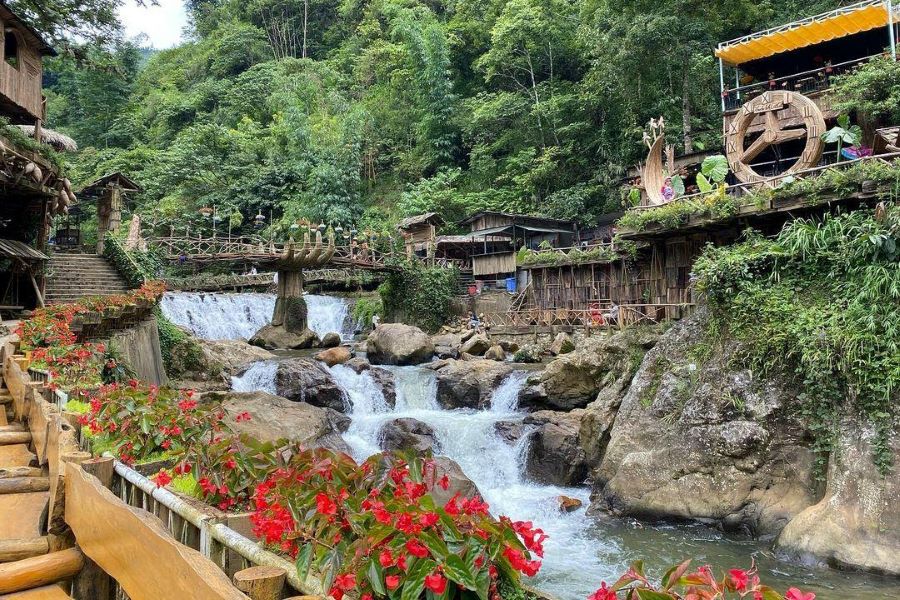
Cat Cat Village, home to the Black H’Mong since the 19th century, radiates rustic charm and rich cultural heritage. Traditional stilt houses with unique three-door architecture stand amidst lush rice paddies, where skilled H’Mong artisans weave linen, dye indigo, and craft intricate silver jewelry and embroidered brocade. Meanwhile, warm locals bring their vibrant traditions to life through music, dance, and the sound of giant bamboo water mills.
How to go to Cat Cat Village
How to get to Cat Cat Village from Sapa town is relatively easy due to its close proximity. You have several transportation options to choose from, depending on your preferences and fitness level.
Embarking on a scooter ride
Renting a motorbike is a popular and convenient way for independent travelers to reach Cat Cat Village. This option provides flexibility and allows you to explore the scenic routes at your own pace. You can easily rent a motorbike from numerous rental shops in Sapa town or through your accommodation, which typically ranges from 100,000 VND to 180,000 VND per day. Some shops may offer lower daily rates for longer rental periods.
 Renting a motorbike is a popular and convenient way to reach Cat Cat Village (Source: Sapa Nomad)
You can also rent a motorbike taxi (xe om) for a one-way or round trip. A one-way ride typically costs 20,000 VND to 50,000 VND, while a round trip is about 100,000 VND, offering flexibility and ease.
From Sapa town’s center, ride 2-3 km toward Fansipan mountain on a well-paved road, starting southwest on Xuan Vien Street, then passing through Cau May and Muong Hoa Streets. After 1.5 km, turn left onto Violet Street, then slightly left onto Fansipan Street near a traditional clothing shop. At Coffee View and Bar, turn left to reach Cat Cat Village’s first ticket gate, or take a longer, scenic route to the second gate. Park your motorbike at the designated area for about 5,000 VND.
Pedaling through scenic landscapes
Cycling is a delightful, eco-friendly option for active travelers to go to Cat Cat Village, with bikes rentable in Sapa town for 120,000-150,000 VND daily. The 2-3 km route, mirroring motorbike paths, features gentle slopes ideal for a scenic cycling adventure.
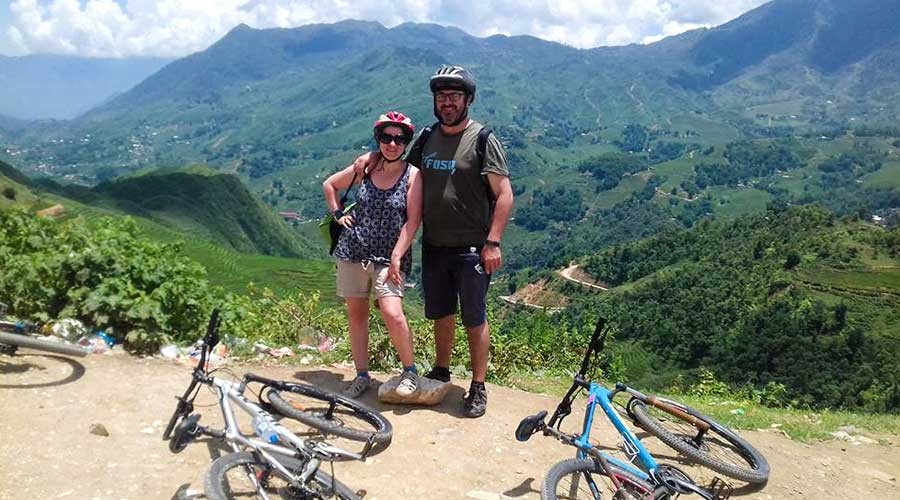
The 2-3 km route features gentle slopes ideal for a scenic cycling adventure (Source: Hanoi Explorer Travel)
Park at the village entrance and explore on foot, as cycling inside is restricted. This leisurely ride offers fresh mountain air, breathtaking views of hills and rice terraces, and a deeper connection to the landscape. Don’t forget to check your bike’s condition and ride cautiously on downhill stretches, especially in wet weather, for a safe, scenic journey.
Jumping on a taxi or a tram
Taking a taxi or tramcar to go to Cat Cat Village offers a comfortable, convenient travel option, perfect for groups, families with children, or elderly visitors. In Sapa town, taxis are plentiful at stands or can be booked via hotels or companies. A one-way taxi fare for a 4-seater to the village costs about 100,000-150,000 VND, with options to negotiate return trips or waiting time while tramcars offer a scenic, cozy ride. You can check with hotels or tour operators for availability and pricing.
Both options suit those avoiding self-driving, ensuring a hassle-free trip, especially in bad weather. However, the narrow road to the village may prevent direct access, especially on busy weekends, requiring a short 1 km walk from the drop-off point. Traffic jams during peak times can also occur, so plan accordingly for a smooth, enjoyable journey to Cat Cat Village’s stunning landscapes and cultural treasures.
Exploring on foot
Trekking to Cat Cat Village from Sapa town is a rewarding option for those who love walking and nature. The 2-3 km asphalt route, taking 30-40 minutes, leads to the village entrance, followed by a stone-paved path into the village. Along the way, you’ll enjoy breathtaking views of mountains, valleys, and terraced fields, surrounded by lush greenery perfect for photos. An observatory near the entrance provides stunning panoramic views of the village.

Trekking to Cat Cat Village is a rewarding option for those who love walking and nature (Source: Klook)
The walk to the entrance suits most fitness levels, but exploring the village involves steep steps and bridges, requiring moderate effort. The uphill return from the village to the ticket gate can be tiring after exploration. For convenience, motorbike taxis are available for 20,000 - 50,000 VND to the gate or Sapa town. This trek immerses you in breathtaking scenery and H’Mong culture, making it a memorable way to experience Cat Cat Village’s natural and cultural splendor.
Regardless of your chosen transportation, the trip to Cat Cat Village marks the start of an enchanting journey into the heart of Sapa’s stunning landscapes and rich cultural heritage.
Read more: Sapa – Cat Cat - Lao Chai – Ta Van – Fansipan - Silver Waterfall 3 days 3 nights
FAQ about how to go to Cat Cat Village
Here are some frequently asked questions to further assist you in planning your trip to Cat Cat Village.
How to get to Cat Cat Village from Hanoi?
If you set off from Hanoi to Cat Cat Village from Hanoi, you'll first need to get to Sapa. You can travel by train to Lao Cai (7-9 hours), then take a local bus or taxi for the remaining 40 km to Sapa. Buses offer a direct route from Hanoi to Sapa in 6-7 hours, making travel easier. For ultimate convenience, a private transfer takes about 4-5 hours straight from your hotel in Hanoi to Sapa. From Sapa, simply follow the route to Cat Cat Village.
How is accessibility from Fansipan to Cat Cat Village?
Since Fansipan Mountain is near Sapa town, the easiest way from Fansipan to Cat Cat Village is to first return to Sapa town using the cable car system. From Sapa town, choose your preferred transportation to Cat Cat Village, such as a taxi (100,000-150,000 VND), motorbike rental (100,000-180,000 VND/day), bicycle (120,000-150,000 VND/day), or a 2-3 km trek. Each option offers flexibility to enjoy the scenic 10–15 minute journey to the village’s entrance.
Read more: Journey to the Roof of Indochina: Trekking Tour to Fansipan Mountain
What is the entrance ticket price for Cat Cat Village?
As of March 2024, the entrance ticket prices for Cat Cat Village are as follows:
- Adults (1.3 meters or taller): 150,000 VND per person
- Children (between 1 meter and 1.3 meters tall): 100,000 VND per person, 70,000 VND per person (Note: There is a slight discrepancy in the ticket price for children between the sources. It's advisable to confirm the current price at the entrance).
- Children (under 1 meter tall): Free
When purchasing your ticket, don't forget to ask for a map of Cat Cat Village, as it can be very helpful in navigating the attractions.
What are some must-try dishes in Cat Cat Village?
While in Cat Cat Village, be sure to savor some of the local H’Mong cuisine, such as:
- Thang co is a signature dish of the Hmong people, traditionally made with horse meat, organs and seasoned with local herbs. Its rich, distinctive flavor makes it a must-try delicacy when exploring the cultural cuisine of northern Vietnam.
- Buffalo meat upstairs kitchen (Thit trau gac bep) is a specialty of Vietnam’s Northwest region, made by smoking buffalo meat over a wood fire. This dish boasts a rich, smoky flavor and chewy texture, often enjoyed as a snack or paired with local drinks.
- Black chicken (Ga den) is a native breed in northern Vietnam known for its dark skin and nutritious meat. Often used in herbal soups, it’s prized for its rich flavor and believed to offer various health benefits.
- Corn wine (Ruou ngo) is a traditional corn wine from Vietnam’s northern highlands, especially popular among ethnic minority communities. Distilled from fermented corn, it has a strong, smooth taste and is often shared during festivals, celebrations, or family gatherings.
- Bamboo tube-cooked rice (Com lam) is a traditional Vietnamese dish made by cooking sticky rice inside bamboo tubes over an open fire. Infused with a subtle bamboo aroma, it’s often served with grilled meats or salt and sesame, especially in mountainous regions.
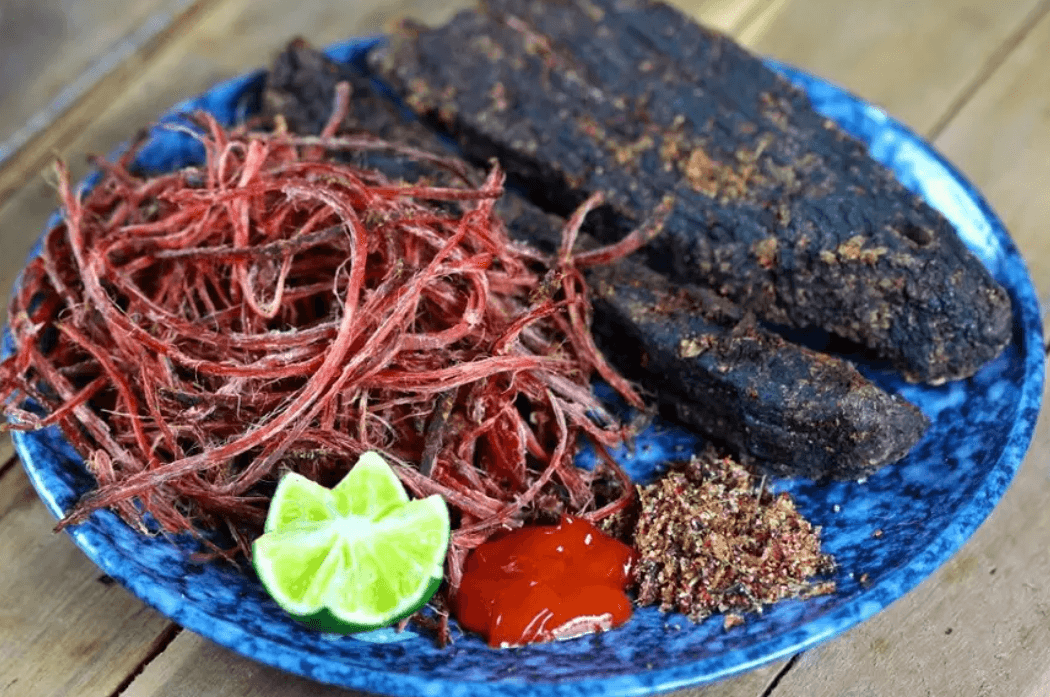
Thit trau gac bep boasts a rich, smoky flavor and chewy texture (Source: Traveloka)
You can find these dishes at local restaurants and food stalls within the village and at the Cat Cat Market (usually held on Saturdays and Sundays).
What is the best time to go to Cat Cat Village?
As mentioned earlier, autumn (September to November) and spring (March to May) are often considered the best time to visit Cat Cat Village.
- Autumn offers pleasant weather, clear skies, and stunning views of the golden rice terraces.
- Spring enchants visitors with mild temperatures and vibrant blooming flowers, making the village come alive with color and charm.
However, Cat Cat Village has its own unique charm in every season. If you enjoy the cold and the possibility of seeing snow, winter can also be an interesting time to visit.
Read more: Nhà thờ Sapa
Where can I rent traditional costumes in Cat Cat Village?
If you want to immerse yourself in the local culture and take some memorable photos, you can easily rent traditional H’Mong costumes at various shops located near the entrance of Cat Cat Village. Prices range from 50,000 to 150,000 VND per set, varying by style.
Shops offer diverse costume types, plus accessories like hats, scarves, and jewelry to complete your look, with some providing designated photo spots for stunning pictures. Wearing these vibrant outfits is a fun, respectful way to engage with local traditions and capture unforgettable memories of your visit to Cat Cat Village.
Read more: Top 12 things to do in Cat Cat Village: A captivating escape in Sapa
If you’re unsure how to plan your Lao Cai itinerary in Vietnam, let Asia Pacific Travel take care of it for you! We specialize in crafting personalized tours and unforgettable experiences. Ready to start your journey? Call our hotline at +84 904488850 for custom recommendations or to book your dream trip!
By planning your transportation and understanding the key aspects of Cat Cat Village, you are well on your way to experiencing the authentic rural life and breathtaking beauty of this remarkable destination in Sapa. We hope this guide on how to go to Cat Cat Village helps you embark on an unforgettable adventure!
Related Posts

.png)

.jpg)