


Cat Cat Village traditional clothes: A in-depth look into cultural uniqueness
Tucked in Sapa’s highlands, Cat Cat Village blends stunning scenery with H'mong heritage, showcasing centuries-old traditions, crafts, and the heartbeat of mountain life. Among the most captivating aspects of this heritage are the traditional clothes worn by the villagers, which are not merely garments but vibrant expressions of identity, history, and artistic skill. This article offers an in-depth look into the rich and captivating world of Cat Cat Village traditional clothes, enhancing your cultural exploration of the region.
What sets Cat Cat Village traditional clothes unique?
The traditional attire of the H'mong people in Cat Cat Village stands out for its distinctive origins, profound cultural significance, and unique design elements. Crafted by hand with intricate embroidery and natural dyes, each garment reflects centuries-old traditions passed down through generations. Far from mass-produced fashion, these clothes are unique masterpieces that showcase the H’mong’s remarkable craftsmanship.
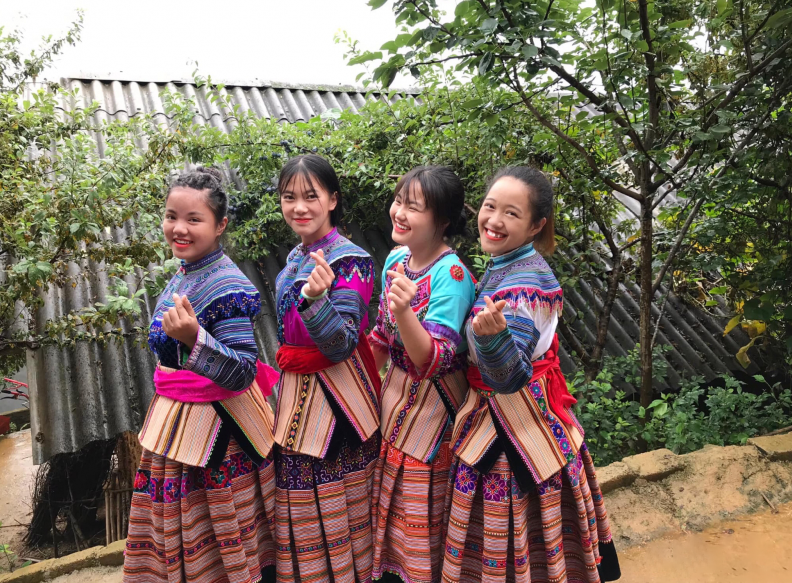
Cat Cat Village traditional clothes are showcase the H’mong’s remarkable craftsmanship (Source: RJ Macalinao)
One of the most striking features of H'mong traditional clothes is the vibrant color palette, predominantly featuring green, red, white, and yellow. These hues are not arbitrarily chosen but often hold symbolic meaning and contribute to the overall visual appeal of the garments. Alongside the colors, the distinctive and artistic patterns woven into the fabric are instantly recognizable. These patterns, often geometric or inspired by nature, each carrying its own history and significance.
The very materials used in crafting these clothes speak to the resourcefulness and connection to nature of the H'mong people. Traditionally, the H'mong people use hemp, cotton, and linen gathered from nearby forests, while silk from locally bred silkworms adds exquisite embroidery to their traditional garments. Adding another layer of distinctiveness is the natural dyeing technique: turmeric for yellow, indigo leaves for blue, and other local plants for earthy tones.
Furthermore, Cat Cat Village traditional clothes often include exquisite silver and bronze jewelry. This jewelry, crafted with intricate detail using traditional techniques, complements the fabric and adds to the overall richness and cultural significance of the ensemble. The process of melting, shaping, engraving, and polishing these metals has been a long-standing tradition within the community.
Cat Cat Village traditional clothes: Who wears it now?
While the modern world brings changes to every society, the traditional clothes of the H'mong people continue to play a significant role in the daily lives and cultural expressions of the Cat Cat Village community. You can still observe H'mong people in Cat Cat Village wearing their traditional attire as part of their everyday lives. While perhaps not everyone wears the full traditional outfit daily, elements of it, such as intricately woven skirts, embroidered blouses, or traditional headscarves, can often be seen on local women, mothers, and young girls.
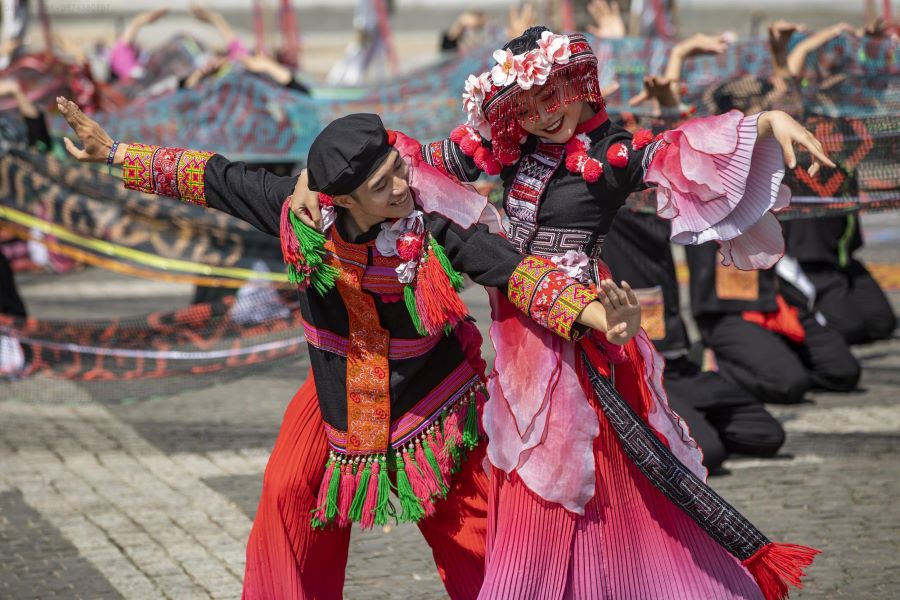
Cat Cat Village traditional clothes are particularly prevalent during local festivals (Source: Vietnamtour.in)
Cat Cat Village traditional clothes are particularly prevalent during local festivals and special occasions. Among them, Nao Pe Chau (a spiritual ceremony to pray for peace, good weather, healthy livestock, and unity among villagers) or Gau Tenh Festival (also called the “Love Market” festival) are the most prominent. These vibrant gatherings provide an opportunity for the community to showcase their cultural heritage, and wearing traditional attire is an integral part of these celebrations. The colorful processions, dances, and rituals are often made even more visually stunning by the sight of people adorned in their finest traditional garments.
Beyond their use by the local community, Cat Cat Village traditional clothes have also become a significant part of the cultural experience for tourists. Recognizing the beauty and cultural value of these garments, many villagers offer rental services of traditional H'mong clothing to visitors. This allows tourists to immerse themselves in the local culture, take memorable photographs, and gain a deeper appreciation for the artistry and heritage of the H'mong people.
In recent years, there have even been special programs introduced in the Lao Cai region, such as the "Cat Cat Mong Cultural Festival" and experiential programs like "A day as a mong bride," which further encourage the wearing and showcasing of traditional clothing. These initiatives aim to promote cultural tourism and provide authentic experiences for visitors while supporting the preservation of local traditions.
Read more: Your ultimate guide to Sapa: How to go to Cat Cat Village
How are Cat Cat traditional clothes made?
The creation of Cat Cat Village traditional clothes is a labor of love, involving a series of intricate and time-honored techniques passed down through generations. In traditional H’Mong culture, especially in places like Cat Cat Village, women are the primary artisans responsible for making traditional garments. It can take 3 to 6 months for them to complete a full outfit, depending on the complexity of the patterns and materials used.

The creation of Cat Cat Village traditional clothes involves a series of intricate and time-honored techniques (Source: Vietnam Trust Car Rental)
Crafting Cat Cat Village traditional clothes is a meticulous process. It begins with growing and processing hemp into fabric, followed by dyeing it repeatedly with natural indigo for a deep blue hue. Using beeswax and bamboo pens, they apply intricate batik patterns, then hand-embroider colorful motifs passed down through generations. The final outfit is adorned with beads, coins, and silver accessories, each stitch reflecting cultural pride, patience, and the soul of the H’Mông people.
Within Cat Cat Village, visitors can often witness these crafting processes firsthand. There are traditional craft village areas with hand-embroidery sections and craft exhibitions where artisans demonstrate their skills. In local homes, it's common to see ethnic mothers sitting by the loom, skillfully weaving colorful fabrics. You might even see colorful pieces of brocade being stitched on the porches of villagers' homes. These direct interactions provide a valuable insight into the dedication and expertise involved in creating Cat Cat traditional clothes.
Read more: Read more: Sapa – Cat Cat - Lao Chai – Ta Van – Fansipan - Silver Waterfall 3 days 3 nights
The hidden meanings behind Cat Cat Village traditional clothes
The vibrant colors used in H'mong clothing likely carry symbolic weight. For instance, the prominent use of green might represent the lush natural environment of the Sapa region, including the rice fields and mountains. Red could symbolize vitality, energy, or important life events. White often signifies purity and new beginnings, while yellow might be associated with prosperity or the golden harvest.
Beyond shades, the intricate patterns woven and embroidered into the fabrics are undoubtedly rich in symbolism. These patterns, often geometric or inspired by the natural world, are not merely decorative but likely represent ancestral stories, beliefs, or aspects of their cultural identity. The silver and bronze jewelry also likely holds symbolic significance, perhaps representing status, wealth, or protection. The intricate designs and the materials themselves may have deeper cultural meanings that are specific to H'mong customs.
It's also important to consider that the clothing serves as a powerful marker of ethnic identity. By wearing their traditional attire, the H'mong people in Cat Cat Village visually distinguish themselves and maintain their unique cultural heritage in the face of external influences.
Experiencing traditional clothing in Cat Cat Village
For visitors eager to immerse themselves in the vibrant culture of Cat Cat Village, experiencing and even wearing the traditional clothes of the H'mong people is a highly recommended and readily available activity.
One of the most popular ways for tourists to engage with this aspect of the culture is through the rental services offered throughout Cat Cat Village. As you stroll through the village, you will find numerous places, often small stalls or even the porches of local homes, where you can rent beautiful traditional ethnic costumes. The variety of clothing available is quite extensive, allowing you to freely choose outfits that appeal to you. You'll find attire for both men and women, often featuring the characteristic vibrant colors and intricate embroidery of the H'mong people.
.png?1745308961891)
Numerous places to rent beautiful traditional ethnic costumes (Source: Alamy)
The rental fees for these costumes are generally quite affordable, ranging from approximately 30,000 to 100,000 VND per set. This makes it an accessible and enjoyable way to enhance your visit. Before renting, it is advisable to carefully check the clothing for any damage. If you notice any tears or imperfections, it's essential to report them to the rental provider immediately to avoid any potential disputes when you return the costumes.
Once you have rented your traditional outfit, you are encouraged to take souvenir photos in the picturesque surroundings of Cat Cat Village. Popular photo spots include the bamboo groves, amidst the golden mustard flowers (in summer), alongside the terraced rice fields, and near the charming wooden houses and meandering streams. Many enjoy posing with local ethnic children in traditional attire, whose innocent smiles add charm to the photos. Wearing the outfit enhances your connection to the landscape and culture, making the experience more immersive and the memories more vivid.
Read more: Top 12 things to do in Cat Cat Village: A captivating escape in Sapa
In case you’re struggling for the perfect Lao Cai adventure in Vietnam, let Asia Pacific Travel handle it for you! We create personalized tours packed with unforgettable experiences tailored just for you. Ready to explore hidden gems and local highlights? Call our hotline at +84 904 488 850 for expert advice or to start booking your dream Lao Cai adventure today!
Experiencing the Cat Cat Village traditional clothes is an accessible, affordable, and enriching activity for visitors. It offers a fun and memorable way to connect with the local culture, capture stunning photographs, and support the preservation of H'mong heritage. So, don't hesitate to embrace this colorful opportunity and immerse yourself in the vibrant threads of Cat Cat Village.
Related Posts


.jpg)