


Discover Dong Van VietNam: Stone plateau & Highland charm
Nestled in the northernmost reaches of Vietnam, Dong Van is a dream destination for travelers seeking wild mountain landscapes and rich ethnic traditions. Renowned for its UNESCO-recognized karst plateau, this highland town also captivates visitors with its ancient quarters, traditional markets, and distinctive cuisine. A trip to Dong Van is more than just a scenic getaway, it's a step into a timeless world where nature and culture intertwine.
Getting to know Dong Van
Dong Van Ha Giang is a hidden gem located in the far north of Vietnam, surrounded by towering limestone mountains and misty clouds. It’s part of Ha Giang Province and sits right on the border with China. This peaceful area is a perfect destination for anyone looking for natural beauty, adventure, and a taste of traditional highland culture. It feels like stepping into another world, where time moves slowly and nature remains wild and untouched.
Dong Van is part of the Dong Van Karst Plateau Geopark, which is recognized by UNESCO for its stunning natural beauty and rich history. The landscape here is truly unique, with jagged rocks, deep valleys, and small villages scattered across the mountainside. It’s the kind of place that leaves you in awe of the power of nature and the simplicity of life.
.png?1748763794542)
Majestic limestone mountains rising through the clouds (source: PYS travel)
The weather in Dong Van is cool and refreshing year-round. In the winter, it can get quite cold, with fog and occasional frost on the mountains. The summer is much milder, offering a welcome break from the heat in other parts of Vietnam. Autumn is a particularly great time to visit when the weather is dry and comfortable, and the fields are covered in beautiful buckwheat flowers that bloom in shades of pink and purple.
To get to Dong Van, you first need to reach Ha Giang City, which you can do by taking a bus from Hanoi. The journey takes about 6-7 hours. From Ha Giang, it’s another 5-6 hours to Dong Van by car or motorbike. Along the way, you’ll pass through stunning landscapes, including the famous Quan Ba twin mountains and the flower-filled valley of Sung La, making the trip itself a scenic adventure.
The best time to visit Dong Van depends on what you want to see. In March, the peach and plum trees bloom, painting the area with soft pink and white colors. If you visit in late April, you can experience the unique Khau Vai Love Market, a special event where people gather to meet old lovers and celebrate their ties. October and November are perfect for those who love flowers, as the buckwheat fields bloom in full force. Even in winter, when the air is cold, the snow and mist create an unforgettable, magical atmosphere.
Where to Visit in Dong Van?
Let’s dive into the must-see spots that make this northern gem truly unforgettable. From ancient villages to stunning natural wonders, here are the top places to visit in Dong Van that will leave you in awe.
Dong Van Stone Plateau
The Dong Van Stone Plateau, part of the UNESCO Global Geopark, is one of the most remarkable landscapes in Vietnam. This vast expanse of rocky terrain stretches across four districts in Ha Giang: Dong Van, Meo Vac, Yen Minh, and Quan Ba. It offers a truly unique experience for visitors, with rugged limestone mountains, deep valleys, and lush green fields, creating a surreal and breathtaking scene that feels like stepping into another world.
.png?1748763814175)
Dong Van Stone Plateau – Majestic and serene amidst the vast mountain winds (source: Ha Giang news)
The stone plateau is home to many ethnic groups, including the H'mong, Tay, and Lo Lo people, who have lived here for centuries. Their culture and traditional architecture blend harmoniously with the natural surroundings, making it an ideal place for cultural exploration. As you travel through this area, you’ll come across villages nestled between the mountains, where local people still follow ancient practices passed down through generations.
One of the most stunning features of the plateau is the contrast between the barren, rocky landscapes and the fertile valleys that are dotted with vibrant buckwheat flowers in the fall. In autumn, the entire region is covered in a sea of pink and purple flowers, attracting travelers from all over to witness this natural wonder. The weather in this area is also part of its charm, with cool temperatures year-round, making it an ideal destination for those seeking peace and adventure in the highlands.
Nho Que river & Tu San Gorge
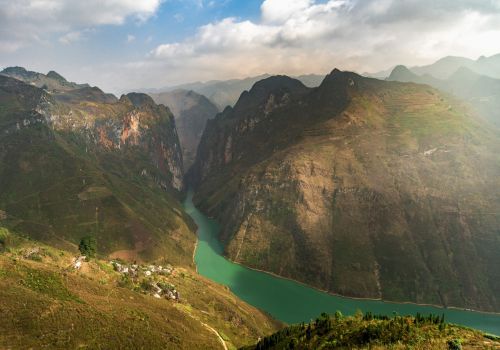
Nestled deep in the rugged mountains of Ha Giang, the Nho Que River winds its way through one of the most dramatic landscapes in northern Vietnam. This hidden gem, resting beneath the legendary Ma Pi Leng Pass, charms travelers with its emerald waters and the surreal beauty of towering limestone cliffs. Unlike any ordinary river, Nho Que offers a journey into untouched nature, where the wild meets the tranquil, and where visitors can find both adventure and peace.
.png?1748763831001)
Nho Que river (source: Vietmap travel)
The Nho Que river is not only famous for its clear waters and magnificent scenery but is also closely linked to the Tu San gorge, a unique natural wonder. With impressive depth and height, the Tu San gorge offers visitors a breathtaking view when looking from above, with the emerald Nho Que river winding beneath the steep cliffs. Travelers can join boat tours on the river to admire the entire gorge and experience the mystique of this land. This is one of the must-visit destinations for those who love exploring wild nature and seeking new adventures. The perfect combination of the river's beauty and the canyon’s grandeur creates an extraordinary scene that captivates the soul.
Lung Cu flag tower
Lung Cu flag tower, marking the sacred northernmost point of Vietnam, is a must-visit destination when traveling to Ha Giang. Located on the summit of Rong (Dragon) Mountain in Lung Cu Commune, Dong Van District, the towering flagpole stands proudly against the sky as a symbol of national pride and the enduring spirit of the Vietnamese people on the borderland.
To reach the tower, visitors must climb nearly 300 stone steps before standing beneath the red flag with a golden star fluttering high in the wind. From this vantage point, you can take in the breathtaking panorama of the Dong Van Karst Plateau, see H’mong villages scattered across the mountains, and gaze into the winding border between Vietnam and China stretching in the distance. Setting foot here — at what is often referred to as "the place where the first stroke of Vietnam’s S-shaped map begins" — stirs deep emotion and patriotism.
Read more: Lung Cu Flag Tower: A symbolic landmark of national pride
The H'mong King's Mansion
Located in the rugged mountains of Sa Phin, the H’mong King’s Mansion (Vuong Family Palace) is a unique historical site tied to Vuong Chinh Duc – a powerful H’mong leader once called the “King of the H’mong” in the early 20th century. Built on a turtle-shaped hill surrounded by pine trees, the mansion sits in a location chosen for its ideal feng shui. Its architecture blends Chinese-style yin-yang tiled roofs, French construction techniques, and the rustic beauty of traditional H’mong homes.
Today, the mansion is a popular stop for travelers exploring Dong Van. With more than 60 wooden rooms and a quiet, timeworn atmosphere, it offers a chance to step back in time. The space reflects not only history but also the deep cultural identity of the H’mong people. It’s an ideal destination for those seeking to understand the heritage of the Ha Giang highlands.
Sung La buckwheat flower field
The buckwheat flower season in Ha Giang usually begins in October and lasts until December. During this time, the flowers bloom in full force across the rocky plateau, from the slopes to the steep "cat ear" valleys. The color of the flowers gradually changes from white to light pink, deep pink, and finally to purple-red, creating a stunning landscape that attracts visitors to admire the untouched beauty of nature here.
.png?1748763848629)
Sung La buckwheat flower field (source: Thi truong Tai Chinh - Kinh te do thi)
To see the flowers, you should visit the Sung La buckwheat flower field, where the vibrant pink and purple flowers blanket the hillsides and the H'mong villages. During the blooming season, the fields become an ideal destination for those who love pristine nature and want to learn more about the lifestyle of the local ethnic people. The buckwheat flower season not only offers a breathtaking sight but also brings a peaceful atmosphere, allowing visitors to immerse themselves in the fresh, serene air of the highland mountains.
House of Pao
For movie enthusiasts, the House of Pao is a must-visit when traveling to Dong Van, Ha Giang. This place is not only a famous tourist destination but also the setting of the well-known movie "The Story of Pao", a film that left a strong impression with its story about the life of the H'mong people. The House of Pao is nestled in a beautiful valley, surrounded by lush fields and majestic mountains, creating a peaceful atmosphere that blends harmoniously with nature.
This house is a typical architectural example of the H'mong people, with wooden walls, yin-yang tiled roofs, and traditional furnishings carefully preserved. Stepping inside, visitors can feel the warm, simple yet profound atmosphere of the local community’s lifestyle. Visiting the House of Pao, you not only get to admire the beauty of the house but also gain a deeper understanding of the culture and customs of the H'mong people, while imagining the life of the characters from the movie.
Dong Van ancient street
Dong Van ancient street is like an ancient painting sketched by time. The houses are built with earthen walls, topped with yin-yang tiled roofs now covered in moss, while the winding stone-paved alleys add to the nostalgic atmosphere. At dawn, the street gently awakens under a thin veil of mist, creating a peaceful and poetic scene that is hard to find elsewhere.
.png?1748763867668)
Dong Van Old Quarter (source: Vietgoing)
But Dong Van ancient street is not only beautiful because of its architecture. Every weekend, it becomes a cultural convergence of ethnic groups such as the H’mong, Tay, and Hoa. Vibrant brocade costumes, the sound of traditional H’mong flutes, and steaming bowls of "thang co" (a traditional highland dish) fill the air with life and flavor. As night falls, the soft glow of red lanterns beneath ancient rooftops turns the old town into a romantic, captivating destination - one that you simply cannot miss when visiting Ha Giang.
Tham Ma Pass
Tham Ma Pass is one of the most impressive mountain roads located on National Route 4C, along the journey from Yen Minh to Dong Van town. The pass stands out with its sharp bends winding through the rocky mountains, surrounded by the majestic landscape of the stone plateau. It is not only a challenge for drivers but also a place that leaves visitors in awe with its vast, endless natural scenery of Ha Giang’s highlands.
Not only is it a vital transportation route, but Tham Ma Pass has also become a popular check-in spot loved by many travelers. During the buckwheat flower season or early mornings when mist blankets the mountains, the pass transforms into a poetic, scenic spot. Standing on the pass, with a wide view stretching out, visitors can easily appreciate the fierce yet gentle beauty of the Dong Van nature – a must-see destination on any journey exploring Ha Giang.
Don Cao Fort
Situated on a high mountain peak, Don Cao Fort is not only a prominent historical site but also a perfect viewpoint for those wishing to admire the panoramic view of Dong Van Old Town from above. Built in the early 20th century, it once served as an important defensive post during the border wars and has since become one of the most popular tourist destinations in Ha Giang. From here, you can see the ancient rooftops, winding roads, and the rolling mountain ranges, creating a breathtaking natural landscape.
The scenery at Don Cao Fort changes with each time of day, especially in the early morning when a thin mist envelops the mountain peaks, creating a mysterious and poetic atmosphere. From this vantage point, you can truly appreciate the beauty of the Dong Van Stone Plateau, where people and nature blend in serene tranquility.
Khau Vai Love Market
Khau Vai Love Market is a unique event held only once a year, on the 27th day of the third lunar month. It provides a special opportunity for lovers who have been separated due to circumstances, family, or other reasons to meet again, chat, and reminisce about their past relationships. Although it only happens once a year, the market attracts numerous local people and tourists, creating a romantic and emotional atmosphere.
.png?1748763885514)
Khau Vai Love Market (source: Wiki)
Not only is it a chance for couples to reconnect, but the Khau Vai Love Market also serves as a cultural exchange hub for the H'mong, Tay, Hoa, and other ethnic groups. The colorful traditional clothing, the sounds of the Mong’s flutes, drums, and instruments fill the air, adding to the mystical and vibrant atmosphere of the market. The Love Market is not only a place for local people to reunite but also a fascinating, emotional experience that visitors should not miss when traveling to Ha Giang.
Read more: Dong Van Market: The lively heartbeat of Vietnam’s Northern highlands
What to eat in Dong Van? Must-try local specialties
When visiting Dong Van, in addition to exploring the pristine beauty of the rocky highlands, travelers cannot miss the unique local dishes that are rich in the flavors of the highlands. Below are the must-try dishes when you set foot in Dong Van, each offering a delightful and unforgettable culinary experience.
Thang Co
Thang Co is a traditional dish of the H'Mong people, made from horse meat and offal, cooked with wild herbs to create a rich and unique flavor. This dish is not just a meal but an essential part of local festivals and gatherings, especially during highland market days. The combination of spices and herbs gives Thang Co its distinctive taste, allowing you to experience the wild essence of the mountains.
Au Tau porridge
.png?1748763901641)
Au Tau porridge (source: Peace tour)
Au Tau porridge is a nourishing dish with a distinct bitter taste, unique to Ha Giang. Made from Au Tau tubers, it has medicinal properties that are believed to help maintain good health, especially in the cold mountain weather. However, the tubers need to be carefully prepared to remove any toxins, and it's typically made by the locals, who are skilled in its preparation. This dish offers visitors a chance to try something truly unique to the region.
Grilled buckwheat cake
Grilled buckwheat cake is made from buckwheat flour, known for its chewy texture and fragrant aroma. This cake is typically made during the buckwheat flower season, when the fields are covered in beautiful flowers. Besides the cake, locals also use buckwheat to make wine and other dishes, giving visitors a diverse culinary experience that represents the season of flowers in Ha Giang.
Smoked beef
Smoked beef is a famous specialty of the rocky highlands, made from beef marinated with spices and smoked for a long period to preserve it. This dish is deeply connected to the daily life of the H'Mong people, who need to store food during the harsh winter months. The unique smoky aroma and the tender, chewy texture of the beef make it a must-try dish when visiting Ha Giang.
Ha Giang sour pho
.png?1748763916589)
Ha Giang sour pho (source: Suc khoe và Doi song news)
Ha Giang sour pho is an innovative twist on the traditional pho, featuring a sour and sweet broth with char siu pork. This dish is not only known for its distinctive broth but also for being served with fresh vegetables and seasonings, creating a refreshing and unique flavor. Often enjoyed in the early mornings, it’s a perfect start to a day in the highlands, offering both nutrition and a taste of the local culinary culture.
Men Men
Men men is a traditional dish made from ground corn, steamed into small pieces, and often served with meat, vegetables, or soup. This dish is a staple food for the H'Mong people and is closely linked to the culture and daily life of the region. Made from corn grown by locals, Men Men is a vital part of the food culture in the highlands, symbolizing the strong connection between the people and the land.
Corn wine
Corn wine has a delicate fragrance and smooth, strong taste that is typical of the H'Mong people. Made during the corn harvest season, this wine is an essential part of local celebrations and gatherings. Sharing a cup of corn wine with friends creates a warm, intimate atmosphere, offering visitors a taste of local hospitality and traditions.
Rolled cake with bone broth
Rolled cake with bone broth is a unique dish in Dong Van, served with a clear, sweet bone broth. This dish is typically sold in the early mornings when the ancient streets of the town are still shrouded in mist. The hot rolled cake paired with the sweet bone broth offers a comforting and delicious breakfast, enjoyed by both locals and visitors alike for its simplicity and tasty flavor.
From winding mountain passes and misty mornings in the old town to warm bowls of local delicacies, this land at the edge of the map offers a truly immersive experience. Come to Dong Van to discover a world both rustic and poetic with Asia Pacific Travel now!
Related Posts
.jpg)

.png)