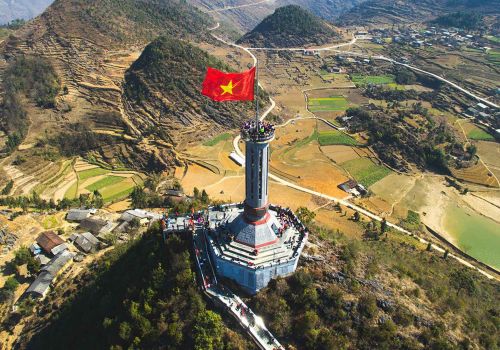


Meo Vac: A comprehensive travel guide to the poetic land of Ha Giang
Welcome to Meo Vac, one of the most captivating destinations in Ha Giang, Vietnam. Known for its majestic natural landscapes, unique ethnic minority cultures, and stunning scenery, this place promises an unforgettable adventure for those seeking authentic experiences in Vietnam's northern mountains. This guide will walk you through the must-see highlights of this "poetic" town, offering valuable insights to help you plan your perfect trip to Meo Vac Ha Giang.
Meo Vac Ha Giang: A journey into natural beauty and culture
Meo Vac, a district located in the northern part of Ha Giang province, Vietnam, stands out as one of the most attractive places to visit this region. It is a mountainous district with dramatic limestone peaks rising 1,500 to 2,000 meters above sea level, featuring rugged terrain, deep valleys, winding rivers, and the stunning Nho Que River, one of the region's main highlights. Spanning around 580 km², this region is home to around 82,000 - 86,000 people, with over 80% being H’Mong, whose rich cultural heritage beautifully complements the area’s wild natural beauty.
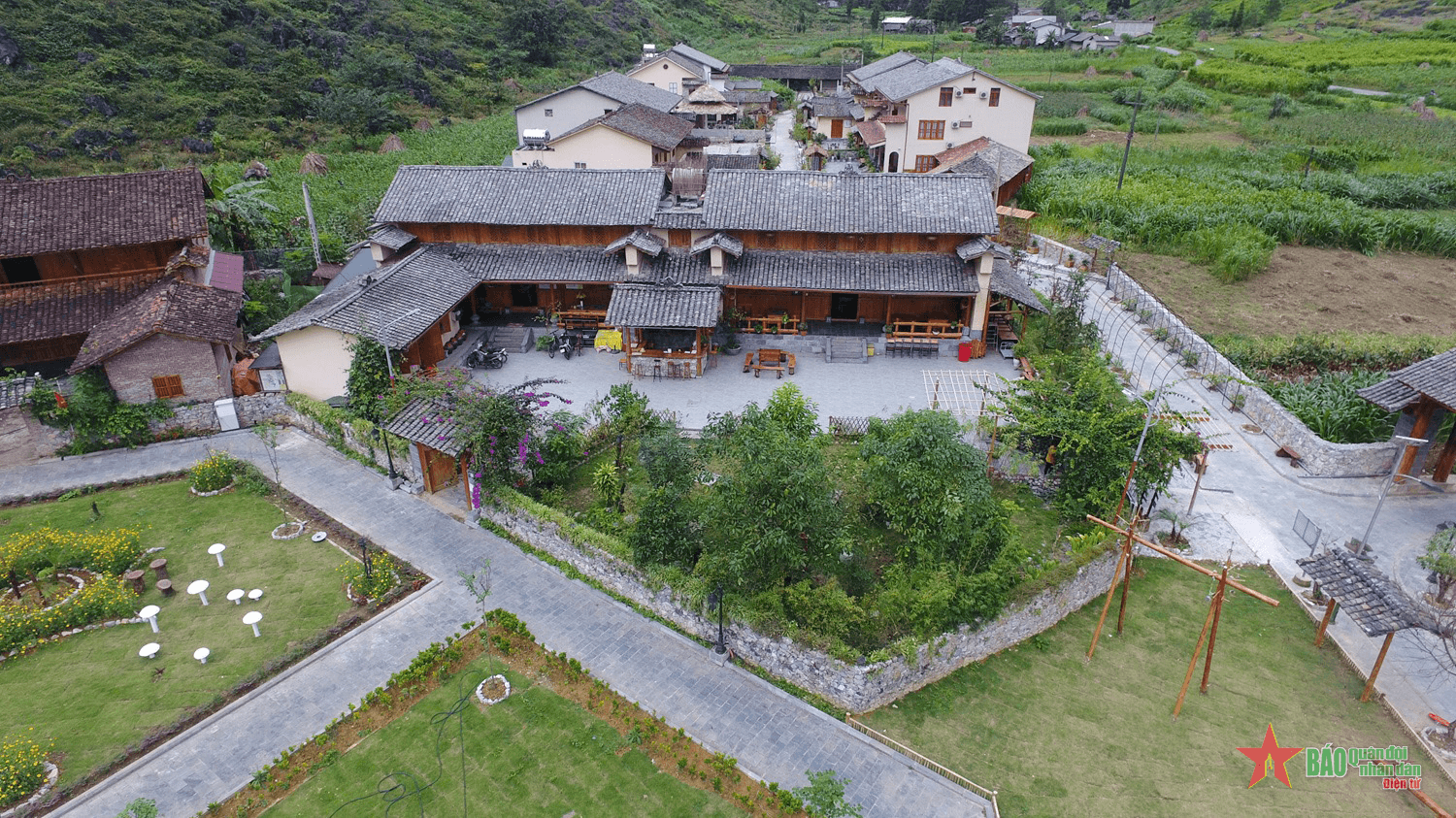
Rich cultural heritage beautifully complements the area’s wild natural beauty (Source: Vietravel)
This land is described as a small and once poor town, but its simplicity and rustic charm make it an ideal destination within the Dong Van Stone Plateau Geopark journey. It offers a perfect stop for those seeking authentic experiences, from vibrant traditional festivals to stunning natural landscapes. The local economy thrives on agriculture, livestock, and tourism. A visit to Meo Vac Ha Giang offers travelers the chance to immerse themselves in the untouched beauty of the mountains and forests, breathe in the fresh air, and experience the warmth of its welcoming people.
Adventure awaits: Things to do in Meo Vac
This area is full of impressive tourist attractions that leave a lasting impression. Almost everyone who travels to Ha Giang will stop and spend a night in Meo Vac, taking time to explore its famous landscapes and places. Here are some of the key places and activities you can experience, making it an essential part of your adventure.
Challenge yourself at Ma Pi Leng’s breathtaking peaks
Ma Pi Leng Pass, one of the "Four Great Passes" of Northern Vietnam, is an unmissable highlight on any journey. Stretching about 20 kilometers, this breathtaking mountain pass sits at an altitude of 1,200 to 1,400 meters above sea level, winding along the edge of the awe-inspiring Ma Pi Leng mountain range. Its dramatic cliffs and jaw-dropping views make it one of the most spectacular roads in Vietnam.
.jpg?1745571605255)
Ma Pi Leng Pass - one of the "Four Great Passes" of Northern Vietnam (Source: Mia.vn)
Revered as the "king" of passes, Ma Pi Leng offers both wild and poetic beauty. On one side, towering rocky cliffs rise sharply, while on the other, the emerald Nho Que River flows peacefully below. From the summit, visitors are treated to a panoramic view of the Dong Van Stone Plateau, where mountain ranges meet terraced fields and mist-covered villages. Conquering this pass is a must for adventurers, with a rest stop at the peak offering the perfect vantage point to soak in the stunning scenery.
Winding through picturesque Nho Que River
Along the section passing through Tu San canyon and Ma Pi Leng pass in Meo Vac, the river flows peacefully, winding along the rocky mountains with striking blue water. With its year-round emerald green water and winding flow between towering limestone mountain ranges, the Nho Que River creates a majestic landscape resembling a fairyland (tuyet tinh coc) amidst the stone plateau. The area surrounding the Nho Que River, specifically the valley, was recognized in 2009 as a unique tectonic valley of Vietnam and classified as a national scenic relic.
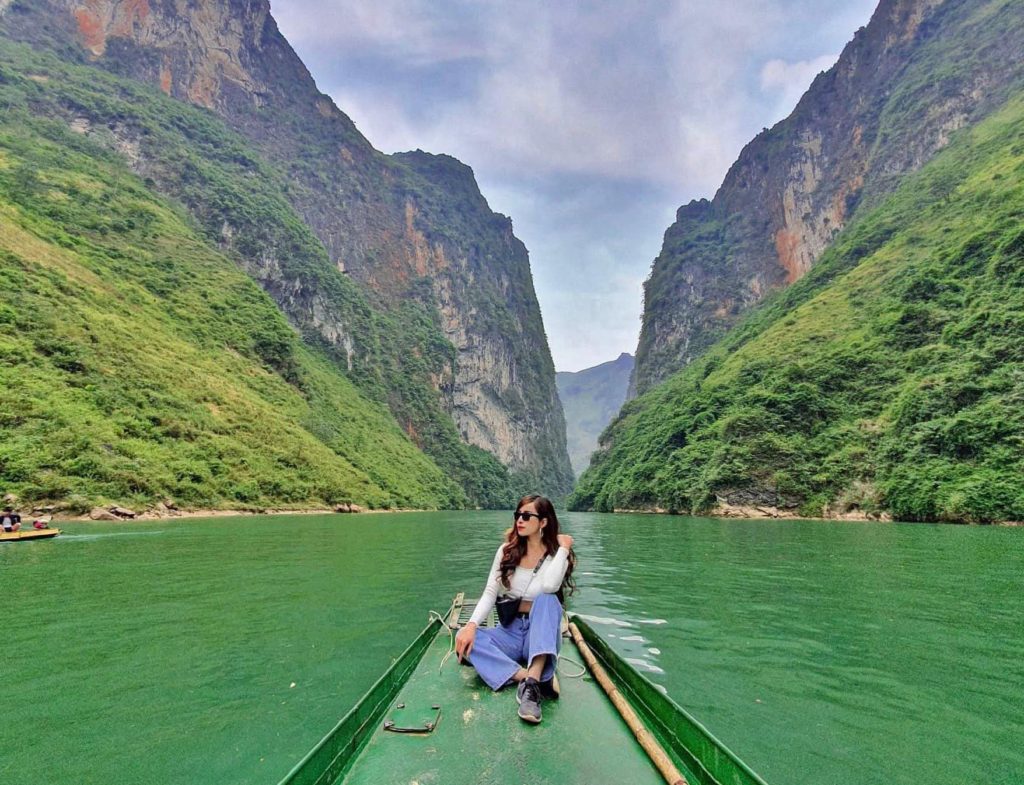
Nho Que River winds along the rocky mountains with striking blue water (Source: VinWonders)
Reaching the boat pier involves a roughly one-hour drive on winding pass roads. Activities include kayaking, traveling by dugout canoe to explore Tu San canyon, the deepest canyon in Southeast Asia, taking boat trips, and trying SUP (Stand Up Paddleboarding). A boat trip on the Nho Que River allows visitors to fully experience the poetic and grand beauty of this northern borderland. Boat trips cost approximately 120,000 VND for adults and 60,000 VND for children, while kayak and SUP rentals are around 100,000 VND per person.
Venture into the heart of Tu San Canyon
Tu San Canyon, Southeast Asia’s deepest canyon, is a breathtaking masterpiece in Vietnam. Its towering limestone cliffs plunge dramatically into the emerald Nho Que River, creating a landscape of unparalleled grandeur and serenity. This remote northern frontier gem captivates with its untouched, poetic beauty, unlike any other natural wonder in the region. The canyon’s uniqueness lies in its pristine, rugged allure, offering adventurers a rare communion with nature.
Discovering Tu San Canyon offers 3 thrilling options. The best way to experience its towering cliffs and emerald waters is by taking a boat tour along the Nho Que River. For the more adventurous, kayaking offers a unique perspective of the canyon’s dramatic beauty. Reaching the pier requires a scenic motorbike or car ride down winding mountain roads, adding to the thrill of this remarkable journey.
Visit Lo Lo Chai Village: A hidden paradise in the heart of Ha Giang
Located in Sang Pa A hamlet, Meo Vac district, Lo Lo Chai village is an essential stop on your itinerary. Situated on a high hill, the village is notable for its characteristic earthen houses (nha trinh truong) and traditional way of life preserved across many generations. Lo Lo Chai is just 1 km from the iconic Lung Cu flagpole, adding an extra layer of excitement to your adventure.
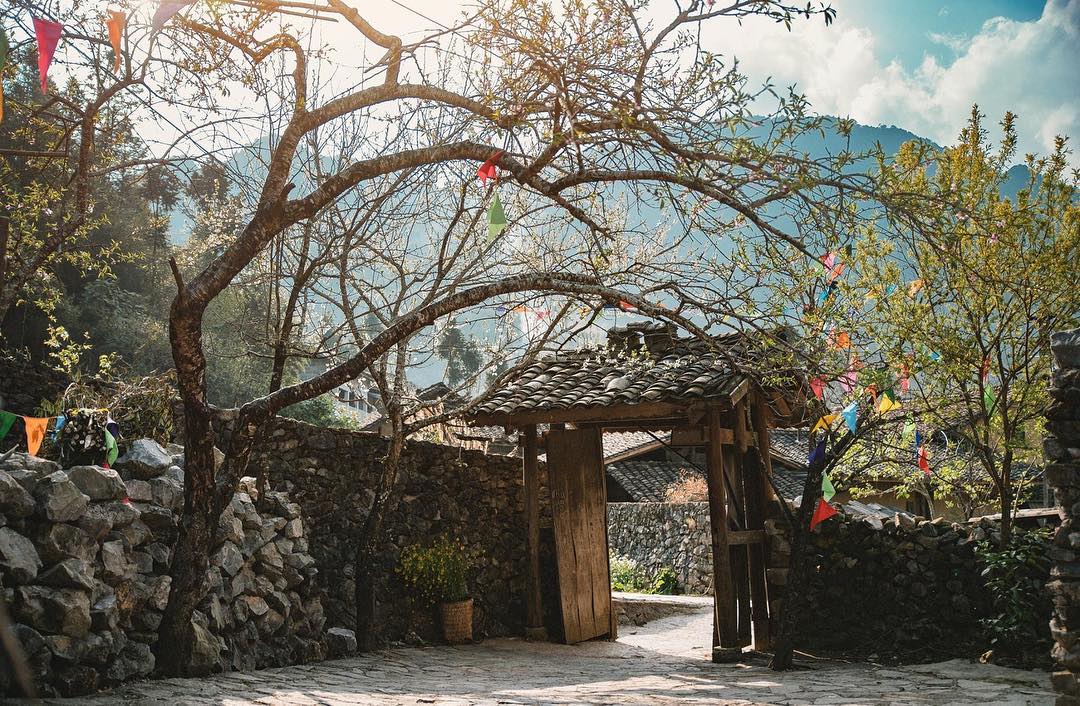
Lo Lo Chai Village is notable for its characteristic earthen houses (Vietnam News)
Beyond its unique architecture, Lo Lo Village is embraced by lush terraced rice fields, vibrant flower gardens, and fruit-laden orchards. Visitors can immerse themselves in the daily life of the Lo Lo people, discovering traditional rituals, farming practices, and the intricate art of brocade weaving. Charming wooden houses dot the village, where guests can enjoy local cuisine, explore cultural customs, and even join in planting or harvesting. The residents, mainly from the Mong and Tay ethnic groups, live self-sufficiently through farming and animal husbandry, preserving a peaceful and authentic lifestyle.
Snap your best shot at the M-shaped Road
This iconic stretch of road zigzags dramatically through the mountains, forming a perfect "M" shape that has become a favorite check-in spot for travelers and photographers. From the viewpoint, you can marvel at the layered green terraces, misty valleys, and winding roads that define Ha Giang’s rugged beauty. The best times to visit are early morning or late afternoon, when soft light enhances the landscape’s depth and color.
Khau Vai Love Market: A unique tradition of love and culture
Khau Vai Love Market, also known as Cho Phong Luu (the Gallantry Market), is one of the most distinctive and emotionally rich traditions of the regional stone plateau. Held only once a year on the 27th day of the 3rd lunar month, in Khau Vai hamlet, Meo Vac district, this market is far more than a place for trade. It’s a heartfelt reunion for former lovers who, though separated by fate, gather here to reconnect, share memories, and relive their past affection. This unique cultural event has endured for over a century.
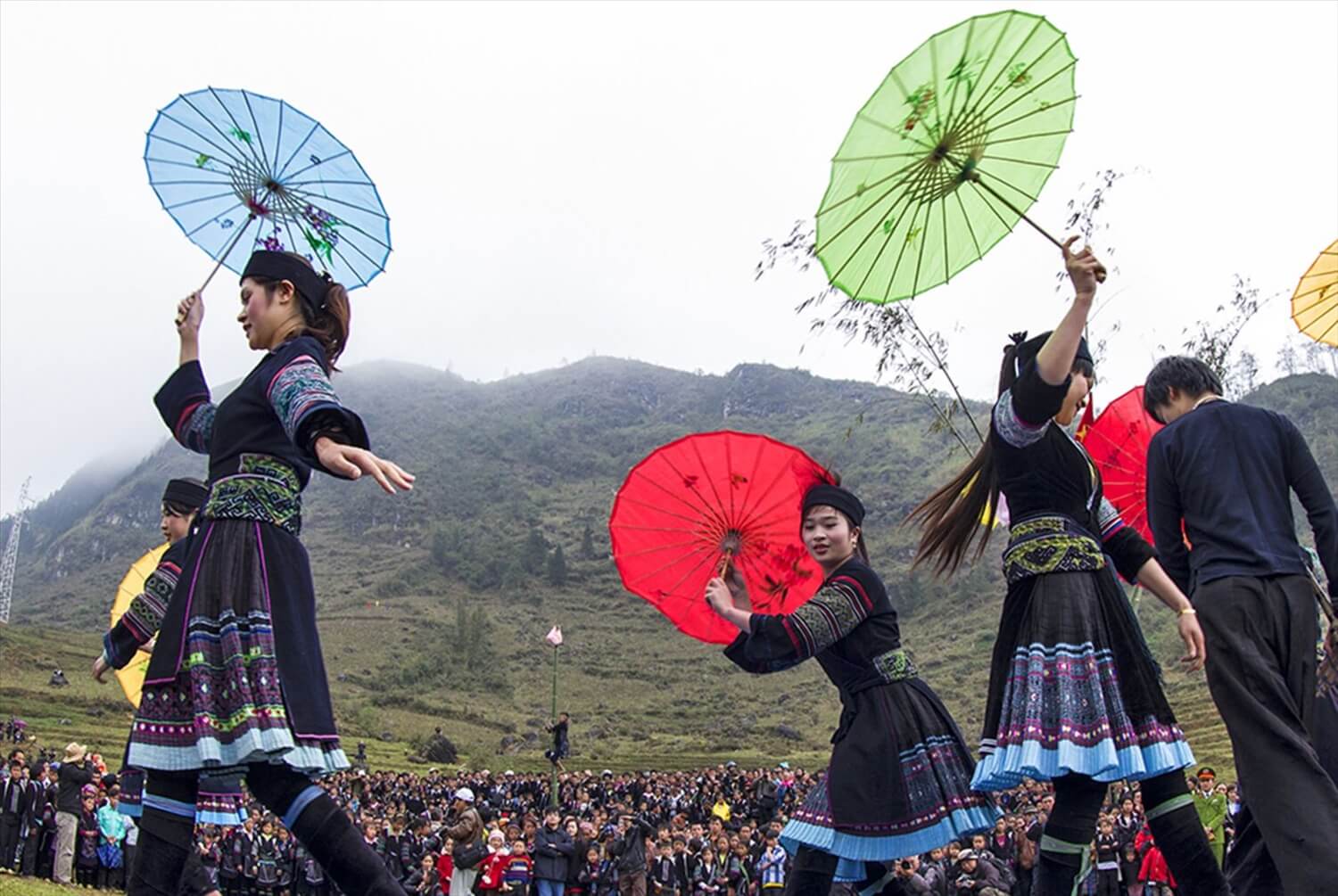
Khau Vai Love Market has endured for over a century (Source: Bao Dan Toc va Phat Trien)
Unlike other traditional markets, Khau Vai Love Market is rich in the cultural identity of ethnic minority groups, particularly the H'Mong people. When visiting the market, travelers are immersed in a unique cultural space with the vibrant colors of traditional costumes, the melodious sounds of the khen (a type of mouth organ), and captivating dances. What makes it truly special is its open-hearted spirit when husbands and wives attend together, each free to reunite with old flames without jealousy or conflict, reflecting deep respect and understanding in love.
Step into Pa Vi Cultural Tourism Village
Pa Vi Cultural Village, located in Pa Vi Ha Hamlet, is a showcase of Hmong culture in Meo Vac Vietnam. It is home to 26 H'Mong ethnic households, covering a total area of over 46,000 square meters. The residential area features charming traditional earthen houses (nhà trình tường), built from compacted soil and stone, reflecting the enduring craftsmanship and cultural identity of the H’Mong people.
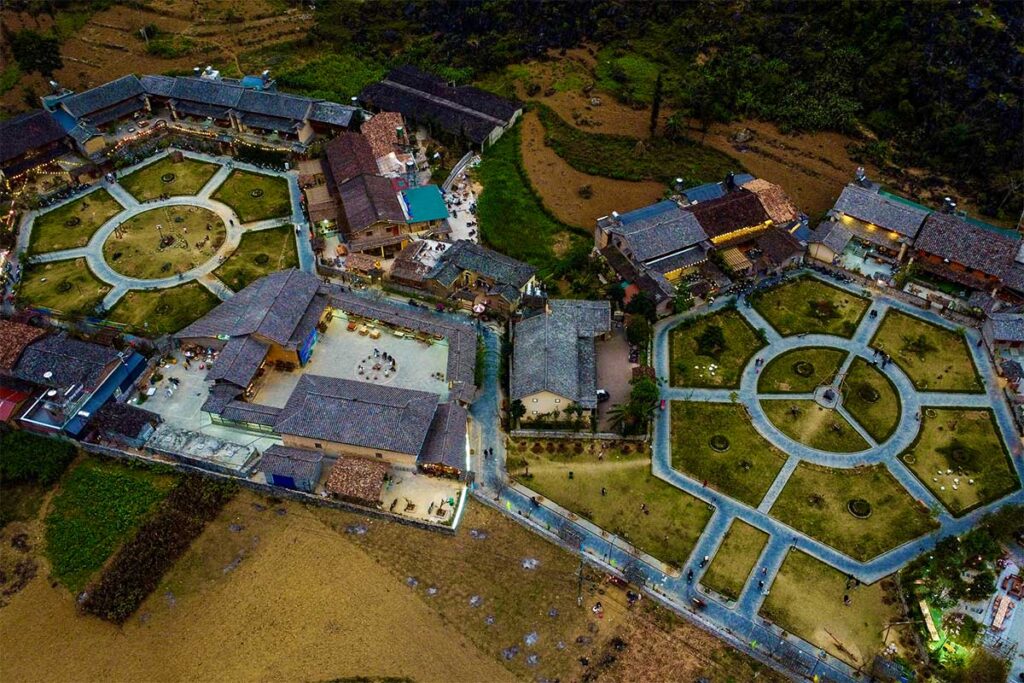
Pa Vi Cultural Tourism Village is home to 26 H'Mong ethnic households (Source: Local Ha Giang)
In the vibrant community space of H’Mong Pả Vi Cultural Tourism Village, visitors can immerse themselves in traditional activities such as folk games, graceful khen dancing, and soulful H’Mong singing, all reflecting the rich spiritual life of the locals. Just nearby, the production area hums with daily life where artisans skillfully engage in brocade weaving, silver jewelry making, and corn wine distilling. These hands-on experiences offer travelers the chance to witness authentic craftsmanship and sample the distinctive flavors of the region.
Visit Meo Vac Market - A cultural tapestry of Ha Giang
Meo Vac Market is widely regarded as the largest and most vibrant market in Ha Giang Province. Held every Sunday in the heart of Meo Vac Town, it attracts a diverse crowd from surrounding districts like Dong Van and Yen Minh, including various ethnic minorities such as the H’Mong, Dao, Tay, and Lo Lo. The market is renowned for its extensive livestock section, bustling indoor and outdoor stalls, and the colorful traditional attire of its attendees, making it a unique cultural experience in northern Vietnam.
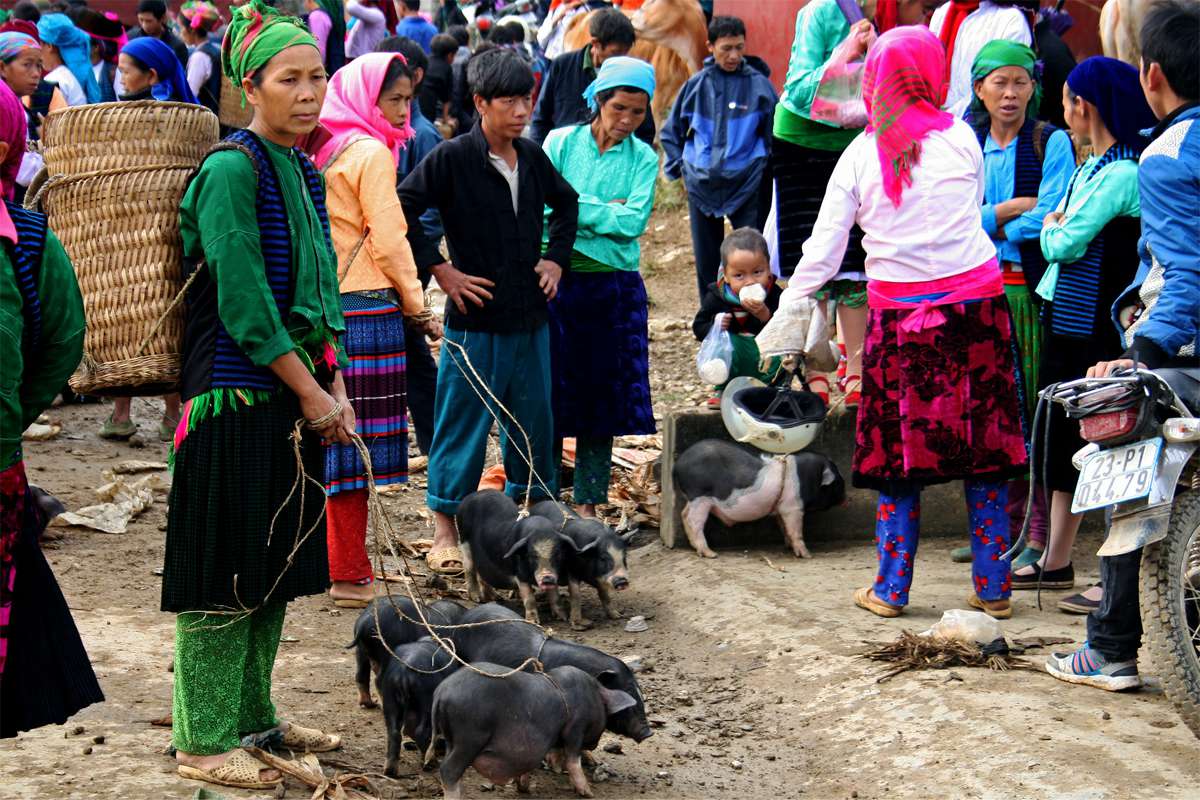
Meo Vac Market - The largest and most vibrant market in Ha Giang (Source: Local Vietnam)
Read more: Exploring Ha Giang: An Authentic Northern Vietnam Journey
Top 10 delicious delights to savor in Meo Vac
Meo Vac Vietnam is home to a variety of mouthwatering local specialties. Here are some must-try dishes that showcase the region's unique flavors.
Steamed rice rolls with bone broth (Banh cuon ninh xuong)
Unlike the southern version served with sweet fish sauce, this kind of banh cuon is paired with a bowl of flavorful pork bone broth, simmered for hours until rich and aromatic. The rice rolls are thin, soft, and filled with minced pork and wood ear mushrooms. Served hot with Vietnamese pork sausage (cha), fresh herbs, and sometimes a soft-boiled egg, this dish is a comforting breakfast favorite in the highlands.
Thang co
Thang co is a traditional dish from the mountainous regions of Ha Giang, particularly popular among the H'Mong people. This hearty, flavorful dish is made from horse meat, which is slow-cooked with a variety of herbs, spices, and vegetables, creating a rich and aromatic broth. The meat is tender, and the broth is savory with a deep, earthy taste. Thang co is often served with rice, and it’s commonly enjoyed at local markets or during festivals.
Chao au tau (Au tau soup)
Made from au tau (a poisonous plant that must be properly prepared to neutralize its toxins), this rice porridge is believed to have medicinal properties. The dish is typically prepared by boiling the plant with rice and a variety of herbs, creating a thick, fragrant porridge. It is often served with meat or vegetables and is considered a delicacy with healing benefits. Chao au tau is traditionally eaten during colder months, showcasing the region's resourcefulness in utilizing local ingredients.
Men men
Men men, a staple food in the area, is made from corn flour, especially in highland villages. The corn flour is steamed to create a dense, sticky texture, often served with stir-fried vegetables, pork, or cooked meats. Men men is both nutritious and filling, providing energy for the hard work of mountain life. It's a beloved part of local cuisine, enjoyed by the H'Mong community during meals and special occasions.
Tam giac mach cake (Banh tam giac mach)
Banh tam giac mach is a delicious and unique treat from this area, made using the tam giác mạch (buckwheat) flower, which is native to the region. The flower's seeds are ground into flour, which is then used to make soft, chewy cakes. They have a slightly sweet, nutty flavor and are typically enjoyed with a cup of tea. This traditional snack is a perfect way to taste the essence of highland culture, especially during the buckwheat flower season when the landscape is covered in a beautiful pinkish hue.
Five-color sticky rice (Xoi ngu sac)
Xoi ngu sac is a vibrant and colorful dish from the northern regions of Vietnam. Made from glutinous rice, this dish is infused with natural colors derived from local ingredients like pandan leaves, red beans, sweet potatoes, and turmeric. Each color represents a different flavor, creating a visually stunning and flavorful treat. It’s often enjoyed with a variety of meats, fried onions, or vegetables, making it a hearty and festive dish.
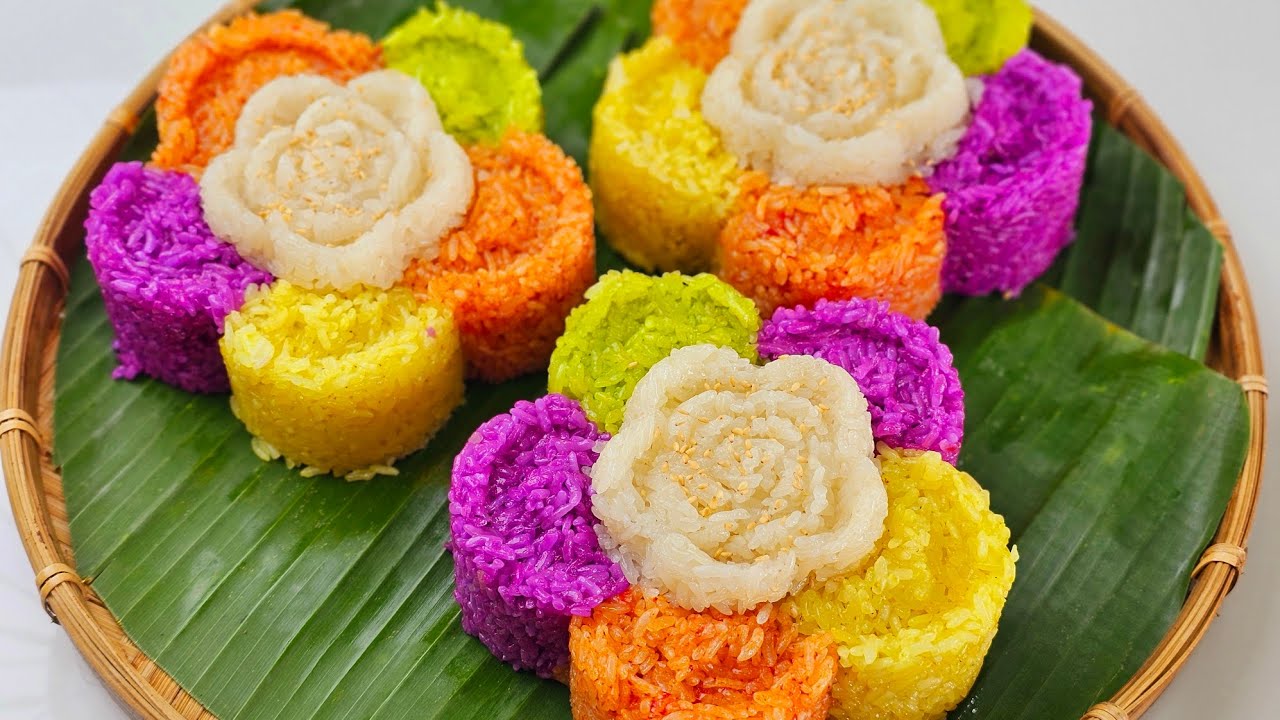 Xoi ngu sac is infused with natural colors derived from local ingredients (Source: Vietnam Plus)
Thang den
Made from glutinous rice flour, thang den is steamed into small, chewy cakes and served with a flavorful sweet syrup made from sugar, coconut milk, and sometimes sesame. Thang Den is often enjoyed as a snack or dessert, especially during festivals or special occasions. Its soft texture and sweet taste make it a beloved treat among locals and visitors alike.
Corn wine (Ruou ngo)
Ruou ngo is a traditional corn wine from the highlands of Ha Giang, particularly enjoyed by the H'Mong people. Made from corn, the main ingredient is fermented and distilled to create a strong, clear beverage with a distinct, slightly sweet flavor. The wine is often brewed in small, family-run distilleries and is a symbol of hospitality in the region. Typically served during festivals, gatherings, and special occasions, rượu ngô is cherished for its cultural significance and is often accompanied by traditional foods.
 Corn wine is often brewed in small and family-run distilleries (Source: Bao Bac Giang)
Grilled moss (Reu nuong)
Rêu nướng is a unique delicacy in this region. It is made from fresh moss that grows on rocks and trees in the mountainous areas. The moss is carefully collected, washed, and then grilled over an open flame, giving it a smoky, savory flavor. Often served with rice or as an appetizer, rêu nướng is prized for its earthy taste and texture. It is a dish enjoyed by locals and adventurous travelers looking to experience the authentic, natural flavors of the region.
Smoked buffalo meat (Thit trau gac bep)
Thịt trâu gác bếp is a traditional smoked buffalo meat from the northern mountainous regions of Vietnam. The meat is carefully marinated with a blend of spices, then hung and smoked over a fire in the kitchen, giving it a unique, rich flavor. The slow smoking process helps preserve the meat, making it a popular choice for long journeys or special occasions. The resulting dish is tender yet flavorful, often served in thin slices with rice or vegetables, and is cherished for its smoky aroma and distinctive taste.
Meo Vac travel guide: Must-know tips for your journey
Proper planning is essential for a smooth journey. Here are some Meo Vac travel guides to assist you in your preparations.
Best time to visit Meo Vac Vietnam
The ideal time to visit this place if you want to see the buckwheat flower fields in full bloom is from around October to December according to the Gregorian calendar. This is the perfect time to capture impressive photos amidst the vibrant pink and purple hues of the flowers, creating a very poetic scene. If you wish to see golden mustard flower fields, the period around mid-November is suggested. Early November is considered the best time to see the Nho Que River in its emerald green.
Your guide to transportation
To get to Meo Vac, travelers first need to reach Ha Giang first. There are many bus companies operating the Hanoi - Ha Giang route, with ticket prices ranging from 200,000 - 250,000 VND per trip. Some bus companies offer direct routes from Hanoi to Meo Vac, with prices ranging from 170,000 VND to 220,000 VND per trip.
From Ha Giang city, you can choose to travel to Meo Vac Vietnam by motorbike or car.
- Motorbike: A motorbike is one of the best ways to explore this area, offering flexibility and the chance to experience the region’s stunning landscapes up close. It allows travelers to navigate winding mountain roads and visit remote villages, making it ideal for adventure seekers who want to feel the wind in their hair while discovering regional natural beauty.
- Car: A car is a more comfortable and safer option for your trip, especially for families or those seeking a relaxed journey. It provides ample space for luggage and offers a smoother ride on the region's rugged roads, allowing visitors to enjoy the scenic views in comfort.
No matter which mode of transport you choose, always check road conditions and weather, and ensure safety for a memorable trip.
Where to stay in Meo Vac Ha Giang
Accommodation in this region offers a range of choices, from guesthouses and hotels to homestays, catering to different budgets. Prices for a double room vary between 250,000 VND and 1.5 million VND, while dormitory beds (DORM) range from 80,000 VND to 200,000 VND. Most hotels are concentrated in Meo Vac town, providing full amenities at affordable rates. Whether you're looking for comfort or a more budget-friendly option, there's something suitable for every traveler in this charming area.
For the adventurous, cliff camping services near the White Stone cliff edge by Ma Pi Leng pass offer views of the Nho Que River. To reach this spot, drive along Ma Pi Leng pass, then turn onto Ma Pi Leng B road for about 3km, followed by a 2km trek. It is advisable to contact a local guide for safety.
Read more: Ha Noi - Ha Giang 5 days 4 nights
Other tips for your exploration
Here are some important things to keep in mind for your visit:
- For boat services on the Nho Que River, contact them in advance to confirm if boats are operating during your visit.
- If you are not confident in your driving skills, consider hiring a local person to drive you.
- It is recommended to contact a local guide, especially if you plan to do activities like cliff camping.
- Be cautious when moving around canyons or driving on roads as the terrain is quite dangerous. Always ensure safety.
- Keep the environment clean and do not litter indiscriminately.
Planning your trip can be overwhelming, but with Asia Pacific Travel by your side. With over 20 years of expertise, we specialize in crafting personalized itineraries, offering exciting adventures, and providing 24/7 support. As one of Vietnam’s top travel agencies, we proudly offer a wide range of unforgettable tours that highlight the beauty, culture, and unique charm of every destination. Let us help make your journey an experience to remember!
Meo Vac Vietnam is the perfect spot for adventurers who love discovering untouched nature, immersing in unique cultures, and experiencing the authentic life of local communities. Visit Meo Vac for an unforgettable journey filled with excitement and rich memories!
Related Posts
.jpg)
.jpg)