




If you're looking for a destination that combines spiritual significance with meaningful historical stories in the heart of Hanoi, Tran Quoc Pagoda is the perfect place for you. With over 1,500 years of history, this ancient pagoda stands out not only for its exquisite architecture but also for the peaceful atmosphere by the picturesque West Lake. Let’s explore the timeless beauty of Tran Quoc Pagoda and experience the unique blend of culture and religion here.
Introduction to Tran Quoc Pagoda

Introduction to Tran Quoc Pagoda (Source: Vinpearl)
Hanoi, the land of a thousand years of culture, has long been renowned for its rich history, culture, and ancient temples. Among them, Tran Quoc Pagoda stands out as a symbol of spiritual culture and unique architecture. With a history spanning over 1,500 years, Tran Quoc Pagoda is not only the oldest pagoda in Hanoi but also holds significant historical value, once serving as the center of Buddhism during the Ly and Tran dynasties. Nestled peacefully by the serene West Lake, it is a must-visit destination for those seeking tranquility and wishing to experience the beauty of Northern Buddhist traditions.
Tran Quoc Pagoda is not only a place of pilgrimage for Buddhists but also an attractive destination for tourists to visit, admire, and explore. The main hall of the pagoda is dedicated to statues of Amitabha Buddha, Shakyamuni Buddha, and Avalokiteshvara, reflecting the diversity and depth of Buddhist beliefs. In addition, the pagoda also houses altars for Quan Binh, Quan Vu, Chu Thuong, Duc Ong, and other attendants, further enriching the spiritual ambiance of this sacred space. A visit to Tran Quoc Pagoda offers a chance to experience the harmonious blend of ancient beauty and timeless spiritual significance.
Read more: 4 perfect Hanoi Itinerary ideas for an unforgettable trip
The long history of Tran Quoc Pagoda
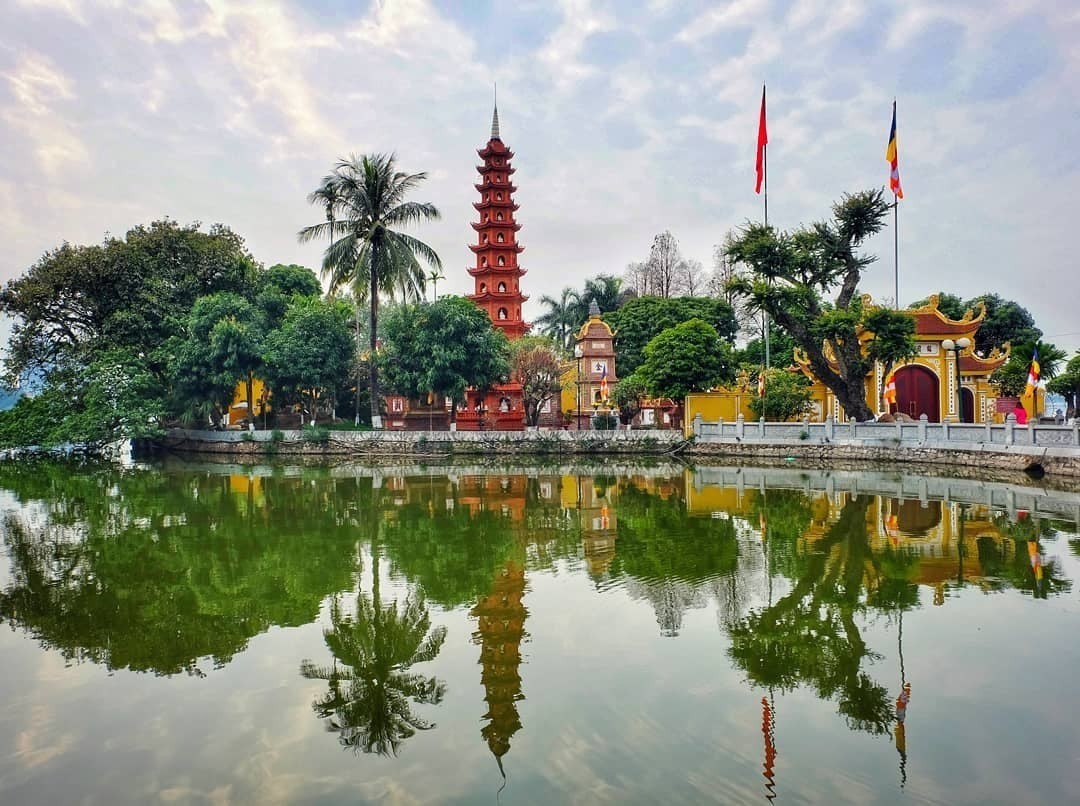
The long history of Tran Quoc Pagoda (Source: Vietgoing)
Tran Quoc Pagoda is one of the oldest and most famous pagodas in Vietnam. According to historical records, it was built in 541 during the reign of the Early Ly Dynasty, originally named Khai Quoc Pagoda. The original location was in the Yen Hoa village area, now Yen Phu, Hanoi. Over the centuries, the pagoda has undergone numerous renovations and name changes, from An Quoc Pagoda in 1440 to its current name, Tran Quoc Pagoda, during the reign of King Le Hy Tong.
With such a long history, Tran Quoc Pagoda has witnessed many important events and the development of the nation. In 1615, during the reign of King Le Kinh Tong, the pagoda was relocated to the Yên Phụ dyke area and was built upon the old foundations of the Ly and Tran dynasties' structures. Throughout various dynasties, Trấn Quốc Pagoda has been continuously renovated, expanded, and enriched with new structures such as the left and right corridors and the main gate. Notably, during the Nguyen Dynasty, the pagoda was adorned with bells, statues, and underwent significant renovations under the patronage of kings like Minh Mang and Thieu Tri.
Today, Tran Quoc Pagoda remains an iconic historical and cultural site, retaining its ancient beauty and significance as a major spiritual destination in Hanoi. The pagoda is not only a source of pride for Vietnamese Buddhism but also a valuable cultural heritage. In 1962, Tran Quoc Pagoda was recognized as a National Historical and Cultural Relic, and it continues to be one of the top attractions for both domestic and international tourists and pilgrims. Its unique architectural beauty, rich history, and cultural significance make it a place of deep reverence and fascination.
What are Tran Quoc Pagoda's opening hours? How to get to the pagoda?
Tran Quoc Pagoda is open to visitors every day from 8:00 AM to 4:00 PM. On New Year's Eve, the pagoda stays open all night to welcome pilgrims and tourists for prayers and ceremonies. On the 1st and 15th of every lunar month, the pagoda opens from 6:00 AM to 6:00 PM, providing an opportunity for worshippers and visitors to come and offer prayers.
Located at 46 Thanh Nien Street, Yen Phu Ward, Tay Ho District, Hanoi, Tran Quoc Pagoda sits on the eastern shore of West Lake. It is only about 4 kilometers from the city center, making it easy to reach by motorbike, car, or public transport like taxis or Grab. If you take the bus, lines 33 and 50 stop near the pagoda, offering a convenient option for tourists.
Exploring the architecture complex of Tran Quoc Pagoda Vietnam
Tran Quoc Pagoda is not only a famous ancient temple in Hanoi but also a cultural symbol of Buddhism, featuring a unique architectural complex. Covering an area of 3,000 square meters, the pagoda showcases a harmonious blend of traditional elements and spiritual significance. Below are the remarkable architectural features of the Tran Quoc Pagoda complex:
The 11-Storey Stupa (Bao Thap)
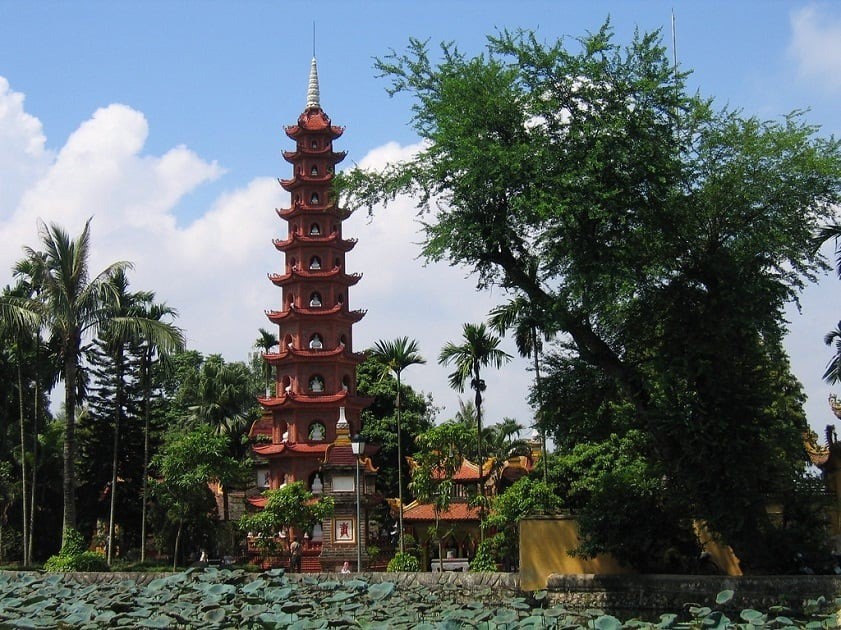
The 11-Storey Stupa of Hanoi Tran Quoc Pagoda (Source: VinWonders)
As soon as visitors step into the grounds of Tran Quoc Pagoda, they are immediately drawn to the impressive 11-storey stupa, an architectural masterpiece. This majestic, reddish-brown tower boasts intricate beauty, with eleven levels, each featuring six graceful arched windows. Inside, precious white jade statues of Amitabha Buddha are arranged in the openings, radiating a serene and enlightening aura. This is the place where the fusion of architecture and spirituality is most evident, allowing visitors to deeply feel the teachings of the Buddha and the path to enlightenment in Buddhism.
The Front House (Tien Duong)
Continuing the journey of discovery, the Front House of Tran Quoc Pagoda is a remarkable stop where visitors can admire the statue of Shakyamuni Buddha, crafted from gleaming gold-painted wood. This statue has been recognized as the most beautiful Reclining Buddha in Vietnam, showcasing the craftsmanship of the artisans. Its revered image highlights the serenity, transcendence, and peace that Buddhism seeks to embody. Standing before the statue, visitors can take a moment to reflect on the life and profound teachings of the Buddha.
The Incense Burning House (Nha Thien Huong)
The Incense Burning House at Tran Quoc Pagoda is a place where visitors can partake in sacred rituals, offering incense and gifts as prayers for health and peace. The incense burning ceremony here not only honors the deities but also serves as an act of purifying the soul, seeking inner tranquility. The atmosphere at the Incense Burning House is always vibrant, drawing many pilgrims from all walks of life, creating a space that is both sacred and lively.
The Upper House (Thuong Dien)
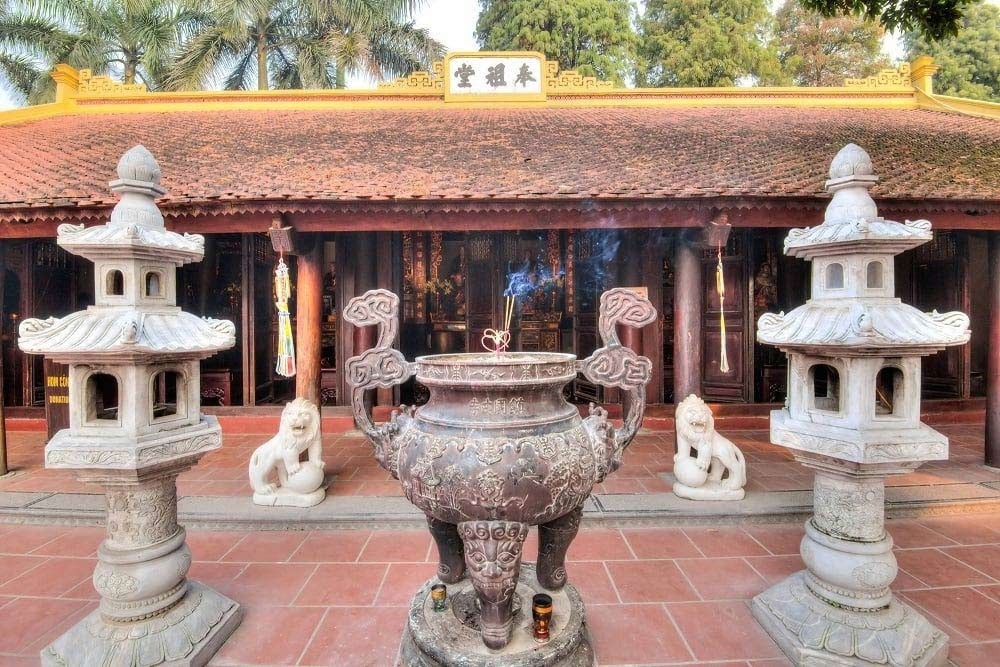
The Upper House of Hanoi Tran Quoc Pagoda (Source: Xanh SM)
In the Upper House area, visitors will encounter a special bell tower built in the style of a traditional wooden house with three sections and a red-tiled roof. This space is dedicated to the worship of deities and serves as the main venue for major ceremonies at Tran Quoc Pagoda. Adjacent to it is the Stela House, another unique architectural structure that houses stone steles inscribed with poetry by renowned scholars from ancient times. These stone tablets also document the restoration, preservation, and development of Tran Quoc Pagoda through various dynasties, serving as a valuable resource for future generations to better understand the history and cultural significance of this ancient pagoda.
The Stele House (Nha Bia)
The Stela House holds 14 stone tablets that document the history of Tran Quoc Pagoda’s development, including details about its restoration over various periods. These steles are not only valuable historical documents but also serve as proof of the preservation and promotion of the cultural and architectural values of the pagoda across generations. These historical marks play an important role in helping visitors gain a deeper understanding of the formation and evolution of Tran Quoc Pagoda, from its early days to the present.
Activities not to be missed when visiting Tran Quoc Pagoda
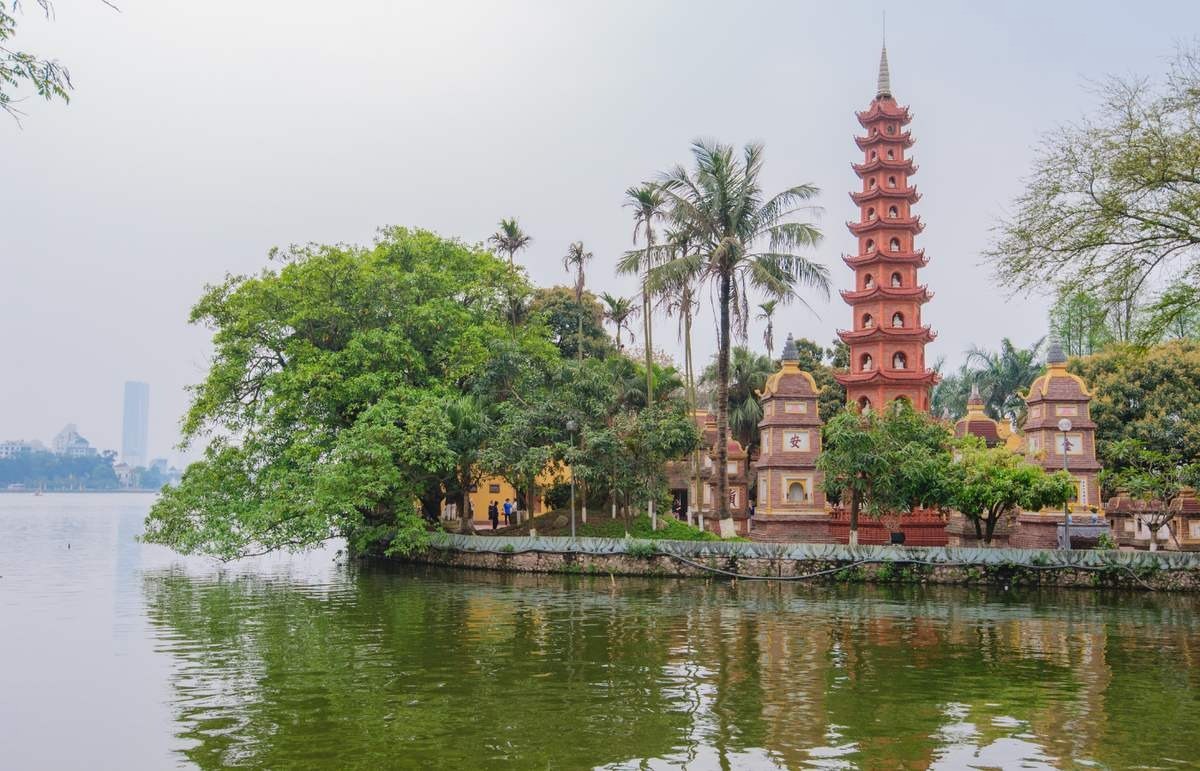
Activities not to be missed when visiting Tran Quoc Pagoda (Source: Crystal Bay)
When visiting Tran Quoc Pagoda in Vietnam, here are some activities you should not miss:
- Offering incense and prayers for peace: This is one of the important rituals at Tran Quoc Pagoda. Visitors can light incense and offer prayers to the Buddha, asking for peace, good health, and prosperity for their families and loved ones. The solemn atmosphere of the pagoda will help calm your mind and bring a sense of tranquility.
- Exploring the peaceful West Lake area: Tran Quoc Pagoda is located by the serene West Lake, one of the most beautiful lakes in Hanoi. Visitors can immerse themselves in the tranquil atmosphere of the lake, enjoying the picturesque natural surroundings. If you have time, be sure to visit the Tay Ho Temple, a famous historical site nearby.
- Taking photos: With its picturesque scenery and unique architecture, Tran Quoc Pagoda is the perfect place to capture beautiful photos. These pictures will not only preserve wonderful moments from your trip but also provide lasting memories of one of Hanoi's oldest and most famous pagodas.
Read more: Exploring the history and uniqueness of Hanoi train street
Things to note when visiting Tran Quoc Pagoda
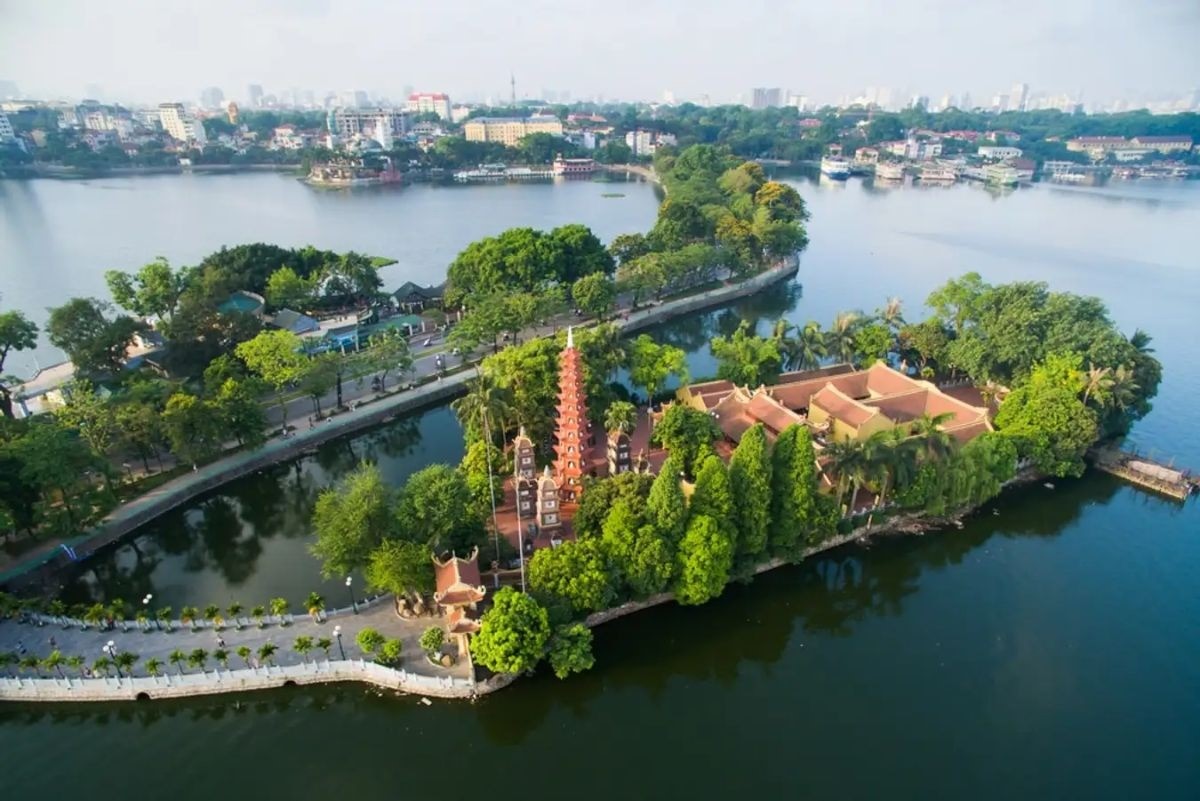
Things to note when visiting Tran Quoc Pagoda (Source: MIA.vn)
Tran Quoc Pagoda is one of the prominent spiritual destinations in Hanoi, attracting not only Buddhists but also visitors from all walks of life. To have a meaningful and fulfilling visit, there are a few important things to keep in mind:
- Dress appropriately: When visiting Tran Quoc Pagoda, visitors should wear suitable attire, avoiding short or revealing clothing. Although it is a popular tourist spot, it is also a sacred place of worship, so dressing respectfully will show reverence for this spiritual site.
- Maintain peace and respect for the sacred space: Tran Quoc Pagoda is a sacred site, so visitors should keep the atmosphere calm, avoid having loud conversations or inappropriate actions. This respect will help you better appreciate the spiritual atmosphere of the pagoda.
- Participate in ceremonies properly: If you wish to take part in any ceremonies, be sure to follow the guidance of the monks or staff at the pagoda. Lighting incense or offering gifts are acts with deep spiritual meaning, so it’s important to do them correctly and with respect.
- Preserve cleanliness: Tran Quoc Pagoda is an important historical and cultural monument, so it’s essential to keep the area clean. Visitors should avoid littering and ensure the pagoda grounds remain tidy, showing respect for the shared space of the community.
- Be mindful of visiting hours: Tran Quoc Pagoda tends to be crowded during holidays and festivals, so if you want a quieter experience, it's best to visit on weekdays and avoid peak hours. To truly appreciate the serene ambiance, it is preferable to visit in the morning or late afternoon.
The above article provides information about Tran Quoc Pagoda, a must-visit destination for both spiritual and historical significance. To fully experience the beauty and meaning of this site, you can contact Asia Pacific Travel through the hotline 0243.8364.212 or 0243.7568.868 for detailed support and travel tour consultation. With years of experience in the industry, Asia Pacific Travel is committed to offering you meaningful and enjoyable trips.
Related Posts
.png)

.png)