




Ho Chi Minh Mausoleum is a significant historical site in Hanoi, attracting millions of visitors every year. It not only preserves the body of President Ho Chi Minh but also stands as a symbol of reverence for his great contributions to the nation. A visit to the Ho Chi Minh Mausoleum offers a chance to gain a deep understanding of the life and career of this revered leader, while also experiencing the sacred and solemn atmosphere of the site.
Introduction about Ho Chi Minh Mausoleum
Ho Chi Minh Mausoleum is one of the most important historical monuments in Vietnam, housing the preserved body of President Ho Chi Minh, the great leader of the nation. Located in the heart of Hanoi, the Mausoleum is not only a place to pay respects to President Ho Chi Minh but also a popular destination for both domestic and international visitors.
Where is the Ho Chi Minh Mausoleum located?
Ho Chi Minh Mausoleum is located at No. 2 Hung Vuong Street, Dien Bien Ward, Ba Dinh District, Hanoi, right in the center of the capital. It is one of the most significant historical monuments in Vietnam - the resting place of Ho Chi Minh's embalmed body. The Mausoleum is situated in the heart of Ba Dinh Square, a space closely linked to many pivotal events in the nation's history, making it an unmissable destination for all visitors.
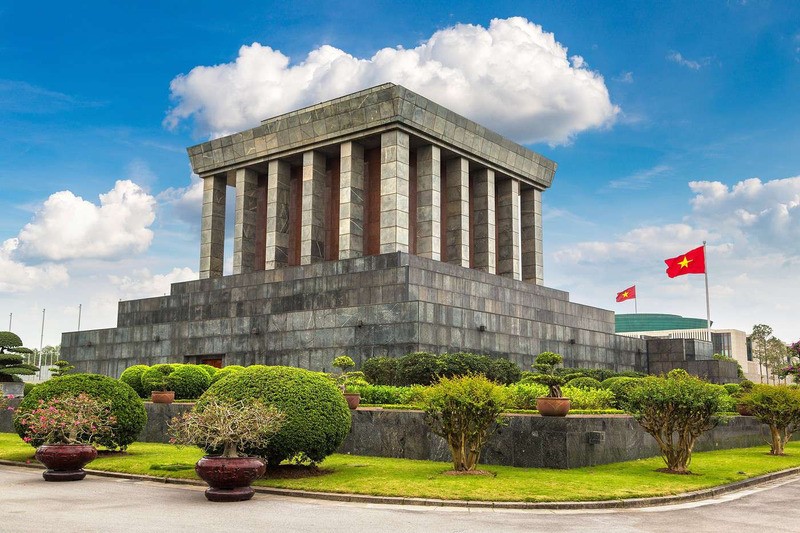 Ho Chi Minh Mausoleum located in the center of Ba Dinh square (Source: vietnamluxuryexpress)
To visit Ho Chi Minh tomb, you can easily get there using various modes of transportation:
- Personal vehicles: If you're traveling by motorcycle or car, you can simply follow the signs or use an electronic map to reach the Ho Chi Minh Mausoleum in Hanoi. The Mausoleum is located in a very accessible area, right in the city center, making it convenient to reach by personal vehicle.
- Public buses: If you don't have your own vehicle, buses are an ideal option. Routes such as 09, 33, 22, 45, and 50 will take you close to the Ho Chi Minh Mausoleum entrance. These bus lines have stops near the Mausoleum, helping you save on travel costs and time.
History and significance of Ho Chi Minh Mausoleum
Construction of Ho Chi Minh Mausoleum began in 1973 and was completed in 1975. It stands as a monumental symbol of history and culture. The site is closely associated with many significant events that took place in Ba Dinh Square, where President Ho Chi Minh once delivered speeches that became historic milestones.
Ho Chi Minh Mausoleum is not only an architectural masterpiece in Hanoi, but it also serves as a place where visitors can pay their respects and explore the journey of dedication by this great leader. The embalmed body of Ho Chi Minh, preserved within the Mausoleum, symbolizes patriotism and self-sacrifice for the nation. It is also a place where future generations can reflect upon and cherish the invaluable historical values left behind by him.
Embalmed Ho Chi Minh Mausoleum body
After President Ho Chi Minh passed away on September 3, 1969, the Vietnamese government decided to preserve his body to maintain the image and legacy of this great leader for future generations. To carry out this task, Soviet scientists, renowned experts in embalming Lenin's body, collaborated with Vietnamese doctors to carry out the embalming process. The body of President Ho Chi Minh was placed in a glass coffin at Ho Chi Minh Mausoleum, a site that attracts thousands of visitors each year.
However, following the dissolution of the Soviet Union in 1991, the preservation efforts faced challenges as Soviet experts were no longer available. The Vietnamese government negotiated with Russia to transfer the preservation technology and necessary chemicals. In 2004, the preservation formula was shared, allowing the ongoing maintenance of the embalming process at Ho Chi Minh Mausoleum.
Essential information for tourists visiting the Ho Chi Minh Mausoleum
When planning a visit to Ho Chi Minh Mausoleum, visitors should take note of some important information to ensure a smooth and meaningful trip. Below are the basic details regarding opening hours, ticket prices, and regulations for visiting Ho Chi Minh Mausoleum in Hanoi.
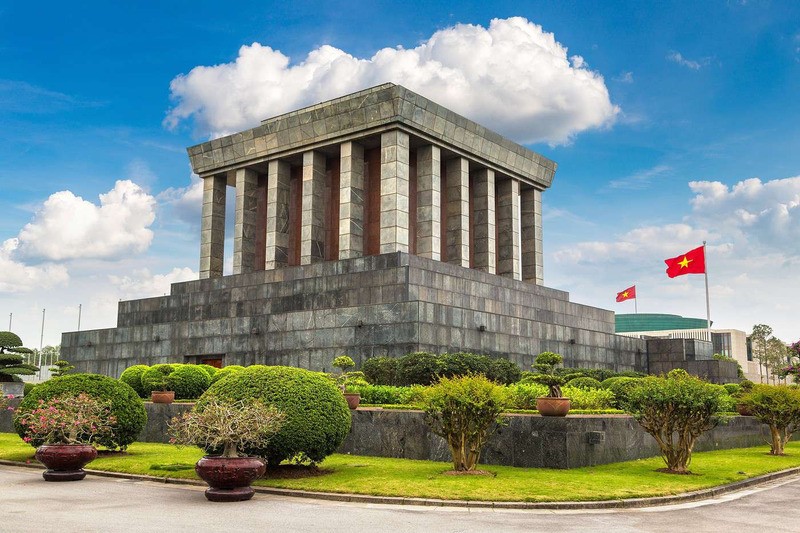 Essential information for tourists visiting the Ho Chi Minh Mausoleum (Source: Gadt Travel)
Ho Chi Minh Mausoleum opening hours
Ho Chi Minh Mausoleum is open to visitors on Tuesday, Wednesday, Thursday, Saturday, and Sunday mornings. It is closed to the public on Mondays and Fridays. However, if May 19th, September 2nd, or the first day of the Lunar New Year falls on a Monday or Friday, the Mausoleum will still be open to visitors.
In addition, Ho Chi Minh Mausoleum typically closes for about two months each year for maintenance and preservation of the body, usually between September and November. The exact dates for the closure are announced in advance by the Mausoleum's management.
Detailed visiting hours:
|
Weekdays |
Summer (1/4 - 31/10) |
Winter (1/11 - 31/3 the following year) |
|
Monday |
Closed |
Closed |
|
Tuesday |
7h30 – 10h30 |
8h00 – 11h00 |
|
Wednesday |
||
|
Thursday |
||
|
Friday |
Closed |
Closed |
|
Saturday |
7h30 – 11h00 |
8h00 – 11h30 |
|
Sunday |
Ho Chi Minh Mausoleum entrance fee
Currently, visiting Ho Chi Minh Mausoleum is completely free of charge for both local and foreign visitors. This is a wonderful opportunity for you to explore the history and learn about the life and career of President Ho Chi Minh.
Ho Chi Minh Mausoleum rules
When visiting Ho Chi Minh Mausoleum, visitors are required to follow certain regulations to ensure respect and order within the site:
- Dress code for Ho Chi Minh Mausoleum is neat and solemn attire.
- Luggage will be checked at the security gate.
- Move in line and do not cause disruption.
- Especially, when entering the inside area of Ho Chi Minh Mausoleum, visitors must remove their hats and hold them with their right hand.
- Do not speak loudly, do not touch the walls or objects in the mausoleum.
- Do not put your hand in your pockets when visiting Ho Chi Minh Mausoleum inside.
- If you want to take photos or videos, you need to follow the instructions of the security staff, especially in the area of the embalmed Ho Chi Minh Mausoleum body.
- Photography, filming, or drawing is not permitted in the room where the full-body embalmed body of Ho Chi Minh is displayed.
The most exciting activities when visiting Ho Chi Minh Mausoleum
When visiting Ho Chi Minh Mausoleum in Hanoi, visitors not only get to admire its grand architecture and pay respects to President Ho Chi Minh’s preserved body but also have the opportunity to take part in special activities that make the experience even more meaningful and memorable. Here are some fascinating activities you shouldn’t miss when exploring Ho Chi Minh Mausoleum in Hanoi!
Visiting Ho Chi Minh Mausoleum
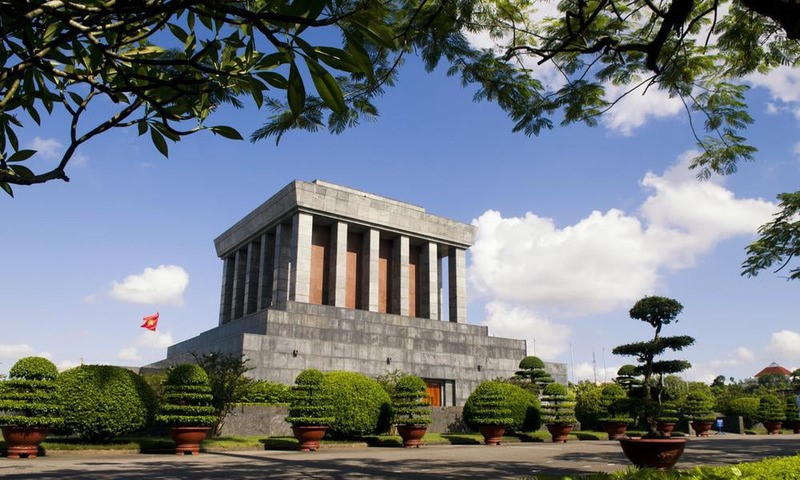 Visiting the Ho Chi Minh Mausoleum(Source: VinWonders)
One of the main activities when visiting Ho Chi Minh Mausoleum is paying respects at the resting place of President Ho Chi Minh, where his body is preserved in a glass casket. Visitors will experience a solemn and quiet atmosphere as they view his embalmed body and witness the deep reverence that the Vietnamese people hold for their great leader
Inside the Mausoleum, visitors will walk through spacious hallways, guarded by security officers, before entering the sacred chamber where President Ho Chi Minh’s body rests. This deeply moving and meaningful experience provides valuable insight into his life, legacy, and immense contributions to Vietnam’s struggle for national liberation.
Attending the flag-raising and lowering ceremony
A special activity you shouldn’t miss when visiting Ho Chi Minh Mausoleum in Hanoi is the daily flag-raising and lowering ceremony at Ba Dinh Square. The flag-raising takes place every morning at 6:00 AM, while the flag-lowering is held at 9:00 PM. During these moments, people gather to witness and take part in this solemn ritual. This ceremony is deeply rooted in tradition and serves as a powerful symbol of respect for the nation and President Ho Chi Minh.
Visit the Ho Chi Minh Museum
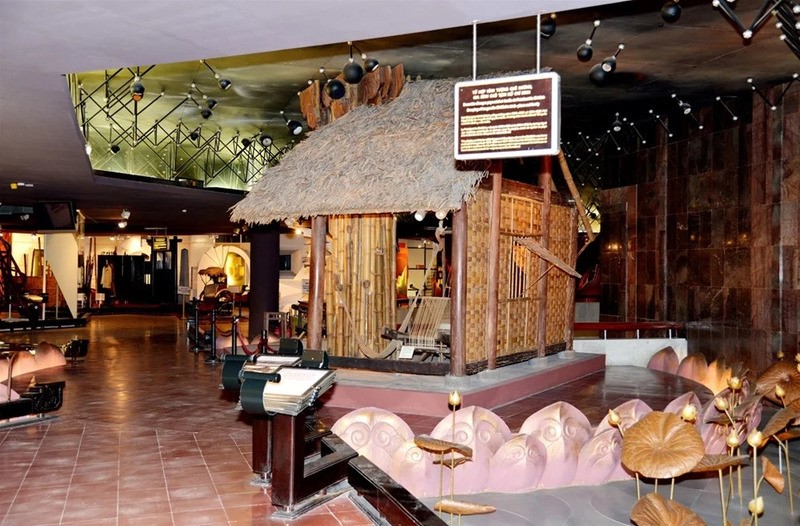 Visit Ho Chi Minh Museum (Source: Vinpearl)
In addition to exploring the Ho Chi Minh Mausoleum, visitors can also visit the Ho Chi Minh Museum, which houses thousands of artifacts and documents related to President Ho Chi Minh’s life and legacy. The museum offers a deeper understanding of his immense contributions to Vietnam’s struggle for independence, allowing visitors to gain insight into his vision, leadership, and enduring impact on the nation.
At Ho Chi Minh Mausoleum and Museum, visitors can admire invaluable artifacts, including photographs, documents, and personal belongings of President Ho Chi Minh. The museum’s exhibitions not only provide insight into his humble yet selfless life but also offer a deeper understanding of a crucial period in Vietnam’s struggle for independence.
Discover Ba Dinh Square
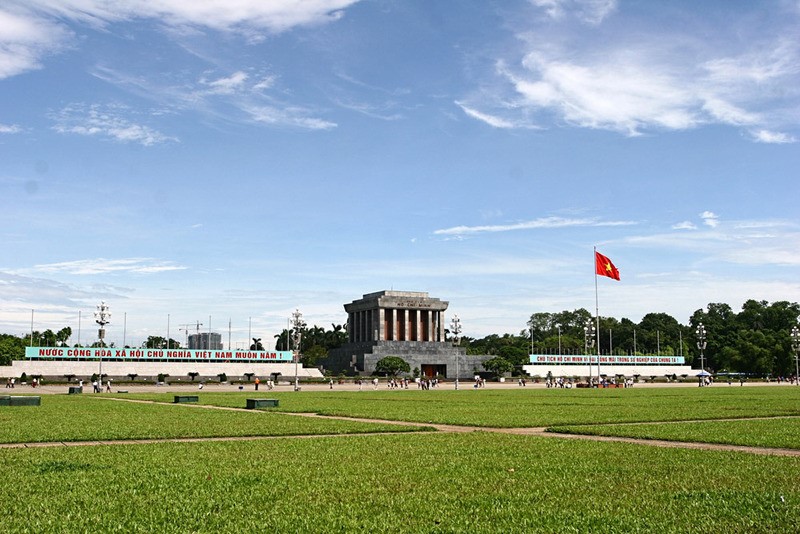 Exploring Ba Dinh Square (Source: Review Villa)
Ba Dinh Square is one of the most significant landmarks when visiting the Ho Chi Minh Mausoleum. This historic site was where President Ho Chi Minh declared Vietnam’s independence on September 2, 1945. As a vast and open space, Ba Dinh Square stands as a powerful symbol of the nation’s heroic struggle for independence, preserving the memory of Vietnam’s most pivotal historical moments.
Strolling around Ba Dinh Square, you will have the opportunity to admire the surrounding architecture, experience the solemn atmosphere, and gain a deeper understanding of this monumental event in the nation’s history.
Taking photos and explore the surroundings
During your visit to the Ho Chi Minh Mausoleum, you can capture memorable moments and document your journey with photographs. However, certain rules must be observed, such as refraining from taking photos or recording videos inside the chamber where President Ho Chi Minh’s body is preserved to maintain the solemnity of the site. That said, taking photos around Ho Chi Minh Mausoleum in Hanoi and Ba Dinh Square will allow you to capture stunning images and unforgettable memories of your visit.
In addition to visiting the main sites, you can also explore the surrounding areas, enjoying the vast and open space of Ho Chi Minh Mausoleum in Hanoi. Take the opportunity to learn more about the architectural structures, monuments, and other symbolic landmarks within the complex to add depth to your experience.
Frequently asked questions about the Ho Chi Minh Mausoleum
When visiting Ho Chi Minh Mausoleum, many travelers often have questions regarding regulations, essential information, or the visit schedule. To make your trip more convenient and meaningful, here are some frequently asked questions about Ho Chi Minh Mausoleum in Hanoi, along with detailed answers to help you better prepare for your visit.
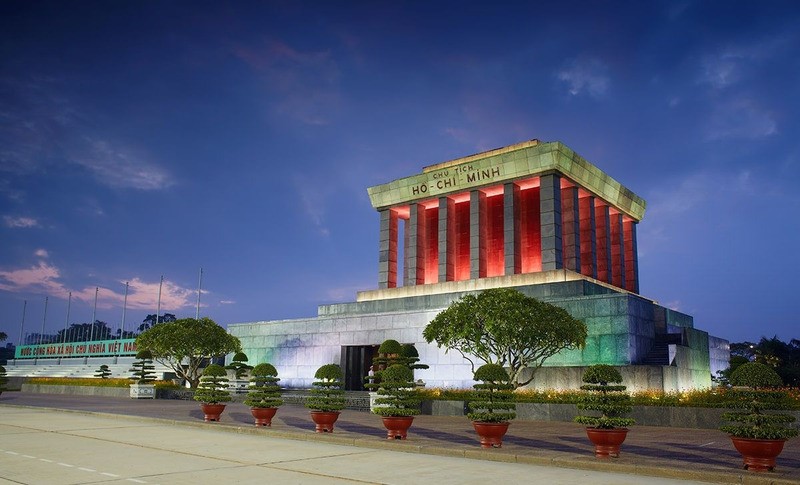
Frequently asked questions about the Ho Chi Minh Mausoleum (Source: Crystal Bay)
Can I bring personal belongings inside Ho Chi Minh Mausoleum?
No, personal belongings such as bags and cameras are not allowed inside the chamber where President Ho Chi Minh’s body is preserved. All items will be inspected and must be stored at the security checkpoint before entering. This regulation is in place to maintain the solemnity and security of the memorial site.
Where can park when visiting Ho Chi Minh Mausoleum in Hanoi?
Visitors can park at public parking areas near Ho Chi Minh Mausoleum, conveniently located next to Ba Dinh Square. However, during peak hours or on public holidays, these parking areas can become quite crowded. To avoid inconvenience, it’s best to plan your visit accordingly and allow extra time for parking.
Are there any places to eat near Ho Chi Minh Mausoleum in Hanoi?
Yes! The area around Ho Chi Minh Mausoleum offers plenty of dining options for visitors. You can enjoy Hanoi’s signature dishes such as pho, bun cha, or banh cuon at local eateries and restaurants near Ba Dinh Square. For a more traditional culinary experience, you can also explore nearby streets, where you’ll find a variety of authentic Hanoi dishes, perfect for a post-visit meal.
Can I buy souvenirs at Ho Chi Minh Mausoleum in Hanoi?
There are no souvenir shops inside Ho Chi Minh Mausoleum complex. However, near Ba Dinh Square and surrounding areas, you can find stores selling memorabilia such as T-shirts, keychains, and books about President Ho Chi Minh. These items make for great keepsakes to remember your visit.
Ho Chi Minh Mausoleum in Hanoi is not only a significant historical site but also a place that preserves the cultural and spiritual values of the Vietnamese people. A visit here offers deep emotions and meaningful lessons about the nation's history.
To make your trip even more fulfilling, contact Asia Pacific Travel, a trusted tour operator specializing in high-quality travel experiences. With a dedicated team and professional services, you can call 0904.488.850 for assistance and to book the most suitable tour packages. This will surely be a fantastic choice for an unforgettable trip to Hanoi!
Related Posts
.png)

.png)