




Ba Chua Xu temple at Sam mountain: A famous spiritual destination in Southwest Vietnam
Located at the foot of Sam Mountain, Ba Chua Xu Temple is a significant historical and cultural site as well as a renowned pilgrimage destination, attracting millions of visitors each year. With its majestic architecture, sacred atmosphere, and mystical legends surrounding the revered Ba Chua Xu statue, this temple is considered one of the most spiritual places in Southern Vietnam.Not only praying for fortune and peace, visitors also have the opportunity to explore the typical spiritual beauty of the Mekong delta region.
Overview of Ba Chua Xu temple at Sam mountain
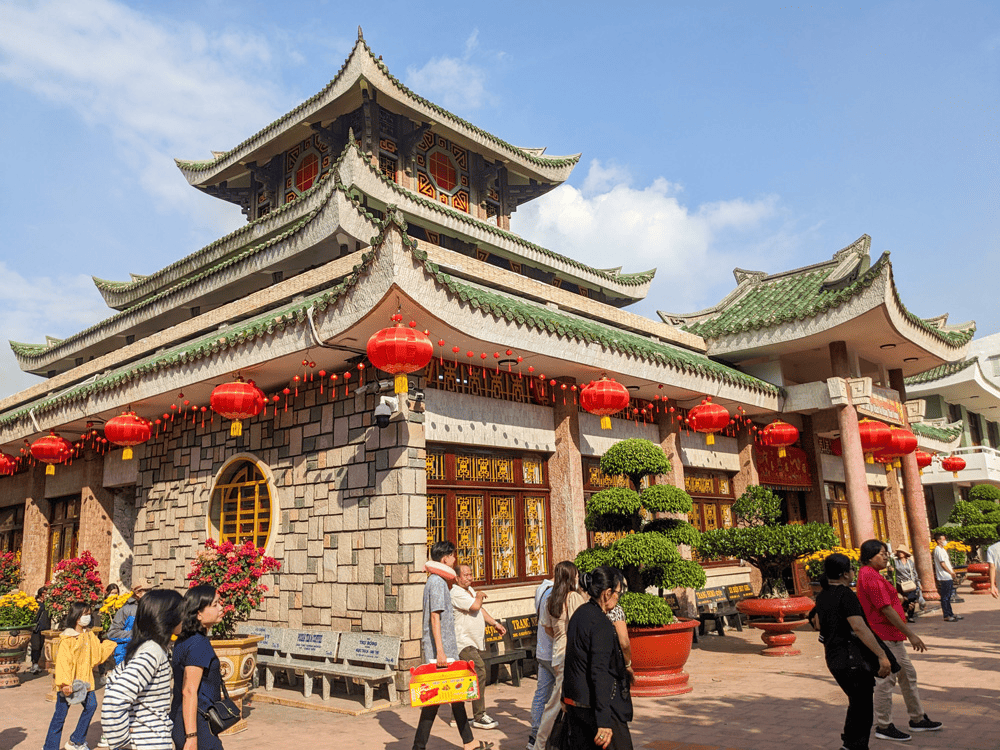
A corner of Ba Chua Xu temple (Source: Cong thong tin dien tu Lam Dong)
Ba Chua Xu Temple is one of the most renowned pilgrimage sites in the Mekong Delta region. It is not only a sacred place deeply connected to the Vietnamese Mother Goddess worship, but also a fascinating cultural tourism destination.
With a history spanning hundreds of years, Ba Chua Xu Temple represents the strong spiritual beliefs of the local people, reflecting the rich cultural heritage, traditions, and customs of the Mekong Delta community. The temple’s sacredness has been passed down through generations, making it an important spiritual center, especially during the annual Ba Chua Xu Festival in the fourth lunar month, when thousands of devotees gather to pay their respects and seek blessings.
The significance of Ba Chua Xu temple in Vietnamese spiritual life
Ba Chua Xu Temple holds great spiritual significance for the Vietnamese community. According to folklore, Ba Chua Xu is regarded as a guardian deity of the land, protecting the people from natural disasters and diseases while bestowing blessings upon them.
People visit the temple to pray for peace, prosperity and success, especially those engaged in business and trade. For centuries, the Mother Goddess worship has been an essential part of Vietnamese spiritual culture, and Ba Chua Xu temple remains one of the most prominent Mother Goddess worship sites in Southern Vietnam.
In addition, the temple is also a place to embody the Vietnamese tradition of gratitude and remembrance. Offering incense and making ritual offerings here are not only spiritual practices but also acts of deep respect for Vietnam’s rich cultural heritage.
The annual pilgrimage and unique spiritual appeal
Each year, Ba Chua Xu temple welcomes millions of pilgrims, especially during the Via Ba festival, which takes place from the 23rd to 27th of the fourth lunar month. During this time, the number of visitors flocking to Chau Doc surges dramatically, creating a vibrant and sacred festive atmosphere.
Not only attracts domestic travelers, the temple is also a well-known pilgrimage site for Vietnamese expatriates and visitors from neighboring countries such as Cambodia, Laos and Thailand, who come to pray for blessings and prosperity.
Beyond its spiritual significance, the natural landscape of Sam Mountain enhances the temple’s unique charm. With its special location, surrounded by lush green mountains and vast rice fields, Ba Chua Xu Temple is not only a sacred sanctuary but also a tranquil and picturesque destination, offering visitors a sense of peace and serenity.
The history and legend of Ba Chua Xu temple
The history of Ba Chua Xu temple
Ba Chua Xu Temple dates back to the early 19th century and has been deeply connected to the spiritual life of the people in Chau Doc, An Giang. According to historical records, the temple was originally a simple shrine, built with bamboo and thatched leaves, to worship a sacred statue discovered on Sam Mountain.
By 1870, recognizing the temple’s spiritual significance and the growing number of worshippers, local residents contributed funds to rebuild the temple with o duoc bricks, a common construction material in Southern Vietnam at the time.
However, the temple’s current architectural form was only fully completed in 1976 after several renovations and expansions. The structure now boasts a grand and imposing appearance, blending Vietnamese, Chinese, and Khmer architectural styles, reflecting the unique cultural fusion of the Mekong Delta region.
Beyond its spiritual role, Ba Chua Xu temple is also a national historical and cultural site, officially recognized in 2001. It stands as a symbol of great religious and cultural significance, attracting both pilgrims and tourists to the Mekong Delta.
Legend about Ba Chua Xu state
The Ba Chua Xu state was discovered at the summit of Sam Mountain and is associated with numerous mystical legends about its sacred power. One of the most widely told stories recounts that during the early settlement period of Southern Vietnam, Siamese invaders attempted multiple times to seize the statue. However, as they tried to move it, the statue mysteriously became immensely heavy, rendering it impossible to lift.
After the Siamese invaders retreated, the villagers deciđe to bring the statue down the mountain for worship. Yet, despite their collective effort, they could not move it. It was only when an elderly woman in the village had a dream in which Ba Chua Xu revealed that only virgin girls could carry the statue that they found a solution. When a group of young maidens placed their hands on it, the statue suddenly became lightweight and was effortlessly transported down the mountain.
When the statue reached a certain spot at the foot of Sam Mountain, it suddenly became extremely heavy again and could no longer be moved. Believing this to be Ba Chua Xu’s divine will, the villagers decided to build a temple right at that location. Since then, Ba Chua Xu Temple has become a sacred place of worship, attracting millions of pilgrims each year.
Guide to getting to Ba Chua Xu temple at Sam mountain
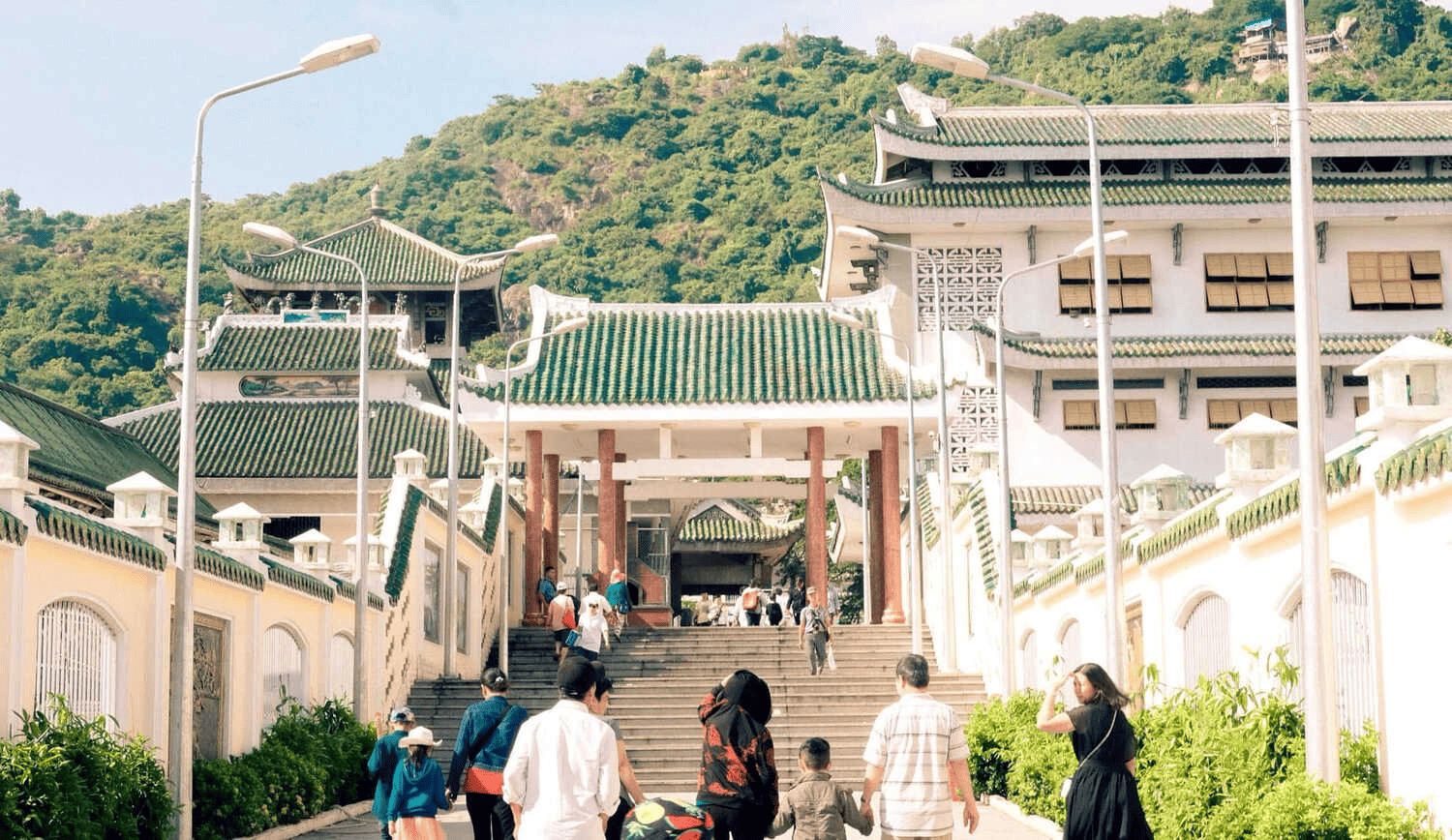
Guide to getting to Ba Chua Xu temple at Sam mountain (Source: Báo An Giang)
With its convenient location, visitors can easily travel from Ho Chi Minh city or nearby provinces by various means of transportation. Depending on individual needs and conditions, you can choose to go by bus, motorbike, private car, or even combine different public transport options to reach this famous spiritual site.
Bus is the most popular and convenient option, with a travel time of about 5 to 6 hours. Several sleeper bus companies operate the Ho Chi Minh city - Chau Doc route like Phuong Trang, Thanh Buoi, Hue Nghia and Tuan Nga, with tickets prices ranging from 180,000 to 250,000 VND per trip. Buses depart from Mien Tay Bus Station, follow the Trung Luong – My Thuan Expressway – National Highway 91, and stop at Chau Doc Bus Station. From there, visitors can take a taxi or motorbike taxi for about 5 km to reach Ba Chua Xu temple.
For those traveling by motorbike or private car, the route follows the Ho Chi Minh City – Trung Luong Expressway, then continues to My Thuan Bridge and along National Highway 80 to Long Xuyen, An Giang. From Long Xuyen, continue about 60 km on National Highway 91 to Chau Doc, then drive another 5 km to the temple. The total travel time is approximately 5–6 hours, depending on driving speed and traffic conditions.
When is the best time to visit Ba Chua Xu temple at Sam mountain?
Depending on the purpose of your trip, you can choose the right time to visit the temple, experience its spiritual atmosphere, and avoid overcrowding during peak seasons.
The Ba Chua Xu festival - the most bustle time of the year

The Ba Chua Xu festival (Source: Hoi lien hiep Phu nu)
The most bustling and vibrant time at Ba Chua Xu temple is during the Ba Chua Xu festival, held from the 23rd to the 27th day of the fourth lunar month. This is one of the largest festivals in the Mekong Delta, recognized as a national intangible cultural heritage by the Ministry of Culture, Sports, and Tourism.
The festival attracts hundreds of thousands of pilgrims from all over the country, creating a lively atmosphere filled with spiritual and cultural activities. Some of the most important rituals include:
- The bathing ceremony: The statue of Ba Chua Xu is cleansed with perfumed water and a red cloth, then dressed in a new robe, symbolizing respect and reverence.
- The Procession of the Deity’s Seal: This takes place at Thoai Ngoc Hau mausoleum, where the spirit of the great general who helped establish An Giang is honored. The ritual involves carrying the sacred seal back to the temple to pray for peace and prosperity.
If you want to immerse yourself in the vibrant energy of a large-scale cultural and spiritual festival, this is the perfect time to visit. However, due to the massive influx of pilgrims, expect long queues to enter the temple. It is highly recommended to book accommodations 1–2 months in advance to avoid fully booked hotels.
Visiting Ba Chua Xu temple during Lunar New Year – Seeking prosperity for the year ahead
Lunar New Year (Tet Nguyen Dan) is also a special occasion to visit Ba Chua Xu temple, as people from all over gather here to pray for peace, health, prosperity, and good fortune for the new year. During the first days of spring, the temple is always bustling with visitors, but it is not as overcrowded as during the Ba Chua Xu festival.
At the temple, visitors can take part in incense offerings, prayers, and traditional cultural activities such as lion dances and hat boi (Vietnamese classical opera). Moreover, making a pilgrimage at the beginning of the year is considered a way to ensure a smooth and successful start, especially among businesspeople and traders.
If you want to experience the lively atmosphere of Tet but prefer to avoid excessive crowds, visiting between the 4th and 10th days of the lunar calendar is recommended, as the number of visitors significantly decreases compared to the first three days of the holiday.
Visiting the temple during other times of the year
Apart from peak occasions such as the Ba Chua Xu festival or Lunar New Year, Ba Chua Xu temple is open to visitors year-round. If you seek a peaceful atmosphere for pilgrimage and worship without the crowds, consider visiting during the following periods:
- May – August (rainy season): This is the least crowded time of the year. While occasional rain showers may occur, the temple remains tranquil, allowing visitors to pray and perform rituals without long waiting times.
- September – December (dry season): The weather is cooler and more pleasant, making it a great time to explore nearby attractions such as Tra Su cajuput forest, Thoai Ngoc Hau mausoleum, and Tay An pagoda. During this period, the temple is moderately busy, not too crowded but still lively enough to retain its characteristic bustling atmosphere.
Explore the architecture of Ba Chua Xu temple
Ba Chua Xu temple also holds significant architectural value, reflecting the cultural fusion of Vietnam, China, India, and the Khmer. Through multiple restorations, the temple has retained its ancient and majestic appearance, standing as one of the most sacred and magnificent temples in the Mekong Delta.
The temple is built in the shape of the Chinese character “Quoc" (国), resembling a traditional Vietnamese pagoda. Its overall structure is divided into multiple sections, each meticulously designed to showcase the solemnity and sacredness of this revered worship site.
The three-tiered tiled roof and the impressive curved roof system
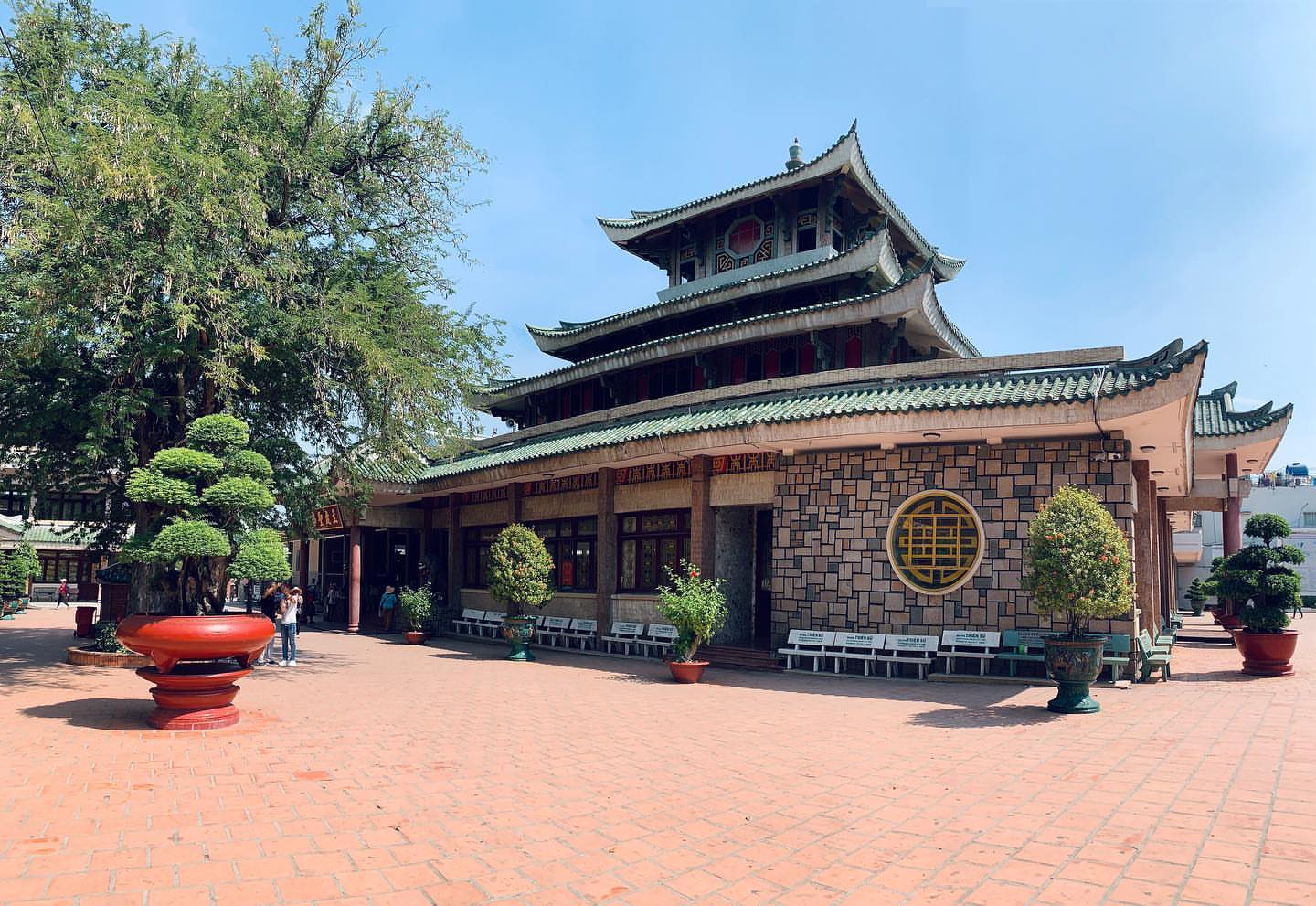
The three-tiered tiled roof (Source: Traveloka)
One of the most distinctive features of the temple is its three-tiered roof, covered with large green tube tiles, creating a majestic and ancient appearance. The roof corners are elegantly curved like the prow of a boat, reflecting the artistic influence of Southeast Asian architecture. This unique design not only enhances the temple’s aesthetic appeal but also holds spiritual significance, symbolizing divine protection over the land.
Pillars and exquisite carvings
The interior of Ba Chua Xu temple is supported by a system of sturdy pillars, intricately carved with dragon, phoenix, and cloud motifs, symbolizing the cultural fusion between Vietnam and China. These patterns convey wishes for peace, prosperity, and authority, aligning with the Vietnamese belief in the Mother Goddess.
Additionally, the temple features elaborately carved wooden doors adorned with Chinese couplets that praise the sacredness and virtues of Ba Chua Xu. The surrounding bas-reliefs are also meticulously sculpted, depicting scenes of nature, soaring dragons, and dancing phoenixes, creating an artistic and spiritual atmosphere.
Ba Chua Xu statue
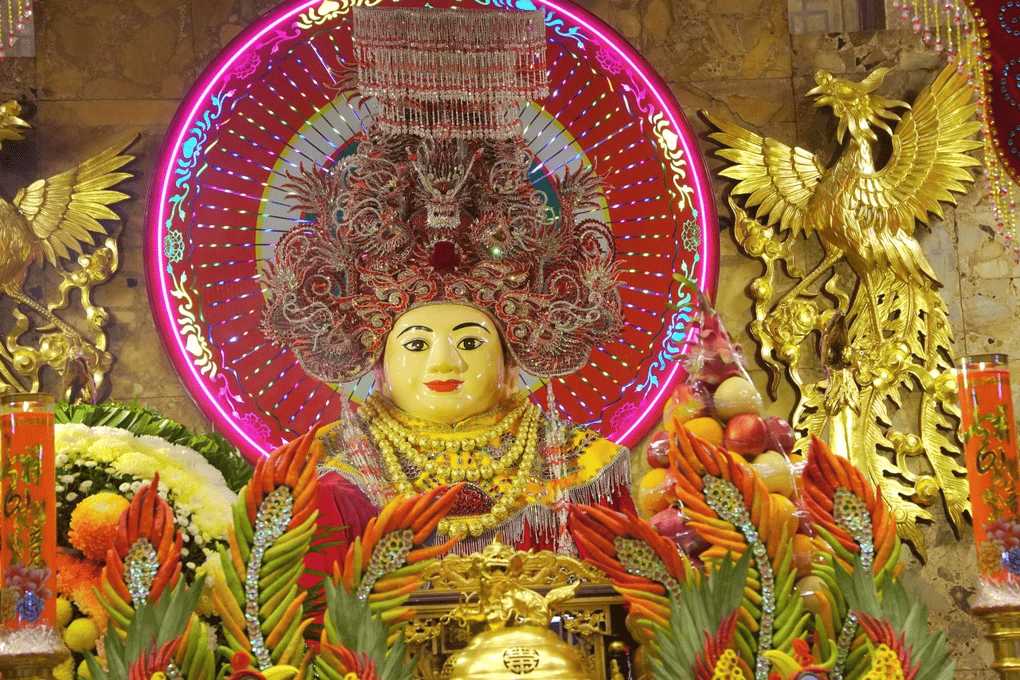
Ba Chua Xu statue (Source: Bao Nhan Dan)
The statue of Ba Chua Xu sits in a dignified posture, wearing a crown, with a benevolent yet authoritative expression that reflects her divine role as the protector of the land. A distinctive feature of the statue is its height of approximately 1.2 meters, placed on an elevated altar. It is regularly adorned with new ceremonial garments during important rituals throughout the year.
Inside the temple
Upon entering the temple, visitors are immersed in an atmosphere of reverence and tranquility, with the scent of incense filling the spacious temple. The main sanctum houses the statue of Ba Chua Xu, surrounded by auxiliary altars dedicated to Guan Gong, the God of Wealth, and the Earth Deity.
The temple walls are adorned with intricate dragon and phoenix motifs, along with lacquer paintings, all illuminated by the glow of hundreds of flickering candles, creating a mystical and sacred ambiance. Red lanterns hang along the corridors, casting a warm light that enhances the temple’s ancient charm. On the altars, devotees present offerings such as flowers, fruits, sweets, and incense to express their devotion to Ba Chua Xu.
The surrounds of the temple
Ba Chua Xu temple is nestled at the foot of Sam mountain, surrounded by lush natural landscapes. The temple grounds are thoughtfully arranged with greenery, miniature landscapes, and a tranquil pond, offering visitors a serene environment for pilgrimage.
From the temple grounds, visitors can take in panoramic views of Chau Doc City, with its vast rice fields and interwoven waterways—an iconic image of the Mekong Delta region.
A journey to Ba Chua Xu temple at Sam mountain offers not only a profound spiritual experience but also a chance to explore the natural beauty and cultural heritage of An Giang. For a complete travel experience, consider Vietnam exploration tours of Asia Pacific Travel, where you can embark on unique journeys, from the floating markets of the Mekong Delta to famous landmarks across the country.
Related Posts
.png)
.png)

.png)