

A complete guide to Perfume river Hue
A symbol of Hue’s beauty, Perfume River is home to historic sites, scenic cruises, and cultural experiences that captivate every traveler. Whether you’re cruising along its gentle waters or strolling its scenic banks, the Perfume River offers a unique glimpse into the timeless beauty of Hue.
Perfume river and the origin of its name
Perfume River, known as Huong river in Vietnamese, is the lifeline of Hue, flowing gracefully through the city and shaping its cultural and historical identity. Stretching approximately 80 kilometers, the river originates from the Truong Son Mountains and winds its way through lush landscapes before reaching the heart of Hue.
The name “Perfume river” comes from a fascinating natural phenomenon. In autumn, flowers from upstream forests fall into the water, releasing a delicate fragrance that once spread throughout the city. This unique characteristic gave rise to the poetic name that has been passed down for generations.
.jpg?1743756209465)
Perfume river in Hue (source: Tai nguyen va Moi truong news)
Beyond its name, the river holds great historical and cultural significance. During the Nguyen Dynasty, it played a crucial role in trade, transportation, and royal ceremonies. Over the centuries, it has been a source of inspiration for poets, artists, and musicians, appearing in many traditional Vietnamese songs and literary works.
Today, the Perfume river remains a symbol of Hue’s charm, offering visitors a tranquil escape while preserving the essence of the city’s rich heritage.
Read more: Da river adventure: Boat tours & Top attractions to discover
Interesting activities on the Perfume river
A visit to Hue would not be complete without experiencing the Perfume River, a waterway that offers both serenity and cultural richness. This iconic river is not just a scenic landmark but also a gateway to some of Hue’s most captivating experiences.
Boat cruises on Perfume river
One of the most enchanting ways to explore the Perfume River is by taking a boat tour or cruise. These tours allow visitors to admire Hue’s historic sites from the water while enjoying the river’s tranquil beauty. Traditional dragon boats, adorned with intricate decorations, provide a unique cultural experience as they glide along the gentle currents.
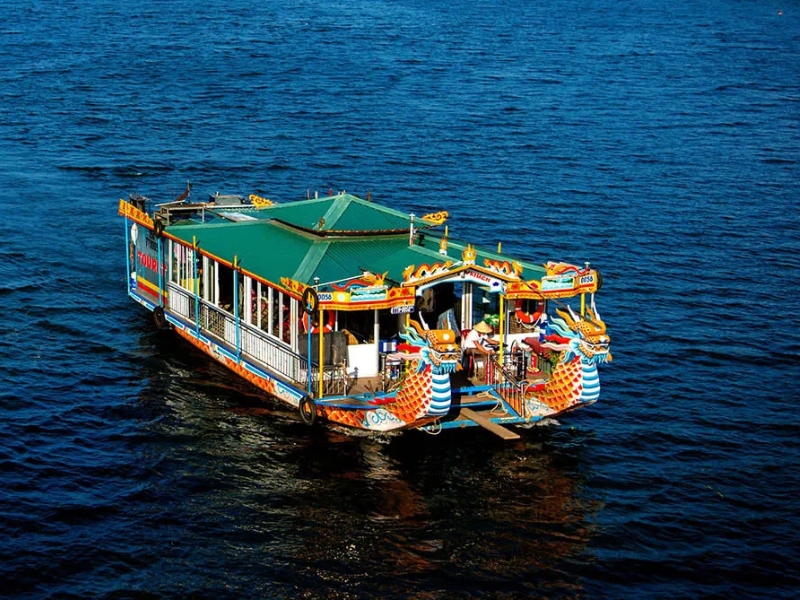
Boat cruises on Perfume river (source: Thuyen rong)
During the daytime, visitors can embark on a sightseeing cruise that passes by lush riverbanks, historic temples, and the royal tombs of the Nguyen emperors. Many tours include commentary from local guides, offering insights into the history and significance of each landmark. Prices for these tours vary, typically ranging from 100,000 to 200,000 VND per person, depending on the duration and services included.
For a more romantic experience, sunset and nighttime cruises offer breathtaking views as the city lights reflect on the water. Some evening cruises feature Ca Hue, a traditional music performance that enhances the magical atmosphere. These cultural cruises are slightly more expensive, with ticket prices starting from 150,000 VND per person, and can go up to 500,000 VND for premium packages that include dinner and live performances.
Visitors can choose between private or group tours, depending on their preferences. Private boat rentals offer a more intimate and personalized experience, with prices beginning at 500,000 VND per boat, ideal for couples or families. Group tours, on the other hand, provide a more budget-friendly option, with costs as low as 80,000 VND per person for a shared ride. Some tour operators also offer customizable experiences, allowing guests to include food tastings or extended stops at key attractions along the river.
No matter the time of day or the type of tour, a boat ride on the Perfume River is a must-try experience, blending stunning scenery with Hue’s deep-rooted cultural heritage.
Hue’s traditional music on the river
As night falls over Hue, the Perfume River becomes a stage for one of the city's most treasured cultural traditions - Ca Hue. Performed on wooden dragon boats as they float along the river, this unique art form blends poetry, folk melodies, and classical music, creating a deeply emotional and authentic experience for visitors.
Each evening, as the city lights shimmer on the water, dragon boats gather in the middle of the river, where skilled musicians and singers dressed in traditional ao dai perform timeless melodies. The soft strumming of the đàn tranh (Vietnamese zither) and the melancholic notes of the dan bau (monochord) create a soothing atmosphere, transporting listeners back to the royal days of the Nguyen Dynasty.
Kayaking and other water activities
For those looking for a more active way to explore the Perfume River, kayaking and other water activities offer a refreshing alternative to traditional boat tours. Paddling along the river allows visitors to experience Hue from a different perspective, passing by lush riverbanks, historical sites, and local fishing villages at their own pace.
Kayaking on the Perfume River is a peaceful yet engaging activity, perfect for nature lovers and adventure seekers alike. Early morning and late afternoon are the best times to go, as the weather is cooler and the river reflects the golden hues of sunrise or sunset. Some guided kayaking tours include stops at key attractions, such as Thien Mu Pagoda or the Hen Islet, where visitors can take a break and enjoy local delicacies. Rental prices for kayaks start at 150,000 VND per hour, while guided tours range from 300,000 to 600,000 VND per person, depending on the itinerary and services included.
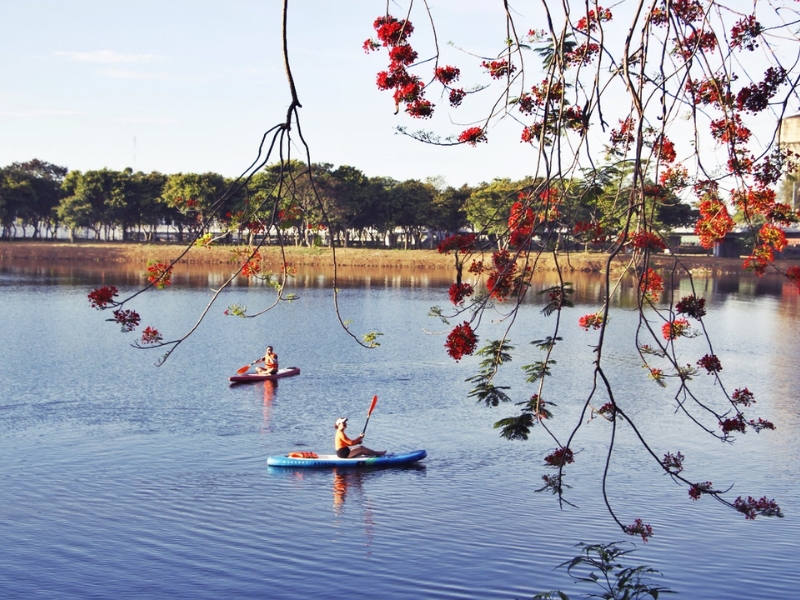
SUP on Perfume river (source: Vinwonders)
In addition to kayaking, other water-based activities like stand-up paddleboarding (SUP) are gaining popularity among younger travelers. SUP offers a fun and relaxing way to glide across the calm waters while taking in the scenic views. Rental fees for paddle boards are similar to kayaks, with prices starting at 200,000 VND per hour.
Dining and culinary experiences along the Perfume river
Exploring the Perfume River isn’t just about sightseeing—it’s also a chance to experience Hue’s rich culinary heritage. Along the riverbanks, visitors can find a variety of dining options, from floating restaurants to riverside eateries, offering an authentic taste of Hue’s traditional cuisine.
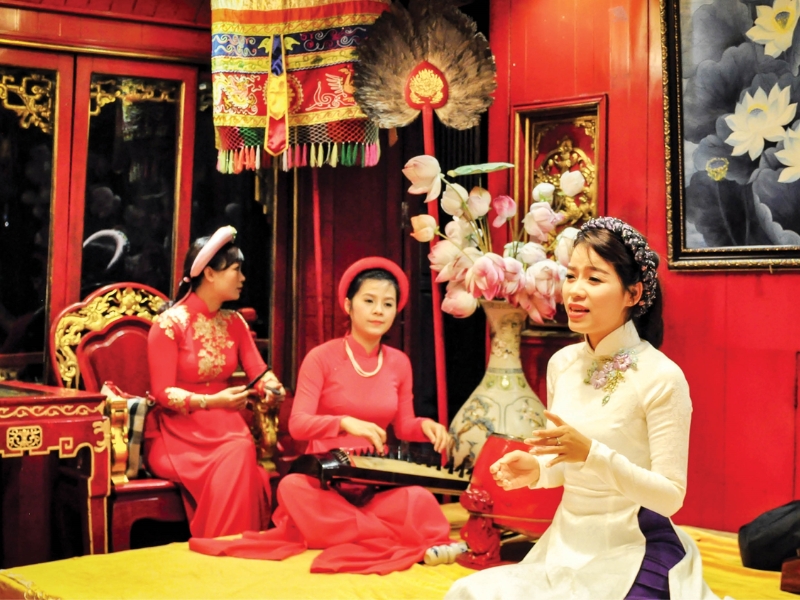
Enjoy a magical evening on the Perfume River with a delicious dinner and traditional Hue folk music (source: Ca Hue tren song Huong)
One of the most unique experiences is enjoying a dinner cruise on a dragon boat. As the boat drifts along the tranquil river, guests can savor Hue’s signature dishes such as bun bo Hue (Hue beef noodle soup), banh khoai (crispy Vietnamese pancake), and nem lui (grilled lemongrass skewers). Many dinner cruises also feature live Ca Hue performances, creating an elegant and culturally immersive atmosphere. Prices for dinner cruises start at 350,000 VND per person, with premium options reaching up to 800,000 VND, depending on the menu and entertainment included.
For a more casual experience, several riverside restaurants and street food stalls offer local specialties with stunning river views. Popular spots near Trang Tien Bridge and Hen Islet serve fresh seafood, grilled meats, and sweet desserts like che Hue (Hue-style sweet soup). Meals at these eateries range from 50,000 to 150,000 VND per dish, making them an affordable and delicious way to experience Hue’s food culture.
Top attractions along the Perfume river
A journey along the river offers visitors a chance to explore these iconic sites while enjoying the peaceful beauty of this legendary waterway.
Thien Mu pagoda
Perched on a hill overlooking the Perfume River, Thien Mu Pagoda is one of Hue’s most iconic landmarks. Built in 1601 during the reign of Lord Nguyen Hoang, this historic temple is not only a symbol of Hue’s spiritual heritage but also a place of great historical significance.
_1.jpg?1743756382998)
Thien Mu pagoda (source: Husta)
Visitors can reach Thien Mu Pagoda by boat or road, but the most scenic route is a dragon boat ride along the Perfume River. The temple is free to enter, making it a must-visit site for those exploring Hue’s spiritual and historical past.
The Imperial city of Hue
Located along the northern bank of the Perfume River, the Imperial City of Hue is the most significant historical site in the city. Once the political and cultural center of the Nguyen Dynasty, this vast complex was home to emperors, royal families, and court officials for over a century. Today, it stands as a UNESCO World Heritage Site, offering visitors a glimpse into Vietnam’s imperial past.
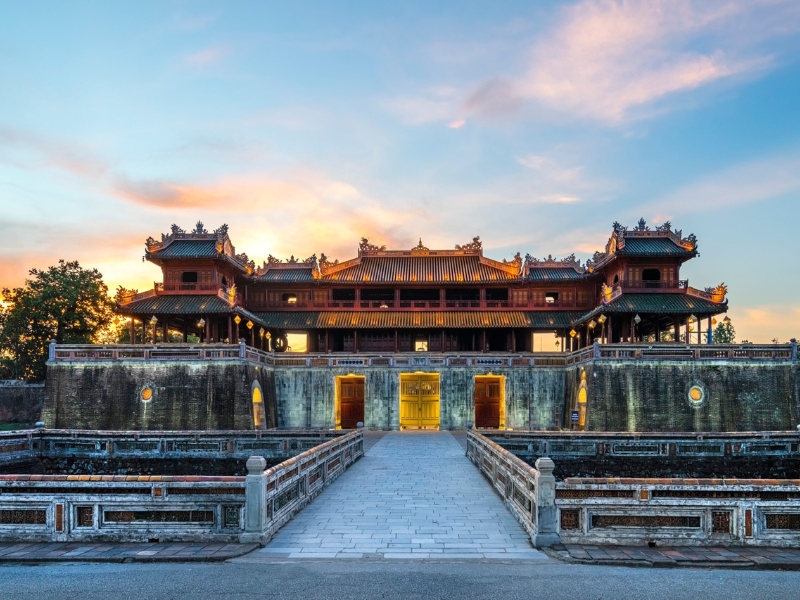
The Imperial city of Hue (source: Vietnam tour)
The Imperial City is surrounded by massive stone walls and a moat, with the Ngo Mon Gate serving as its grand entrance. Inside, visitors can explore important structures such as the Thai Hoa Palace, known for its intricate wooden carvings and golden throne, and the Forbidden Purple City, which was once reserved exclusively for the emperor. Despite damages from wars, many sections of the complex have been beautifully restored, showcasing traditional Vietnamese architecture and royal artifacts.
Visitors can reach the Imperial City easily by taxi, bicycle, or even by boat along the Perfume River. Entry tickets cost 200,000 VND per person, with guided tours available for a deeper historical insight.
Tu Duc tomb
Among the many imperial tombs in Hue, Tu Duc Tomb stands out for its poetic charm and harmonious design. Built between 1864 and 1867, this sprawling complex was not only Emperor Tu Duc’s burial site but also his retreat, where he sought solace in nature and poetry.
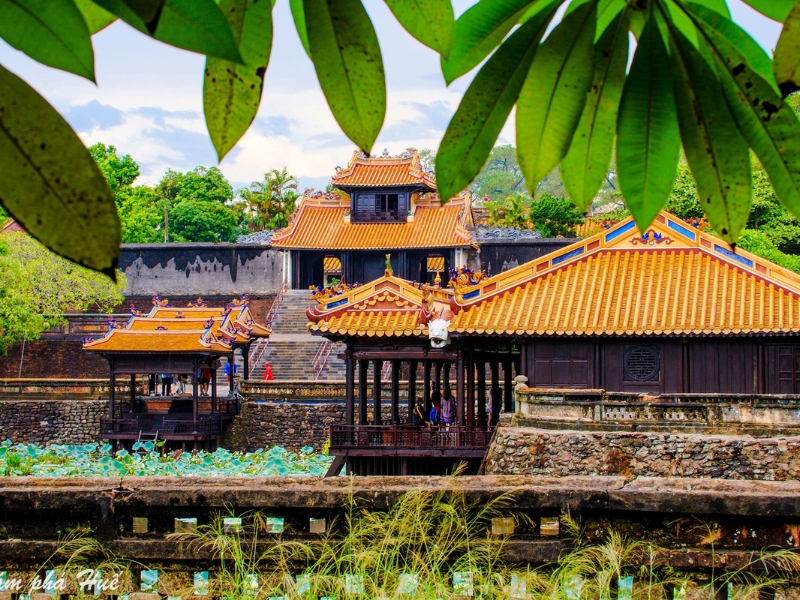
Tu Duc tomb (source: Vinpearl)
Unlike other grand tombs, Tu Duc’s reflects a sense of tranquility and introspection. The site features peaceful lakes, lush pine forests, and traditional pavilions, creating an elegant yet melancholic atmosphere. One of the highlights is Xung Khiem Pavilion, where the emperor once spent time composing poetry, and Khiem Cung Gate, the entrance to the main temple dedicated to him. Despite its beauty, the tomb also tells a story of personal sorrow, as Tu Duc faced political struggles and had no heir to succeed him.
Located a short distance from the Perfume River, Tu Duc Tomb is easily accessible by taxi, bicycle, or boat. Entrance tickets are priced at 150,000 VND per person, with guided tours available.
Read more: Khai Dinh Tomb in Hue – A Masterpiece of Nguyen Dynasty Architecture
Hon Chen temple
Tucked into the lush hills along the Perfume River, Hon Chen Temple is a spiritual sanctuary rich in history and cultural significance. It is one of the few places in Hue where Buddhism, royal traditions, and indigenous Mother Goddess worship (Dao Mau) intertwine, creating a unique religious atmosphere.
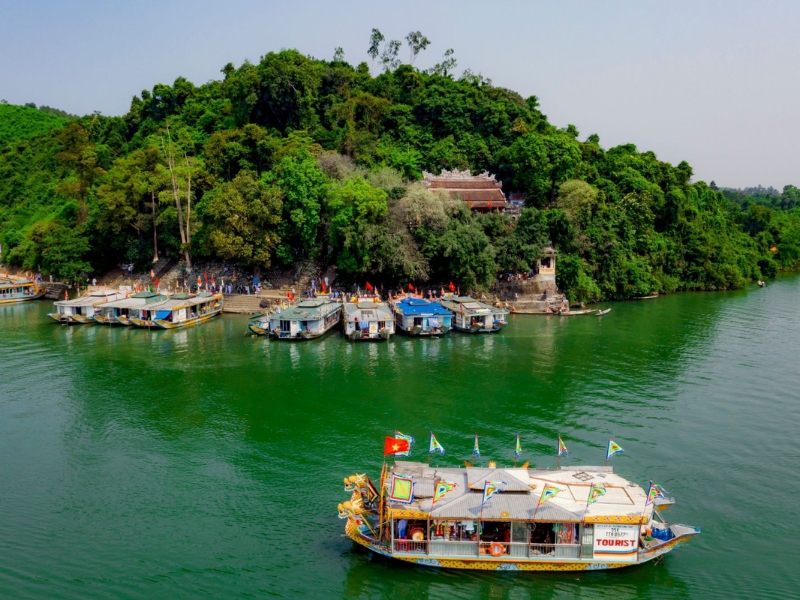
Hon Chen temple (source: Izitour)
The temple complex consists of several shrines decorated with vivid ceramic mosaics, delicate wood carvings, and sacred artifacts. Originally dedicated to Po Nagar, the Cham goddess of fertility, Hon Chen later became an important worship site during the Nguyen Dynasty. Twice a year, in the third and seventh lunar months, the temple comes alive with grand festivals featuring colorful boat parades, traditional rituals, and folk performances.
Trang Tien bridge
Spanning the Perfume River in the heart of Hue, Trang Tien Bridge is one of the city’s most recognizable landmarks. Built in 1899 during the reign of Emperor Thanh Thai, the bridge was designed by French architect Gustave Eiffel, the mastermind behind the Eiffel Tower. Its elegant six-span steel structure reflects a blend of Western engineering and Hue’s poetic charm.
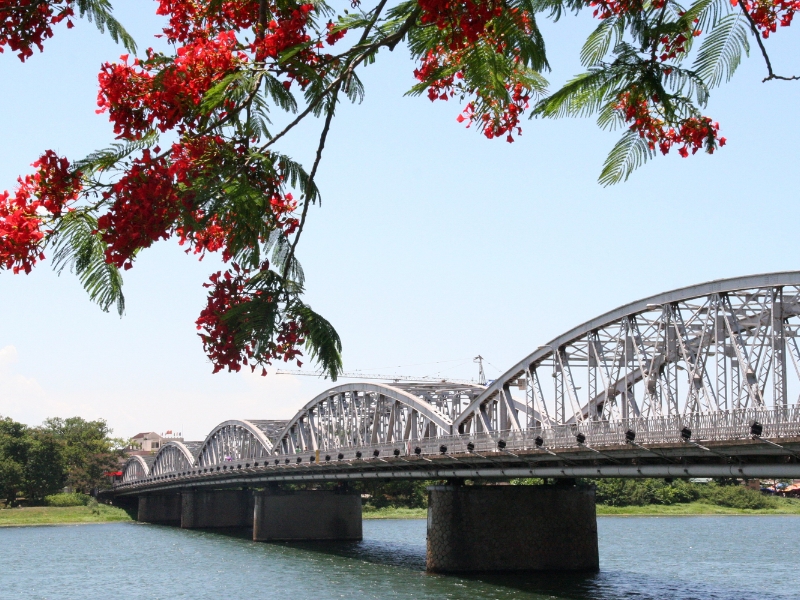
Trang Tien bridge (source: Viet lux tour)
More than just a crossing, Trang Tien Bridge has witnessed significant historical events, from the Nguyen Dynasty’s final years to wartime struggles. Today, it serves as a scenic spot where both locals and visitors can admire the tranquil beauty of the Perfume River. At night, the bridge is illuminated with colorful LED lights, creating a dazzling reflection on the water.
Dong Ba market
Dong Ba Market is the largest and oldest market in Hue. Established in the early 19th century under Emperor Gia Long and later expanded during Emperor Dong Khanh’s reign, the market has long been a bustling hub of trade, culture, and local life.
Dong Ba market (source: Vinpearl)
Spanning multiple floors, Dong Ba Market offers a wide variety of goods, from fresh produce and seafood to handicrafts, fabrics, and souvenirs. It is also a paradise for food lovers, with vendors serving famous Hue specialties such as bun bo Hue (Hue beef noodle soup), banh beo (steamed rice cakes), and me xung (sesame candy). Prices here are generally affordable, but bargaining is common and encouraged.
Easily accessible from the city center, Dong Ba Market is best visited in the morning when the selection is freshest, or in the late afternoon for a more relaxed experience. Whether shopping for unique local products or sampling authentic Hue cuisine, a visit to this market offers a vibrant glimpse into the daily life and culinary traditions of the former imperial city.
Local cuisine
If you are exploring the Perfume River, don’t miss the chance to try Hue’s signature dishes – a perfect blend of imperial cuisine and flavorful local specialties. Here are some must-try foods.
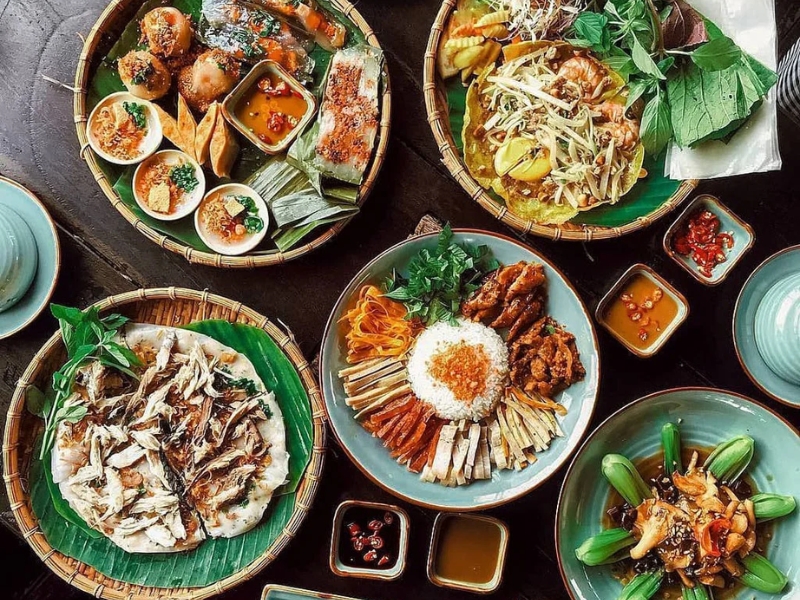
Hue’s cuisine (source: vincom)
- Bun Bo Hue: This flavorful noodle soup features a rich broth made from beef bones, lemongrass, and mam ruoc (fermented shrimp paste), giving it a unique depth of flavor. It is served with crab cakes, pork hock, and sliced beef, creating a perfect balance of spice and savoriness.
- Com hen: A simple yet flavorful dish that locals love. It consists of cold rice mixed with stir-fried baby clams, crispy pork skin, peanuts, fresh herbs, and clam broth on the side.
- Banh beo: Small steamed rice cakes topped with shrimp flakes and crispy shallots, served with sweet fish sauce.
- Banh nam: A soft, flat rice dumpling wrapped in banana leaves with shrimp and pork filling.
- Banh loc: This dish features chewy tapioca dumplings with shrimp and pork, offering a delightful texture.
- Nem lui: These minced pork skewers wrapped around lemongrass sticks are grilled over charcoal, giving them a smoky aroma. They are served with rice paper, fresh vegetables, and a rich peanut-based dipping sauce, making them an irresistible combination of flavors and textures.
- Che Hue: This is a variety of traditional sweet soups. Some favorites include Che cung dinh (royal sweet soup with lotus seeds), Che bot loc boc thit heo quay (tapioca dumplings with roasted pork), and Che khoai tia (purple sweet potato soup). These refreshing and mildly sweet desserts are perfect after a day of exploring.
The Perfume River is one of Hue’s most iconic attractions, offering breathtaking views and a deep connection to the city’s past. This peaceful waterway winds through ancient temples, historic sites, and lively markets, making it the perfect backdrop for an immersive Hue experience. Book your tour with Asia Pacific Travel for a seamless journey through historic sites, scenic boat rides, and authentic local experiences. Plan your trip today!
Related Posts
.jpg)
.png)

.png)