



Mua Cave – The Ultimate Viewpoint of Northern Vietnam
Tucked away in the heart of Ninh Binh province, Mua Cave is more than just a scenic lookout—it is an experience that combines history, physical challenge, and one of the most breathtaking panoramas in Southeast Asia. Often described as the “roof of Ninh Binh,” this limestone peak offers sweeping views over rivers, rice paddies, and dramatic karst formations that define the region’s landscape.
If you are planning a trip to northern Vietnam, Mua Cave deserves a top spot on your itinerary.
Where Is Mua Cave?
Mua Cave is located about 5 kilometers from Ninh Binh city center and only a few minutes from the famous boat-riding area of Tam Cốc. The site sits within the stunning limestone region that is part of the UNESCO-listed Tràng An Landscape Complex, known for its caves, waterways, and towering karsts.
Surrounded by lotus ponds, rural villages, and peaceful countryside roads, the journey to Mua Cave already feels like an escape from busy city life.

The Story Behind the Name
“Mua” means dance in Vietnamese. According to local legend, during the Tran Dynasty (13th century), Vietnamese kings visited this area to relax and enjoy royal dance performances inside the cave at the base of the mountain. Though the cave itself is relatively small, the historical tale adds a poetic charm to the destination.
Today, however, most visitors come not for the cave—but for the climb above it.
The 500 Stone Steps to the Summit
The highlight of Mua Cave is the dramatic staircase that winds up the limestone mountain. With nearly 500 steep stone steps, the climb is both physically demanding and incredibly rewarding.
The staircase zigzags sharply along the ridge, resembling a miniature version of the Great Wall. The stone path splits midway:
-
One route leads to the famous dragon statue viewpoint.
-
The other leads to a pagoda and panoramic valley overlook.
The steps are uneven and narrow in some sections, requiring steady footing and patience. On hot days, the climb can feel intense, but frequent stopping points allow you to catch your breath—and capture stunning photos.
Each step upward reveals more of the countryside below. By the time you reach the summit, the view feels almost surreal.
The Dragon Peak: Iconic and Dramatic
The most photographed spot at Mua Cave is the stone dragon statue that stretches along the mountain ridge. Intricately carved and perched high above the valley, the dragon symbolizes power and protection in Vietnamese culture.
Standing beside it feels exhilarating. On one side, limestone mountains rise like ancient guardians. On the other, the river curves gently through farmland far below. The narrow ridge pathway creates an adventurous, almost cinematic atmosphere.
It is not uncommon to see travelers carefully balancing for the perfect photo—but always prioritize safety, as the drop-offs are steep.

The View Over Tam Coc
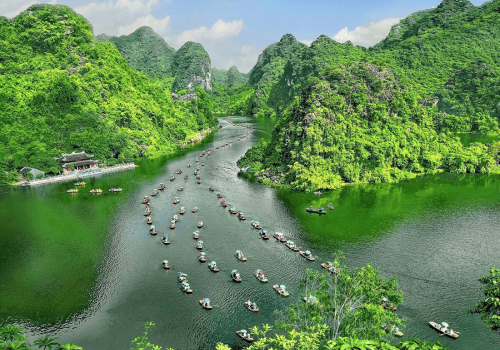
From the summit, you can admire the winding river of Tam Coc cutting through vibrant rice paddies. The river appears like a silver ribbon weaving between limestone cliffs.
The scenery changes beautifully with the seasons:
-
Late May to early June: Rice fields turn brilliant gold during harvest season.
-
Spring (March–April): Lush green paddies dominate the valley.
-
Autumn (September–October): Cooler temperatures and softer light create ideal photography conditions.
Watching small rowboats glide through the river below gives you a sense of scale. From above, they look like tiny brushstrokes on a vast natural canvas.
Sunrise vs. Sunset: Which Is Better?
Both times of day offer something special:
Sunrise
-
Fewer crowds
-
Cooler temperatures
-
Soft mist floating over the valley
-
Peaceful and quiet atmosphere
Sunset
-
Warmer golden light
-
Dramatic sky colors
-
Stunning reflections over water and fields
If possible, arrive early in the morning to avoid tour groups and midday heat. The soft morning light makes the landscape look almost ethereal.
The Cave at the Base
After descending, you can explore Mua Cave itself. Though not as large as other caves in Ninh Binh, it offers interesting rock formations and a cool interior space. It’s a brief stop but a nice contrast to the panoramic views above.
The Lotus Pond and Surroundings
At the foot of the mountain lies a picturesque lotus pond. During summer months, pink lotus flowers bloom beautifully, adding even more charm to the area. Wooden walkways stretch across the pond, creating another photogenic spot for visitors.
The entire complex is well-maintained, with landscaped gardens, small temples, and open spaces that make the experience feel organized yet still connected to nature.
Practical Travel Tips
Entrance Fee: A small entrance fee is required (usually around 100,000 VND; check locally for updates).
What to Wear:
-
Comfortable walking shoes
-
Light clothing
-
Hat and sunscreen
What to Bring:
-
Water bottle
-
Camera or phone
-
Small towel (especially in summer)
Time Needed:
Plan for 2–3 hours to fully enjoy the climb, photography, and surroundings.
Why Mua Cave Is So Memorable
Mua Cave is not just about taking photos—it’s about perspective. From the summit, the landscape stretches endlessly, reminding you how small you are compared to nature’s grandeur.
There is something grounding about climbing those steep steps. Your breathing slows. Your focus sharpens. And when you finally stand at the top, wind brushing your face, the view feels earned.
In a region filled with boat rides and scenic countryside, Mua Cave offers something different: elevation. It gives you the chance to see northern Vietnam from above—to witness the harmony between mountains, rivers, and farmland in one sweeping glance.
And once you’ve stood beside the dragon, looking out over Tam Coc’s winding river, you’ll understand exactly why this viewpoint remains one of the most unforgettable experiences in Ninh Binh.
Related Posts
.jpg)
.png)